
There's no shortage of ways to check weight, from full-length weighbridges at truck stops to sensors mounted right on your axles. This article walks through why weighing matters, the scale types available, how to weigh correctly, and what it actually costs.
Key Takeaways
- Trucks over 10,001 lbs GVWR fall under FMCSA commercial rules; state signage still controls weigh station entry
- Scale options span certified weighbridges for legal weights and onboard sensors for load checks in the field
- Onboard systems like TruckWeight let drivers check axle and gross weight before ever reaching a scale
- Costs run from a few dollars per certified weigh-in to a one-time onboard system that cuts scale trips
Why Trucks Are Weighed
Weight limits exist to protect roads and bridges from damage, and to keep unsafe loads off the highway.
The Federal Bridge Formula sets Interstate limits at 80,000 lbs gross vehicle weight, 20,000 lbs on a single axle, and 34,000 lbs on a tandem axle, according to FHWA's Bridge Formula guidance. Axle spacing can still force a lower cap even when axle and gross weights pass on their own.
How Overweight Loads Affect Safety
Overweight loads change how a truck handles:
- Longer stopping distances: FHWA/USDOT testing showed full-brake distance rising from 223 feet at 80,000 lbs to 252 feet at 116,000 lbs
- Tire and wheel stress from loads above a component’s rating
- Handling and rollover risk when weight is poorly distributed across axles

Violations Carry Real Costs
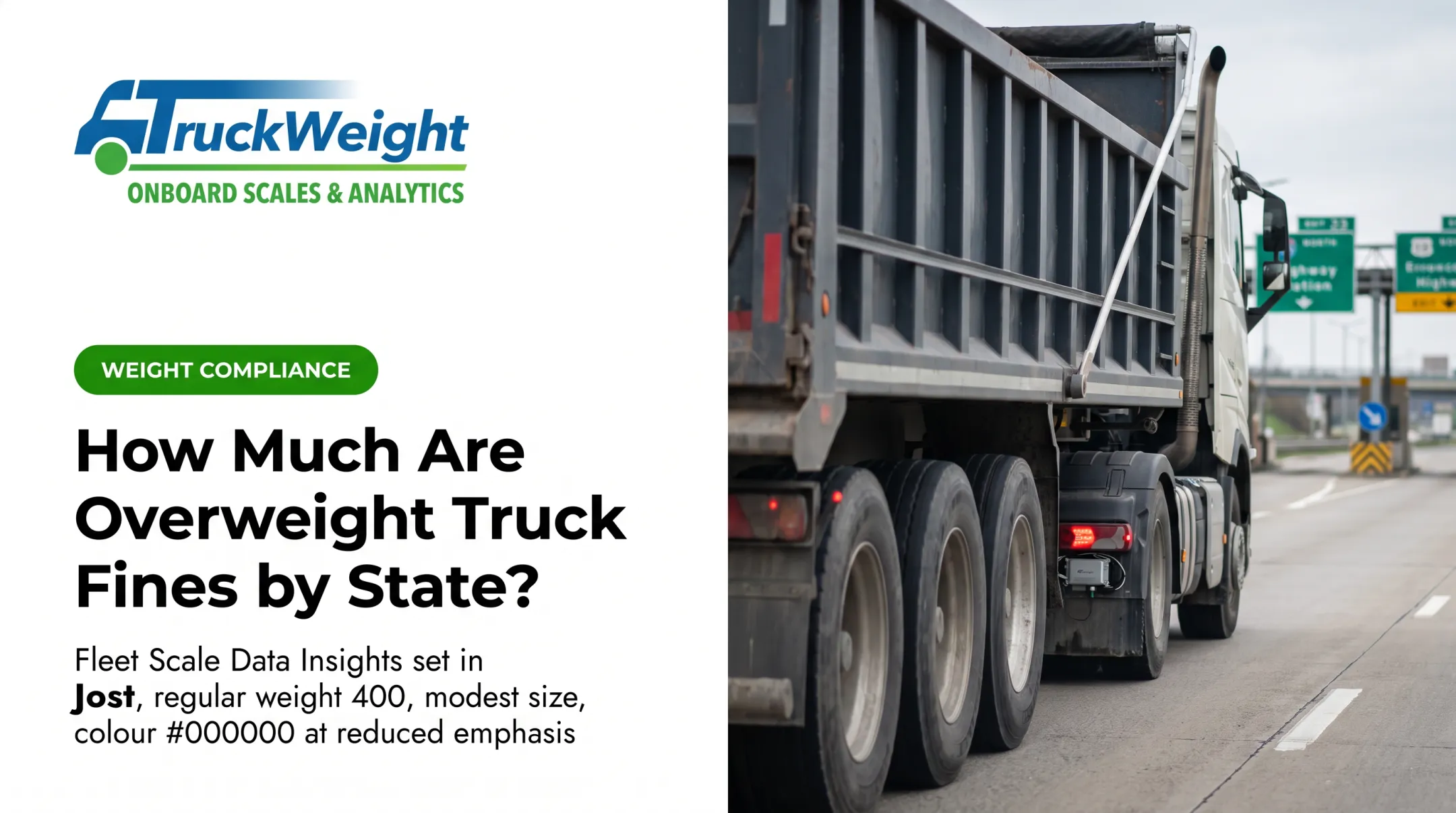
Fines vary heavily by state. Texas charges $100–$500 for under 2,500 lbs over, and $7,000–$10,000 for more than 40,000 lbs overweight, according to the Texas DPS overweight permit page.
Pennsylvania and Florida use their own pounds-over formulas. An overweight citation also lands on your roadside inspection record and feeds FMCSA’s CSA scoring. Getting a load right the first time also pays off operationally:
- Fewer wasted trips back to a scale
- Better payload utilization per haul
- More predictable fuel costs Industries like aggregate hauling, construction, and refuse depend on accurate weighing for both compliance and getting paid correctly — many bill by the ton.
Types of Truck Scales and Weighing Methods
Not every scale serves the same purpose. Here's how the main options stack up.
Full-Length Static Scales
These are permanent weighbridges at truck stops, terminals, and weigh stations. They're legal-for-trade, meaning the reading holds up for enforcement and commercial billing. NIST Handbook 44 governs their design and requires an active NTEP Certificate of Conformance for the equipment.
Portable and Axle Scales
Modular platforms placed at temporary sites, often used to spot-check a single axle. They're useful but not automatically legal-for-trade; that depends on the device's approval and how it's used.
Weigh-in-Motion (WIM) Systems
Sensors embedded in the roadway measure weight, axle spacing, and speed as a truck rolls through at highway speed. Compliant trucks bypass the station; flagged ones get pulled in for a full weigh, per WSDOT's WIM overview.
Onboard Vehicle Scales
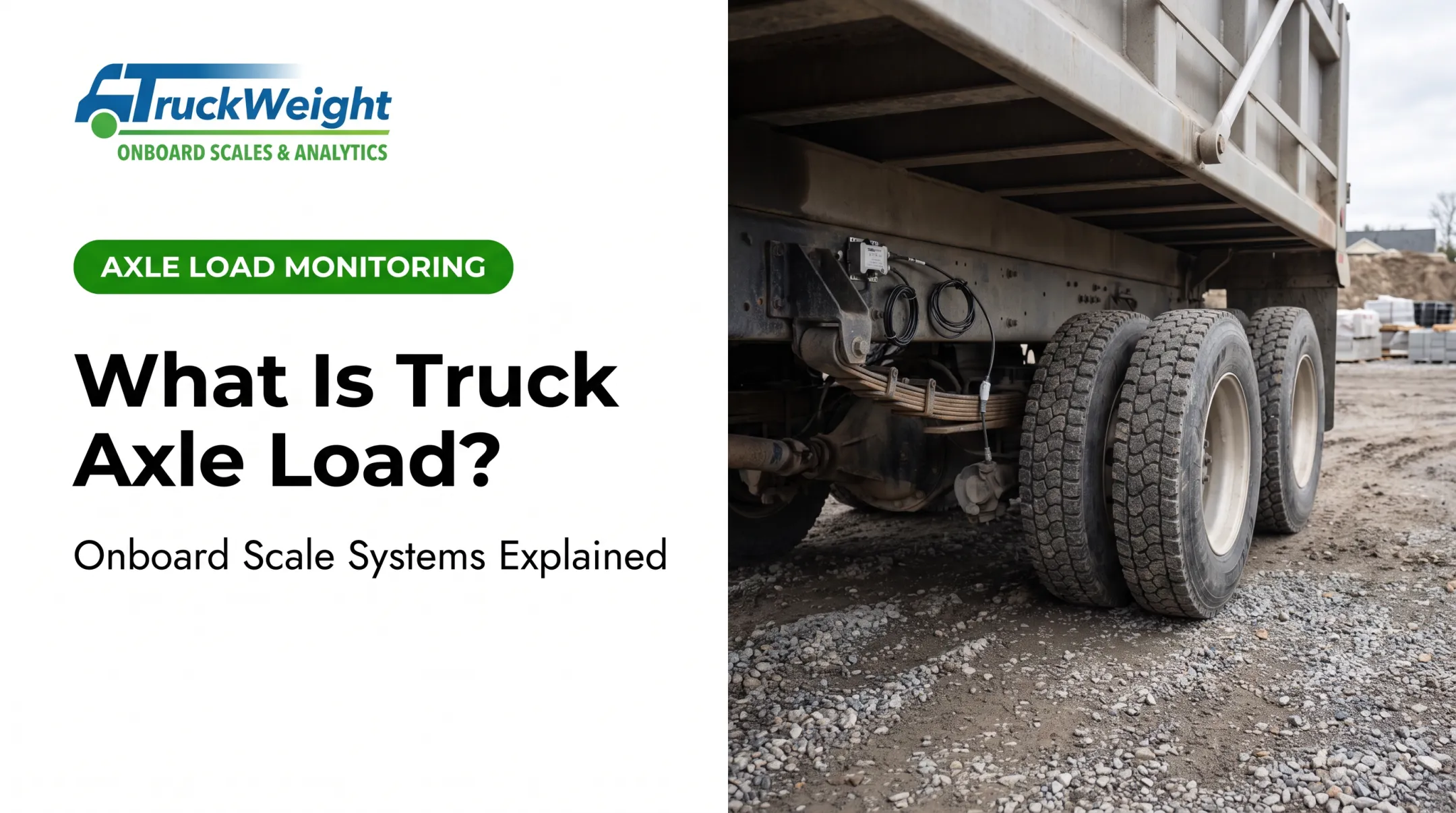
Sensors mounted directly on the truck or trailer suspension estimate weight in real time. TruckWeight, for example, offers four sensor types depending on suspension:
- Strain gauge SG-1: front-axle weighing
- Strain gauge SG-2: spring, walking-beam, and other mechanical suspensions, accurate to within 0.3–2% of GVW
- Air suspension sensor: air-ride tractors, trailers, and B-train combinations, rated 0.3–1% accuracy in all weather
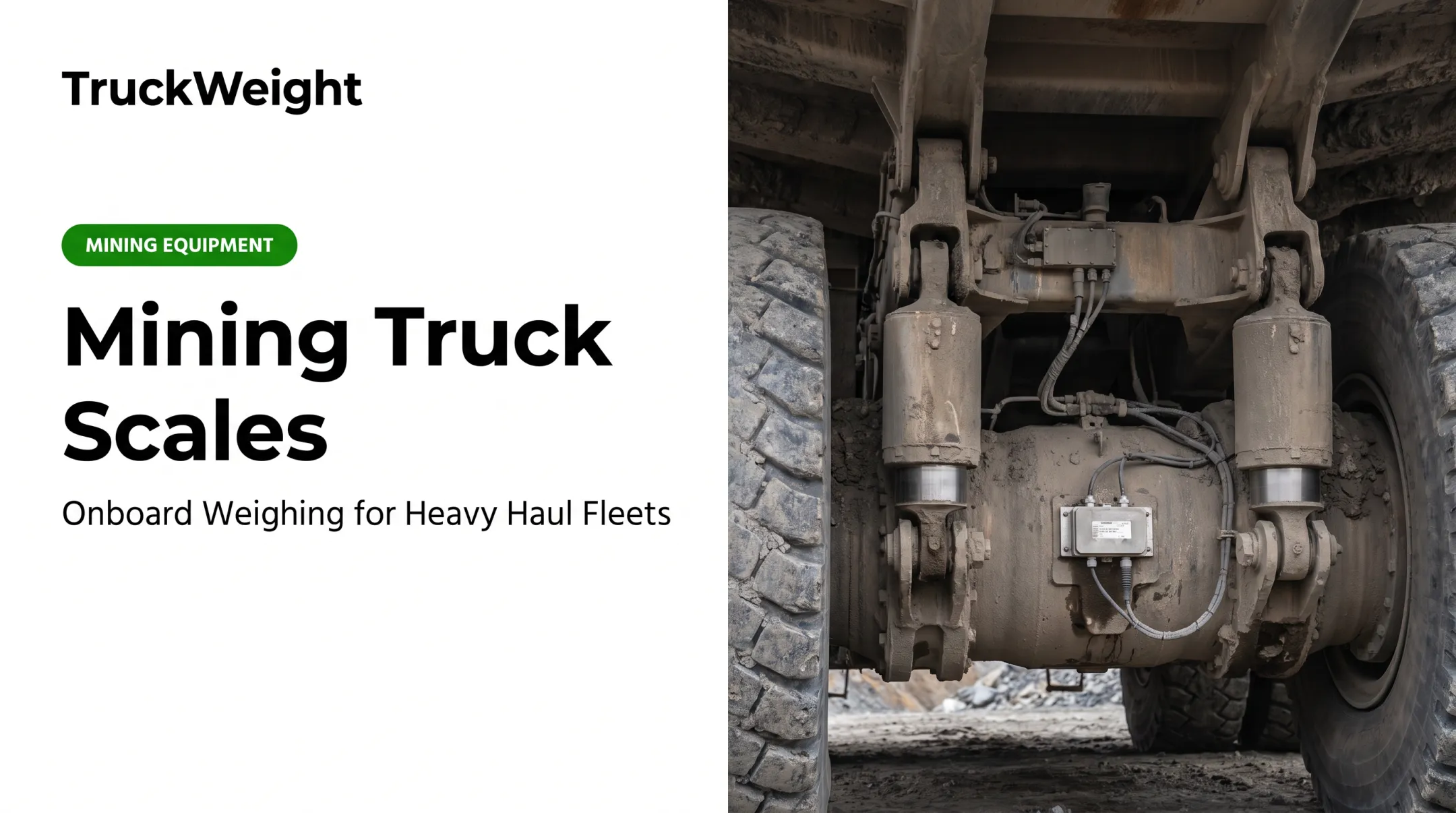
- MG-3 military-grade sensor: built for both air and non-air suspensions, including refuse and dump trucks
| Method | Legal-for-Trade | Cost | Convenience |
|---|---|---|---|
| Full-length static | Yes | Low per-weigh fee | Requires a stop |
| Portable/axle | Sometimes | Rental-dependent | Moderate setup |
| WIM | Case-by-case | Infrastructure cost | High-speed, no stop |
| Onboard | No | One-time hardware cost | Real-time, in-cab |

How to Properly Weigh Your Truck
Accurate truck weight comes from a short sequence of checks, not one pass over a scale.
- Check gross vehicle weight (GVW) first. Use a certified static scale for anything that needs to hold up legally, whether for enforcement or billing.
- Weigh axle-by-axle. A truck can be under its GVW limit and still violate single or tandem-axle limits if the load isn't distributed properly. CAT Scale's own instructions place steer, drive, and trailer axles on separate platforms for this reason.
- Pre-check with an onboard scale before you leave the yard. TruckWeight systems show front axle, drive, trailer, total, and net weight on an in-cab touchscreen or handheld display, so you catch problems before you leave the yard.
- Calibrate regularly. Match TruckWeight sensor readings against a certified ground scale—empty and loaded—then enter the values in the Hub interface. A pressure difference over 0.3 PSI on a non-sectional scale can mean an uneven surface is throwing off the reading.
- Adjust before departure. If you're over, shift the load or pull material off. It's far cheaper than a fine and a delay at the scale.

How Much Does It Cost to Weigh a Truck?
Public certified scales are the cheapest per-use option. CAT Scale charges $15.25 for a first weigh and $5.25 for a reweigh of the same truck within 24 hours; some locations offer free weighs.
Portable and axle scale rentals cost more, with pricing that varies by capacity, platform length, and rental term. There's no fixed national rate — get a vendor quote for your specific site.
Onboard systems flip the model: you pay upfront instead of per weigh.
- TruckWeight's SG-1 strain-gauge sensor starts around $699
- The SG-2 mechanical suspension sensor runs about $799
- Accessories range from roughly $25 to $2,000
That upfront cost pays back through fewer per-weigh fees. It also cuts out-of-route miles spent hunting for a scale you no longer need.
Avoiding Overweight Violations and Maximizing Payload
Real-time weight data changes the decision-making process at the loading site. Instead of guessing, a driver or loader operator can see the number and adjust immediately.
That's exactly what happened at Limar Enterprises, where operators previously relied on rough estimates like "I think you're OK." With a wireless Smart Scale and handheld display, the loader could confirm there was room for another ton and add it without going over.
At Tri County Block & Brick, inaccurate loading-area measurements were causing lost trips on a route that ran seven loads of sand and stone a day. Onboard weighing brought the needed precision back.
TruckWeight's hardware is:
- Rugged and ISO 9001:2015 certified for design and manufacture of non-legal-for-trade onboard scales, rail car scales, forklift scales, and weight-monitoring systems
- Wireless and self-installable — no wiring runs, just a standard toolkit and an included how-to video
- TruckWeight Analytics-ready — weight data in the cloud for fleet-wide visibility, overweight alerts, and compliance reporting
That mix fits construction, aggregate, refuse, and military fleets—especially when a wired install isn't practical on every unit.
Frequently Asked Questions
How much does it cost to weigh a truck?
Public certified scales typically charge $5–$15 per weigh, and some are free. Onboard systems cost more upfront—about $700 for a strain-gauge sensor—but reduce recurring per-weigh fees over time.
How do I properly weigh my truck?
Check gross vehicle weight on a certified scale, then verify each axle group individually. Use an onboard monitor beforehand to catch problems while you're still loading.
Why do trucks have to be weighed?
Weighing protects roads and bridges from damage, reduces safety risks from longer stopping distances, and confirms compliance with federal and state weight limits.
What happens if a truck is found overweight at a scale?
Expect a fine, which varies by state and by how far over the limit you are. It also becomes part of your inspection record, which can affect your CSA scoring.
Do all commercial trucks need to stop at weigh stations?
FMCSA generally treats vehicles at 10,001 lbs GVWR and up as commercial, but stop rules depend on state signage. PrePass or Drivewyze carriers may bypass if they meet weight and safety criteria.
Can onboard scales replace certified truck scales?
No. Onboard systems are for real-time monitoring and load pre-checks, not legal-for-trade verification. TruckWeight equipment is scoped non-legal-for-trade, so a certified scale is still required for official records.