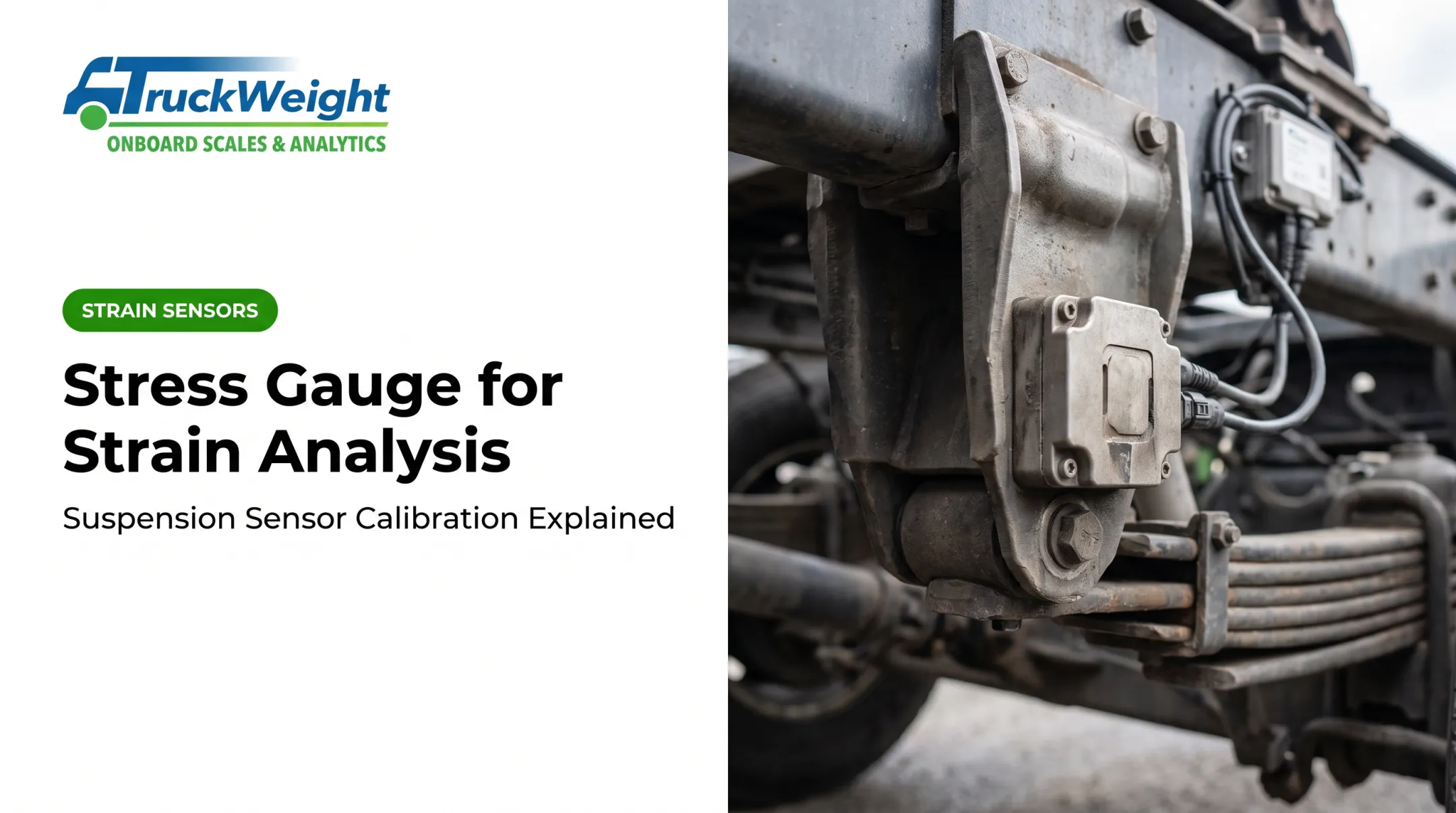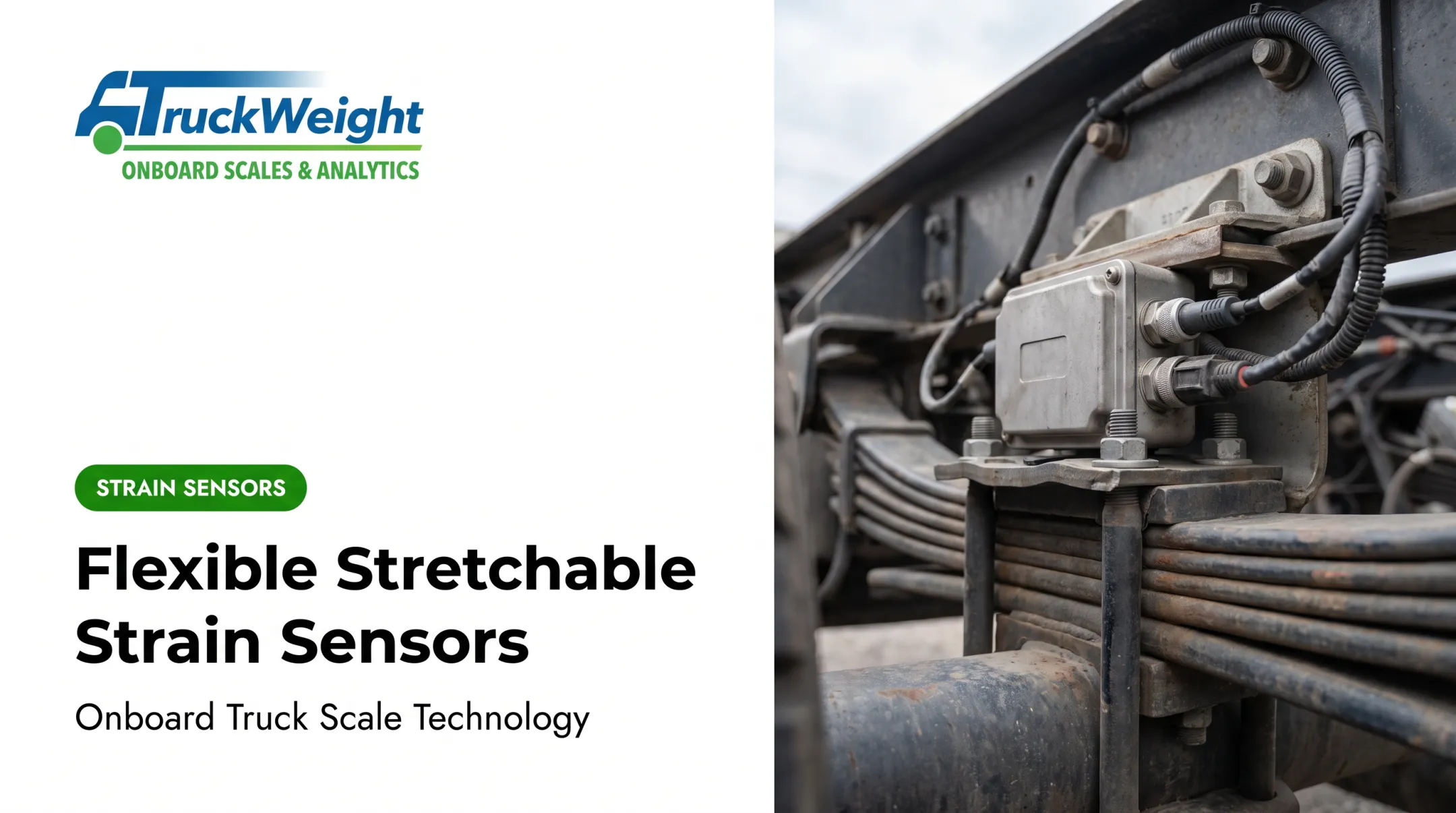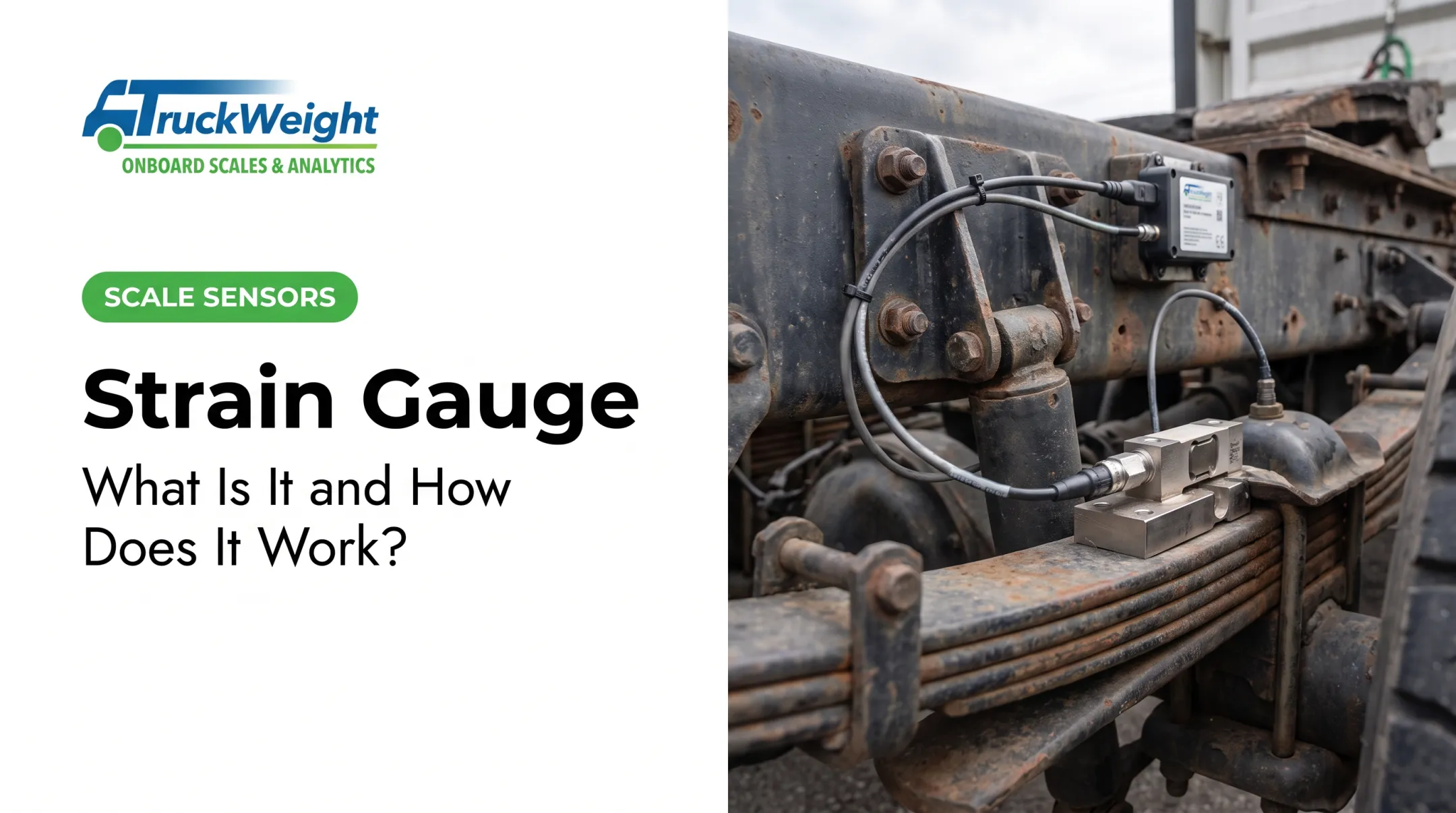

That's a foil strain gauge. It's the workhorse sensor behind most strain measurement done today, and it's been the industry standard for decades because it's cheap, reliable, and easy to install compared to alternatives like thin-film or semiconductor gauges.
This article breaks down how foil strain gauges work, the main types you'll encounter, and how to pick the right one for your application — whether that's a lab test rig or a spring suspension on a dump truck.
Key Takeaways
- Foil strain gauges convert mechanical strain into a resistance change via a bonded serpentine metal foil grid
- Low cost, simple install, and dependable performance suit them to general testing
- Types include linear, rosette, torsion/shear, and full bridge, each built for a different strain condition
- Pick by strain direction, environment, and how much complexity your application can handle
What Is a Foil Strain Gauge?
A foil strain gauge is a sensor built from a precisely manufactured metallic foil grid, arranged in a pattern and mounted on a flexible carrier or backing material. When bonded to a test surface, the gauge stretches or compresses along with the material, and that deformation changes the foil's electrical resistance in direct proportion to strain (Micro-Measurements).
A complete gauge installation includes:
- Foil grid — the resistive sensing element
- Carrier/backing — supports the grid and provides a bondable surface
- Adhesive — transfers strain from the part into the gauge without creep
- Lead wires or tabs — connect the grid to instrumentation, often copper ribbons or solder-dot terminals
- Protective coating (optional) — shields the gauge from moisture, oil, or abrasion

Foil gauges show up well beyond the lab—in structural testing, load cells, torque transducers, and vehicle-weighing systems. TruckWeight's SG-1 and SG-2 sensors, for example, use bonded strain gauge elements on spring suspensions and walking beams to measure axle load in real-world trucking conditions.
Why Are Foil Strain Gauges Important in Strain Measurement?
Strain is directly tied to stress through a material's known mechanical properties. That means unusual strain readings can flag unusual structural behavior — damage, fatigue, or overload — often before it becomes visible or catastrophic (PMC structural monitoring review, 2022).
Strain-based monitoring also sidesteps a limitation of many displacement-based systems: it doesn't require a stable reference point or unobstructed line of sight to the target. That makes it practical for embedded, long-term monitoring on bridges, buildings, and vehicles.
What goes wrong without proper strain monitoring:
- Fatigue accumulates undetected until a component fails suddenly
- Overloading goes unnoticed until it causes permanent deformation or breakage
- Maintenance becomes reactive instead of predictive, driving up repair costs
Those risks are why foil gauges show up in structural health programs. Micro-Measurements documents foil-gauge installations on bridges and buildings to compare real-world stress against analytical models, tracking strain, displacement, force, and temperature over time (Micro-Measurements structural health).
In trucking, the same logic applies at a smaller scale. Axle-mounted strain gauges let fleets catch overloading before it triggers fines or premature suspension wear.

Types of Foil Strain Gauges
Foil gauges aren't one-size-fits-all. Grid configuration determines whether a gauge captures strain in one direction, multiple directions, or a specific stress mode like shear or torsion.
Linear Strain Gauges
A linear (or uniaxial) gauge uses a single measuring grid oriented to capture strain in one direction. As the surface elongates or compresses, the grid stretches with it, changing resistance proportionally. Compared to multi-grid configurations, this is the simplest design available: one direction, one reading. Best suited for:
- General structural testing on beams, bridges, and mechanical components
- Single-direction load cell applications, including vehicle suspension and axle-weight sensing TruckWeight's SG strain gauge sensors fall into this category. They're bonded directly onto spring suspensions, walking beams, or axle surfaces to measure load in a known direction. Installation is straightforward: prep a roughly 1-inch-square area, clean with isopropyl alcohol, and bond the gauge under pre-strain while the axle hangs unloaded. Strengths:
- Low cost
- Easy installation
- Widely available Limitations:
- Can't capture multi-directional or shear strain
- Won't tell the full story once loading gets complex
Rosette Strain Gauges
Rosette gauges pack two or three measuring grids into one unit, offset at set angles (typically 90 degrees for rectangular rosettes, or 60 degrees for delta rosettes) (HBK, "What is a Strain Gauge Rosette?"). The grids read strain in different directions simultaneously, allowing engineers to calculate the full biaxial stress state. Best suited for:
- Components where stress direction isn't known in advance
- Biaxial loading on complex brackets, irregular castings, or structural joints Strengths:
- Full stress-state calculation from combined readings Limitations:
- More complex wiring and data processing
- Higher price than a single linear gauge
Torsion/Shear and Full Bridge Strain Gauges
These two types are built for specific measurements, not general use. Torsion/shear gauges use uniquely arranged grids designed to isolate shear stress, such as the stress in torsion bars and rotating shafts (Micro-Measurements shear pattern gauges). Full bridge gauges integrate four measuring grids, offset by 90 degrees, forming a complete Wheatstone bridge in a single unit. HBM's VY series is a documented example, used in tension/compression bars, torsion bars, and shear beams.
| Type | Primary use | Key advantage |
|---|---|---|
| Torsion/shear | Torque sensors, rotating shafts | Precise shear isolation |
| Full bridge | Transducers, bending beams | High signal output, built-in temperature compensation |
| Best suited for: |
- Torque sensor manufacturing
- Precision transducer production
- High-accuracy load cells Limitations:
- More expensive than linear or rosette gauges
- Harder to install
- Often needs specialized transducer design knowledge

How to Choose the Right Type of Foil Strain Gauge
Picking a gauge shouldn't come down to cost or familiarity alone. The strain condition and environment need to drive the decision. Key factors to weigh:
- Direction and complexity of strain: Is it uniaxial, biaxial, or shear? A linear gauge won't help if you don't know the stress direction in advance.
- Operating environment: Temperature swings, moisture, vibration, and chemical exposure all affect adhesive choice and gauge longevity.
- Required accuracy and stability: Long-term monitoring demands more rigorous temperature compensation than a short lab test.
- Installation complexity: Do you have the technical expertise for multi-grid wiring, or does the application call for something simpler?
- Budget versus performance: A $700 sensor system that measures the wrong thing isn't a bargain. Beyond the gauge type, sizing and calibration compatibility matter just as much. A gauge that's the wrong length for the stress concentration area, or mismatched in resistance to the readout electronics, won't deliver a trustworthy reading no matter how well it's installed. TruckWeight's onboard scale sensors show why that match matters in the field. Correct sizing and placement have to line up with the axle or suspension component:
- SG-1 for front axles
- SG-2 for spring trailers, drive axles, and walking-beam suspensions Getting the pairing wrong undermines accuracy no matter how strong the underlying gauge technology is. After install, TruckWeight recommends a quick verification: jack under the bonded section and confirm the strain reading shifts by several points before you rely on it for calibration.
Conclusion
Foil strain gauges remain a proven, cost-effective way to measure strain across industries — from bridge monitoring to torque sensors to axle-weight sensing on commercial trucks. Linear, rosette, torsion/shear, and full bridge types each solve a different measurement problem, and none of them is a universal answer.
Understanding these distinctions matters. Pick the wrong gauge type and an engineer or fleet operator can lock in inaccurate readings from day one. Pick the right one and the same setup delivers stable, usable strain data under real loads.
Frequently Asked Questions
How much does a foil strain gauge cost?
Individual foil strain gauges are relatively inexpensive, but costs vary by type, precision, and packaging. A complete sensor or load-cell system, like TruckWeight's SG-1 ($699) or SG-2 ($799), costs more once wiring, calibration, and housing are included.
How do you size a foil strain gauge?
Sizing depends on matching grid length to the stress concentration area on the component and the expected strain range. A grid that's too long across a steep strain gradient will average out the reading and lose accuracy.
How accurate are foil strain gauges?
Foil strain gauges typically deliver high accuracy under controlled conditions, though temperature swings, adhesive creep, and hysteresis can degrade results. Thin-film and silicon alternatives sometimes offer better long-term stability in extreme conditions.
What is a typical foil strain gauge?
A standard linear foil gauge has a metallic grid on an epoxy backing, with electrical resistance typically falling in the 120–1000 ohms range, depending on the manufacturer and application.
What is the difference between a foil strain gauge and a thin-film strain gauge?
Thin-film gauges are molecularly bonded to a substrate without adhesive, offering better long-term stability. Foil gauges use an adhesive-bonded backing, which costs less but introduces more variables like bond creep (TE Connectivity).
Where are foil strain gauges commonly used?
Common applications include structural testing, load cells, torque sensors, and vehicle weighing systems. TruckWeight's SG sensors, for example, measure axle load on spring and walking-beam suspensions with accuracy within 0.3–2% of gross vehicle weight.