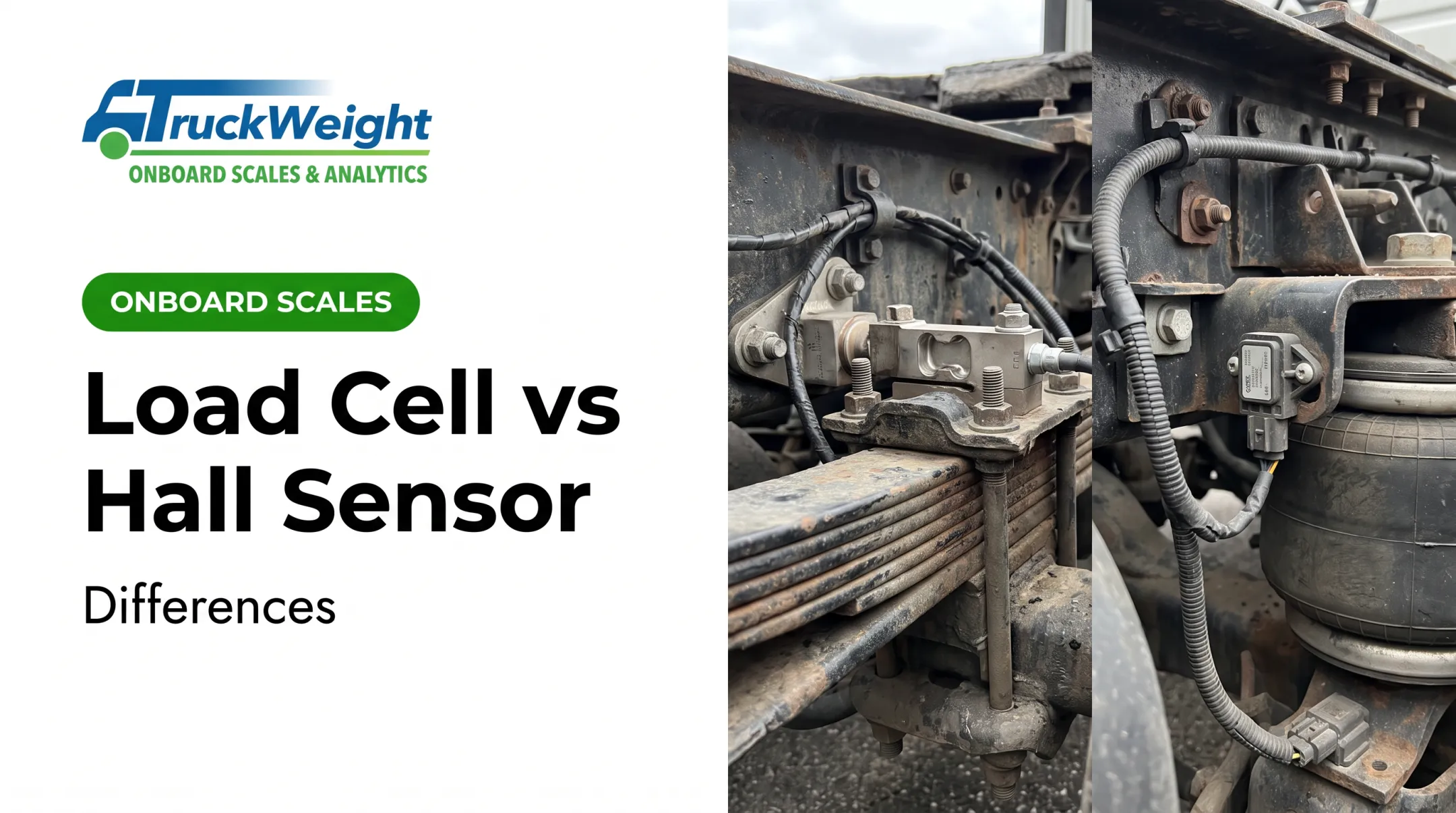

Both technologies rely on the same basic physics. But how they process and transmit that signal changes everything downstream, from how often you'll calibrate to how well the system holds up in a Nevada dust storm or a Minnesota winter.
This guide breaks down how each type works, where they differ in real-world performance, and what that means for commercial trucking and industrial weighing setups.
Key Takeaways
- Digital load cells convert strain gauge signals to binary data at the sensor, boosting accuracy and stability.
- Analog cells cost less upfront but face more interference and drift on long cable runs.
- Choose based on accuracy needs, cable length, budget, and how harsh the environment is.
- Wireless onboard systems, like TruckWeight's strain gauge and air suspension sensors, eliminate complex wiring.
What Is a Load Cell and How Does It Work?
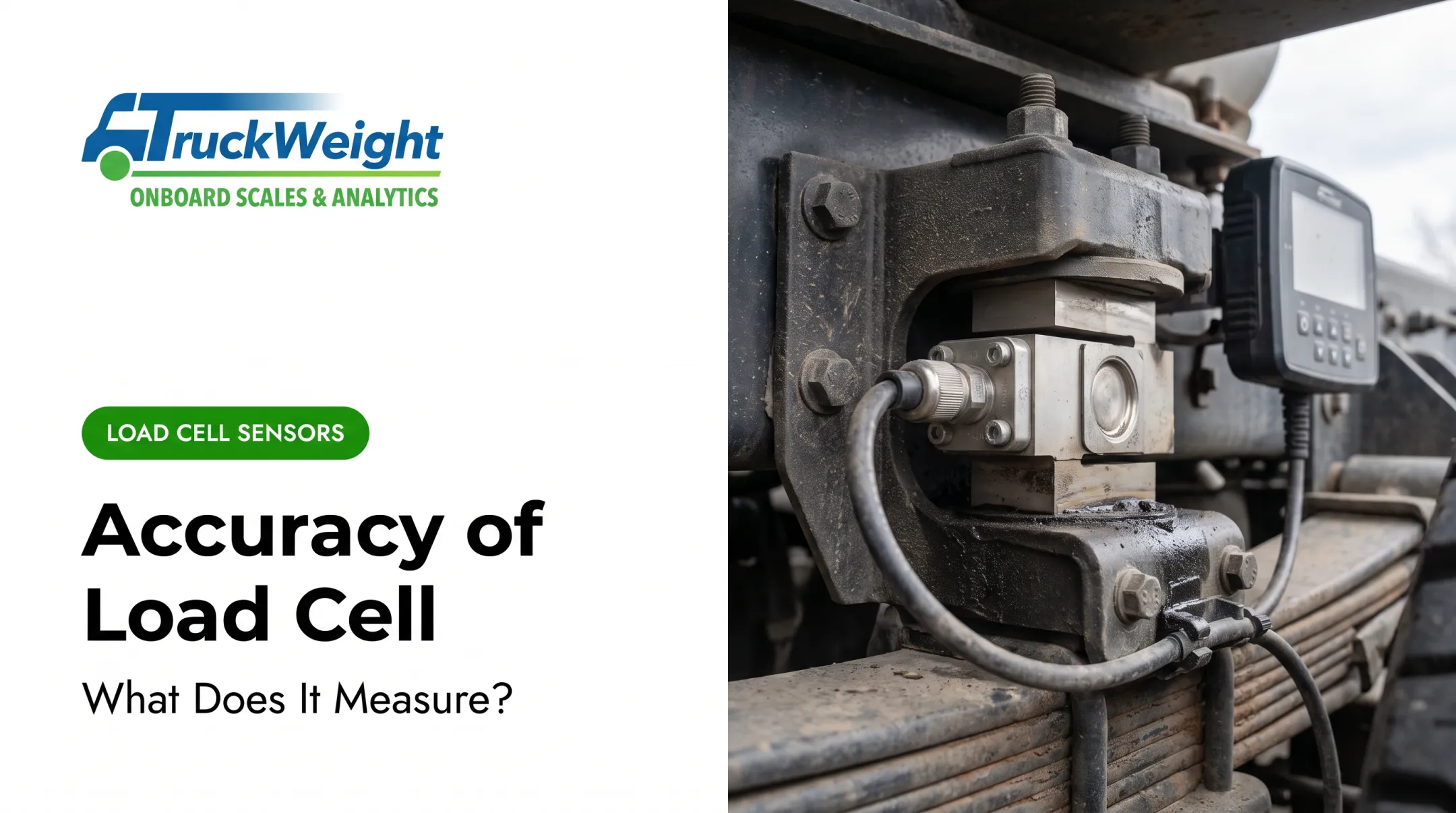
A load cell is a transducer. It takes mechanical force (weight) and turns it into an electrical signal a display or controller can read.
Most strain-gauge load cells share the same basic design: a machined metal element bonded with strain gauges arranged in a Wheatstone bridge. Here's the sequence:
- With no load applied, the bridge sits balanced and outputs zero.
- Weight compresses or stretches the element.
- Gauge resistance shifts, unbalancing the bridge.
- That imbalance produces a small millivolt signal proportional to the load.

This principle applies whether the final signal is analog or digital. The difference comes later, in how that signal gets processed and transmitted.
Other load cell types exist, including hydraulic and pneumatic designs that measure pressure changes rather than strain. They fall outside the analog-versus-digital comparison this article focuses on.
Analog Load Cells: How They Work
Analog load cells output raw voltage, typically in the millivolt range relative to excitation voltage. A common example: a cell rated at 2.0 to 3.0 mV/V running on 10 VDC excitation.
That millivolt signal is too weak for an indicator to use directly.
Signal Conditioning and Summing
Signal conditioning amplifies the millivolt output, filters electrical noise, and prepares the reading for the indicator.
In multi-cell systems, such as a truck scale with four corner cells, each cell's output also gets combined in a junction box (sometimes called a summing or trim box). The junction box sums the signals and passes one combined output to the terminal or indicator.
This setup works, but it introduces a physical weak point. Long cable runs between cells and the junction box create more opportunity for signal degradation.
Pros of analog load cells:
- Lower upfront cost
- Simpler technology with decades of field use
- Straightforward for single-cell or small applications
Cons of analog load cells:
- Susceptible to electrical noise and interference
- Signal can drift with temperature swings
- Long cable runs increase risk of degraded accuracy
- Calibration and troubleshooting require more manual work

Digital Load Cells: How They Work
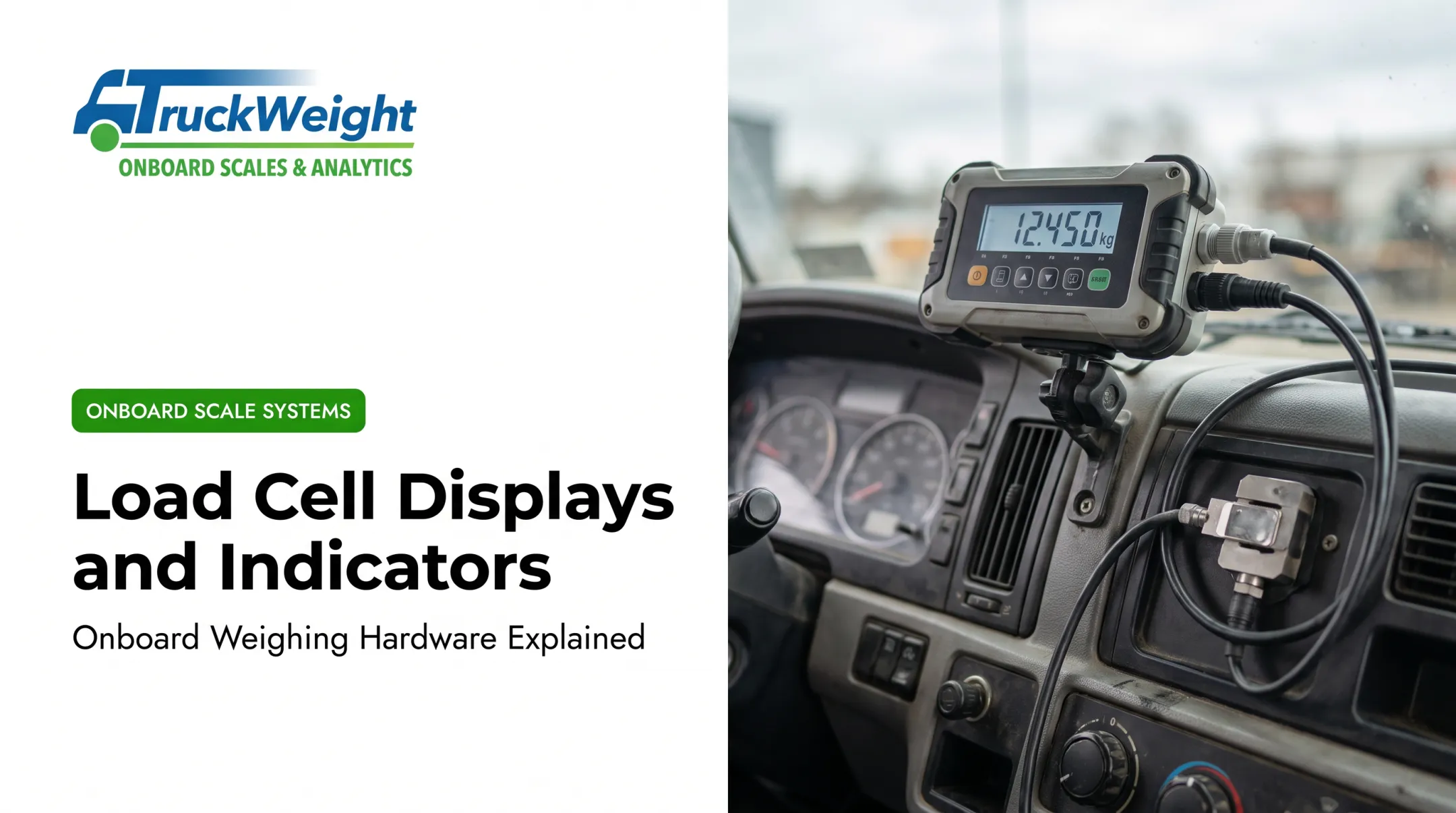
Digital load cells handle the conversion differently. Each cell has a built-in microprocessor that converts the strain signal to digital data right at the sensor, before it ever travels down a cable.
Three technical differences set digital cells apart:
- Signal strength: Digital systems often run on higher supply voltages (commonly cited around 24 VDC for excitation in industrial systems), producing a more robust signal than analog's low-millivolt output.
- Signal content: Binary data is inherently more resistant to electrical noise and interference than raw analog voltage.
- Sample rate: Digital cells can take multiple readings per second. Some industrial models are rated over 1,000 measurements per second, compared to analog's continuous but noise-prone signal.
Diagnostics and Calibration Memory
Cell-level diagnostics are a major practical advantage. Because each cell processes its own signal, the system can flag problems at the individual sensor. Overloads, out-of-range temperatures, and failing cells get identified before they throw off your whole scale.
Many digital cells also store calibration data directly on the sensor. That data can transfer with the cell, cutting down on manual recalibration time when hardware moves between systems.
Pros of digital load cells:
- Higher precision and better noise immunity
- Easier troubleshooting through cell-level diagnostics
- Longer service life in demanding conditions
- Reduced calibration overhead
The tradeoff: digital systems typically cost more upfront. That said, fewer service calls and less downtime often even out the total cost of ownership over the equipment's life.

Analog vs. Digital Load Cells: Key Comparison
| Factor | Analog | Digital |
|---|---|---|
| Accuracy | Strong for standard jobs; quality models keep combined error low | Finer accuracy classes and lower ppm error on premium models |
| Upfront cost | Lower | Higher |
| Maintenance | Manual calibration and troubleshooting | Onboard diagnostics and stored calibration cut manual work |
| Environmental resilience | More exposed to noise, moisture, and long-cable signal loss | Stronger noise immunity; many units rated IP68/IP69K |
| Typical use case | Controlled environments and budget-first installs | Harsh duty: trucking, construction, mining |
Quick pick:
- Choose digital when vibration, temperature swings, washdown, or long cable runs are routine—common in commercial trucking, aggregate hauling, and mining.
- Choose analog for simpler, controlled-environment setups where upfront cost matters more than cell-level diagnostics.
Hybrid analog-to-digital cells sit in between: they sense force in analog, then convert to digital inside the housing. That design improves signal integrity over pure analog runs, but it is not a full digital architecture end to end.

Choosing the Right Load Cell Technology for Your Fleet
For commercial trucking, construction, aggregate, and refuse fleets, the analog-vs-digital debate often takes a backseat to a bigger question: wired or wireless?
Traditional load cell setups, whether analog or digital, usually mean running cables to junction boxes and indicators. That's a lot of wiring to protect against vibration, moisture, and wear on a working truck.
Wireless onboard systems sidestep that complexity. TruckWeight's approach uses two sensor types depending on your suspension:
- SG-1 and SG-2 strain gauge sensors ($699 / $799): Built for mechanical and spring suspensions
- Coverage: SG-1 for front-axle weighing; SG-2 for spring trailers, drive axles, walking-beam, and Chalmers systems
- Patented air suspension sensors ($499): Axle and GVW from temperature and pressure, 0.3% to 1% accuracy in all weather
Mixed fleets aren't a problem either. An air-ride tractor pulling a spring-suspension trailer, for example, can pair an air sensor on the tractor with an SG-2 on the trailer.
Why Wireless Matters for Installation
Traditional load cell installs often require a specialist. TruckWeight's systems are built for self-installation:
- Sensors transmit directly to a wireless handheld receiver, up to 500 feet for the air sensor
- Installation requires only a regular toolkit, no specialized expertise
- Kits include instructional videos and detailed manuals
- Setup typically takes minutes for the sensor unit itself
That matters when you're trying to get a truck back on the road, not waiting days for a technician.
Matching the System to Your Environment
Before picking a load cell technology, weigh three things:
- Application type – Is this a spring suspension, air-ride, or mixed fleet?
- Budget – Upfront hardware cost versus long-term maintenance savings
- Operating conditions – Temperature extremes, moisture exposure, vibration frequency
Steel, asphalt, and aggregate fleets see harsher vibration, moisture, and temperature swing than lighter duty cycles. Use those three factors to match sensors to the suspension and route—then choose wired analog, wired digital, or wireless once cable complexity and noise risk are clear.
Frequently Asked Questions
What is the difference between an analog and a digital load cell?
Digital cells convert the strain signal to binary data right at the sensor, producing a stronger, cleaner signal. Analog cells output raw voltage that needs external conditioning through a junction box.
How much does a 1,000 lb load cell cost?
Pricing varies widely by brand, accuracy class, and analog versus digital design, with some standard analog models listed around $500. Contact a supplier directly for an application-specific quote.
What are the four types of load cells?
The main categories are compression, tension, bending, and shear beam, classified by how they detect applied force. Manufacturers also offer variations like canister, rocker, and S-beam designs.
Which is more accurate, analog or digital load cells?
Digital cells generally offer higher accuracy because their signal resists electrical interference better than analog's low-voltage output. Final accuracy still depends on the specific model and accuracy class.
Do digital load cells require less maintenance than analog?
Often, yes. Digital cells need less manual calibration and include built-in diagnostics that flag issues before they cause bigger problems.
Are digital load cells worth the extra cost for trucking fleets?
For fleets focused on compliance and uptime, often yes. Improved accuracy and reduced downtime tend to offset the higher initial investment over the equipment's working life.