
Tip-overs remain one of the most serious hazards in construction, mining, and hauling. NIOSH reports 809 construction and extraction worker deaths tied to dump truck injuries between 2011 and 2020, spanning tip-overs, struck-by incidents, and crushing hazards (NIOSH). Understanding what actually causes these rollovers is the first step toward stopping them. Ignoring root causes doesn't just risk lives — it leads to citations, insurance hikes, and project delays.
This article breaks down the primary causes behind dump truck tip-overs and what fleets can do to address them before they become accidents.
Key Takeaways
- Uneven ground, overloading, poor material flow, and mechanical failures drive most tip-overs
- A raised bed dramatically shifts the truck's center of gravity, amplifying any instability
- Warning signs like tilting, sticking material, or odd noises should never be ignored
- Prevention blends site checks, load discipline, maintenance, and onboard weight monitoring
- Catching causes early cuts accidents, fines, and downtime
Common Causes of Dump Truck Tip-Overs
A tip-over happens when the raised bed and its load push the truck's center of gravity outside its stable base, causing it to roll. Most tip-overs involve a mix of site conditions, load characteristics, and equipment issues stacking up at the wrong moment.

Cause 1: Uneven or Sloped Ground
Dumping on a slope or unlevel surface shifts weight to one side as the bed rises. If you're not dumping with the slope, that shift compounds fast.
Common scenario: A crew dumps fill on a rough-graded area or road shoulder, assuming the ground is level because it looks flat. It isn't, and the bed's weight finds the low side immediately.
Cause 2: Overloading and Uneven Weight Distribution
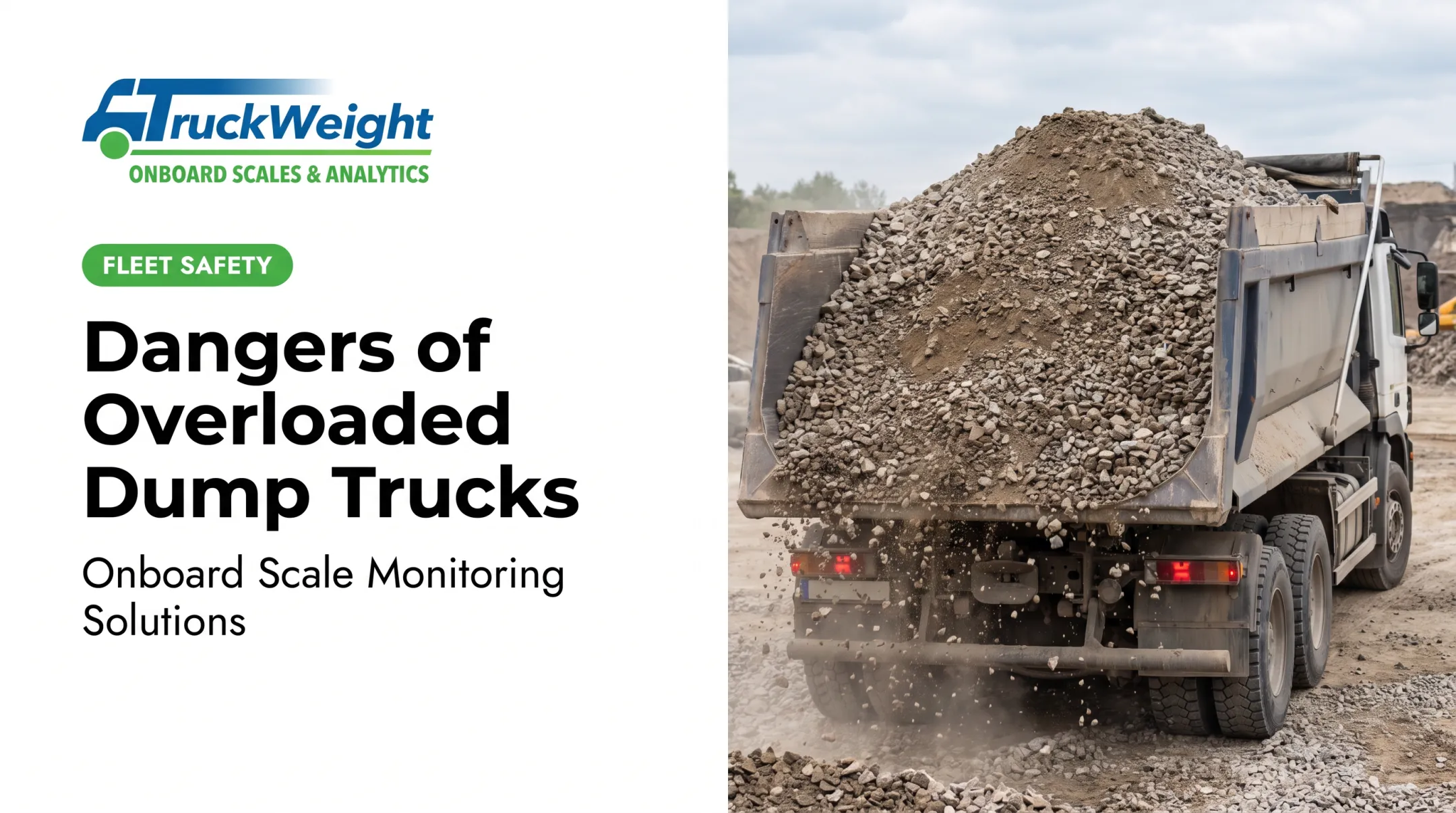
Exceeding rated payload or loading material unevenly — front-to-back or side-to-side — raises tip-over risk and stresses the frame itself. Operators loading quickly from a loader often can't tell if the load is balanced until the bed is already rising.
Common scenario: A loader fills the box fast from one side. The bed looks full, but one axle group is heavy and the opposite side is light—something the driver only discovers once the hoist is up.
Onboard scales close that gap before the dump starts. TruckWeight's wireless axle-weight monitoring lets drivers read axle-group and gross weight from the cab, for example:
- Front axle: 10,500 lb
- Drive axles: 11,850 lb
- Trailer axles: 11,900 lb
- Total gross weight: 34,250 lb
Calibrated systems typically land in the 0.3%–2% accuracy range, so operators can correct balance before raising the bed.
Cause 3: Poor Material Flow or Sticky/Frozen Loads
Clay, wet sand, or frozen material doesn't flow evenly out of the box. Weight stays concentrated up high in the bed, and the truck becomes unstable mid-dump.
Common scenario: Cold-weather hauling where material freezes to the bed overnight, then releases in one uneven chunk instead of a steady flow.
Cause 4: Mechanical or Equipment Failures
Faulty hoist cylinders, worn bushings, uneven tire pressure, or a stuck tailgate can all trigger sudden, unexpected weight shifts. A 2022 trade review notes that a failed tailgate can cause material to pile up rearward and lift the front of the truck mid-dump (Construction Equipment).
Common scenario: A tailgate fails to unlock. Material backs up at the rear, the front lifts, and the truck loses its stable footing.
Cause 5: Environmental Factors Like Wind
A raised, elongated dump bed acts like a sail. High winds push it sideways, destabilizing a load that's already sitting at its most vulnerable position. NIOSH specifically flags high winds as a condition warranting a stop-and-reassess decision, though no universal wind-speed cutoff exists (NIOSH).
Common scenario: Dumping continues through a storm advisory on an open job site because the crew wants to stay on schedule.
What Happens If Tip-Over Causes Are Ignored
The consequences go beyond a damaged truck. OSHA's accident records include a 2022 case where an operator backed a dump truck near a sloped surface; the vehicle rolled backward during unloading, overturned, and crushed the operator (OSHA).
Ground workers face separate exposure during dump operations. A Washington FACE investigation documented a fatality and a serious injury when a dump truck backed over two workers standing nearby. The same proximity risk applies in a tip-over: anyone in the fall zone can be crushed, so prevention and worker-separation planning belong together.
Beyond injury and death, ignoring these causes means:
- Equipment damage and extended repair downtime
- Project delays that ripple through schedules
- Regulatory citations and fines
- Rising insurance premiums after repeat incidents

Warning Signs of an Impending Tip-Over
Early detection can stop a full rollover before it happens. Watch for:
- Cab tilt or instability as the bed rises
- Uneven material flow, or material stuck to one side of the box
- Unusual noises, slow hydraulics, or ground shifting under the wheels
Any one of these is a reason to stop the dump immediately, not push through it.
How to Prevent Dump Truck Tip-Overs
Prevention combines site checks, load discipline, maintenance, and technology. No single step is enough on its own.
Prevention Measure 1: Assess and Confirm Ground Conditions
Inspect the dump site for level, compacted ground before positioning the truck. This directly blocks the uneven-ground cause by keeping the frame level as the bed rises. Do this before every dump, not just once at shift start.
Prevention Measure 2: Manage and Verify Load Weight and Balance
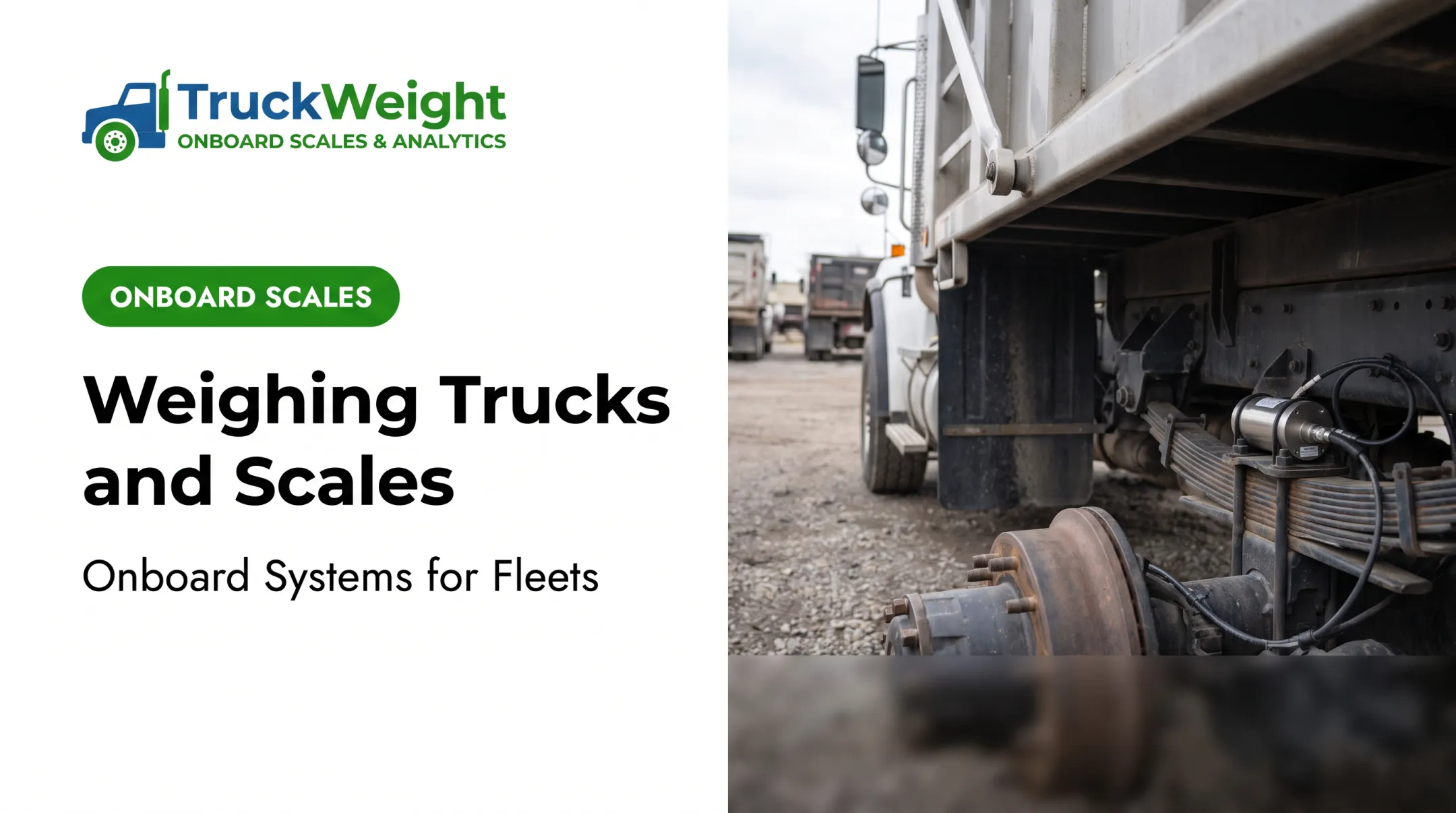
Load material evenly and stay within rated axle and gross weight limits. Onboard scale systems like TruckWeight let operators check axle-group and gross weight from the cab with the touch of a button, before ever heading to the dump site.
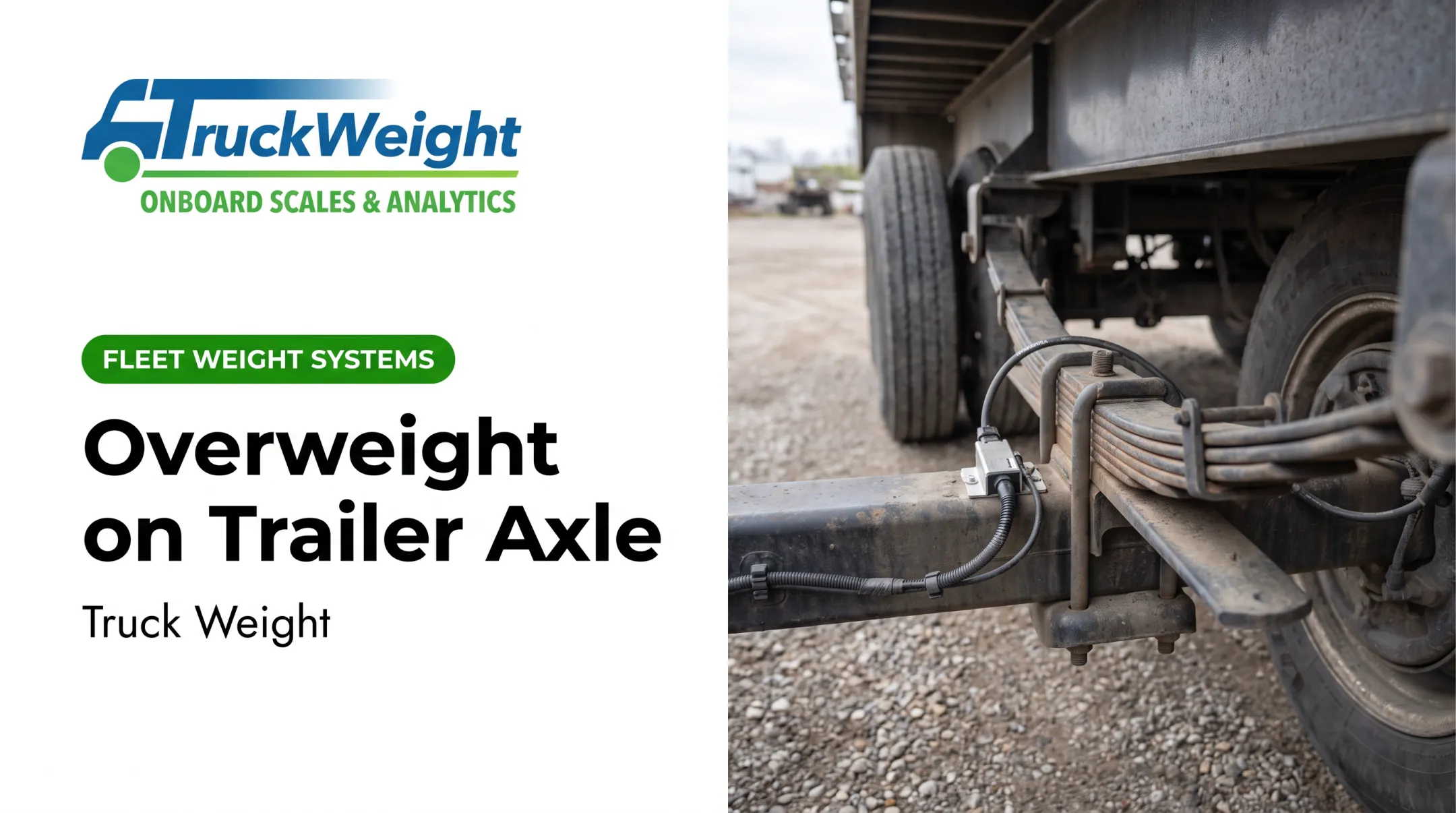
Installation is straightforward. TruckWeight sensors mount to air or mechanical suspensions and install in minutes with a standard toolkit:
- Walking-beam or Chalmers setups: SG-2 on the drives, SG-1 on the front axle
- Air-ride trucks: dedicated air suspension sensor
Operators get real axle and gross weights before the bed comes up, so load decisions are based on numbers instead of guesswork.
Prevention Measure 3: Choose the Right Truck Type and Lighten Poor-Flowing Loads
Belly-dump or articulated haulers handle rough terrain better than high-risk end-dump units in many situations. When hauling sticky or poor-flowing material, reduce load size to avoid a large concentrated mass building up in the upper box. Build this into job planning and truck assignment, not as an afterthought once material's already loaded.
Prevention Measure 4: Maintain Equipment and Clear the Dump Zone
Treat equipment checks and zone clearance as a daily pre-operation checklist, then confirm again before every dump:
- Inspect hoist cylinders, tailgate latches, tires, and suspension components
- Confirm no personnel or vehicles are near the truck before dumping begins
- Catch mechanical issues early and limit injury risk if instability still occurs

Tips for Long-Term Prevention and Control
Beyond daily checks, fleets that consistently avoid tip-overs share these habits:
- Run routine, documented equipment inspections for hoists, tires, and tailgates
- Provide ongoing operator training on tilt-hazard awareness and safe dumping procedures
- Keep records of load weights, inspections, and incidents to spot recurring risk patterns
- Use fleet-wide analytics, such as TruckWeight Analytics, to track payload trends, flag overweight events, and keep auditable compliance records
That last point matters for fleets running multiple trucks across sites. Real-time weight data at the cab level catches individual load problems; fleet-wide analytics catches repeat overload and dump-risk patterns before they become habits.
Conclusion
Dump truck tip-overs stem from identifiable, preventable causes: ground conditions, load imbalance, poor material flow, mechanical failure, and wind. Each leaves warning signs before failure, and each responds to specific controls.
Pair solid operating habits with pre-lift checks and real-time weight visibility so axle loads stay balanced before the bed goes up. That mix cuts tip-over risk, protects crews, and limits downtime that knocks jobs off schedule.
Frequently Asked Questions
What are common causes of dump truck tip-overs?
Uneven or sloped ground, overloading and uneven load distribution, poor material flow, mechanical failures, and high winds are the leading causes.
What is the main hazard point during dump truck operation?
The highest risk occurs when a fully loaded bed is raised. That's when the center of gravity sits at its most unstable point.
Can overloading really cause a tip-over?
Yes. Overloading and uneven weight distribution stress the frame and shift the center of gravity. Real-time weight monitoring helps operators catch imbalance before dumping, not after.
How can drivers tell a tip-over is about to happen?
Watch for cab tilting, uneven material flow, sticking loads, or unusual hydraulic behavior during lifting. Any of these should stop the dump immediately.
Are certain dump truck types more prone to tipping?
End-dump semitrailers generally carry more tip-over risk than belly-dump or articulated haulers, especially on rough terrain, though truck choice should always match the specific site and material.
What role does maintenance play in tip-over prevention?
Regular inspection of hoist cylinders, tailgates, and tires prevents mechanical failures that can trigger sudden, unexpected weight shifts during a dump.