
This isn't a task for general maintenance crews. Structural and legal-for-trade requirements mean certified scale technicians and licensed contractors need to be involved from day one. Get it wrong, and you're looking at inaccurate weighments, damaged load cells, cracked foundations, or a failed legal-for-trade inspection.
This guide walks through the correct installation sequence, from site prep to calibration, so you know what to expect and what to demand from your contractors.
Key Takeaways
- Installation spans several weeks: site prep, foundation curing, scale placement, wiring, calibration
- Only certified technicians and licensed contractors should touch structural or electrical work
- Drainage, soil bearing capacity, and NIST Handbook 44 compliance are non-negotiable
- Skipping calibration or cure time causes inaccurate readings and legal-for-trade violations
- Onboard wireless scales deliver axle and GVW data without foundation work when a full pit install isn’t practical
Installation Guide for a Truck Scale
The process moves through six broad phases: site preparation, foundation pouring, scale placement, load cell installation, wiring and peripherals, and calibration. This section covers how long that work usually takes, who has to show up, and what you must confirm before anyone pours concrete.
According to an American Scale installation guide, a steel-deck scale plus foundation takes roughly 7 days, while a concrete-deck scale plus foundation runs closer to 3 weeks. Reusing an existing foundation can cut install time to about a day.
A real-world example: Advance Scale installed a truck scale in Pennsylvania within 3 weeks, using a 70 ft x 11 ft concrete pier, and it passed Pennsylvania Weights and Measures on the first try.
Expect coordination between three parties:
- Your scale dealer (design, load cells, indicator)
- A crane operator (deck placement)
- A concrete contractor (foundation and approaches)

Prerequisites and Safety Considerations
Before any concrete gets poured, you need to clear several requirements.
Soil and drainage:
- Confirm soil bearing capacity meets your scale manufacturer's spec (some designs call for 3,000-4,000 psf minimum)
- Grade the site so water drains away from the foundation, not toward it
- Verify vehicle turning radius and approach clearance
Utility survey:
- Call 811 (or your state's one-call center) before excavation; 811 guidance and many states require at least 2–3 business days' notice
- Check for overhead power lines that could interfere with crane operations
Compatibility checks:
- Match scale capacity, deck length, and foundation type to your actual vehicle mix and traffic volume
- Confirm the design accounts for peak load and future truck types, not just today's fleet
Compliance non-negotiables:
- Research your state's Weights and Measures regulations
- Confirm approach specs meet NIST Handbook 44 Section 2.20
- Don't break ground without a completed site survey, confirmed permits, and an engineered foundation plan
Tools, Equipment, and Parts Required
A typical installation crew arrives with:
- Crane or boom truck for deck placement
- Load cells, baseplates, and junction boxes
- Conduit for load cell cabling
- A certified test-weight truck for calibration
Temporary locating pins help align the scale deck during placement. They come out once the deck is set and are not part of the finished scale.

Remote displays, printers, and intercoms are optional and depend on how your yard runs day to day.
How to Install a Truck Scale (Step-by-Step)
Installation follows a strict order. If you pour concrete before load cells are seated, you can end up with cracking or misalignment that is expensive to fix.
Before you start, confirm the foundation design, approach dimensions, and drainage plan match the scale manufacturer’s drawings and your state’s weights-and-measures rules.
- Site preparation — Clear, excavate, and grade the area. Build in drainage slope and leave room for future expansion (a second scale or scale house).
- Foundation and approach construction — Pour your chosen foundation type. Industry guidance on the floating/beam slab describes one continuous concrete pour across the full weighbridge length. Approaches must be built to NIST spec — width at least matching the platform, length at least half the platform length.
- Baseplate and wiring prep — Position baseplates and run load cell conduit before the scale deck arrives. This step gets skipped or rushed more than any other, and it's the one that causes wiring headaches later.
- Scale deck placement and alignment — A crane lowers deck modules into position. Locating pins ensure a precise fit. A typical OEM installation manual places deck modules on setting blocks before load cell mounts go into their pockets.
- Load cell installation and wiring — Seat and wire each load cell, then run home-run cables (the main runs from the scale to the instrument) to the junction box and indicator. A junction box (sometimes called a summing box) combines signals from multiple load cells into one scale reading.
- Final deck pour and peripherals — Pour and cure the concrete deck (if applicable). Connect remote displays, printers, or kiosks once the deck is set. After the deck and peripherals are in place, foundation quality still decides whether the scale stays accurate. NIST Handbook 44 and state rules—for example Minnesota’s vehicle and livestock scale requirements—expect the foundation to carry maximum load without significant settling or cracking, and outdoor pits need effective drainage. Common skip points that cause callbacks:
- Rushing conduit and baseplate layout before the deck arrives
- Approaches that are too short or too narrow for NIST geometry
- Load cells seated before concrete work is fully sequenced and cured

Post-Installation Checks and Validation
Once concrete cures, the scale needs a full electrical and diagnostic check before it touches a single load. Once concrete cures, run a full electrical and diagnostic check before the scale takes any load. Verify load-cell cable continuity, junction-box connections, and indicator communication, then move to calibration.
Calibration process:
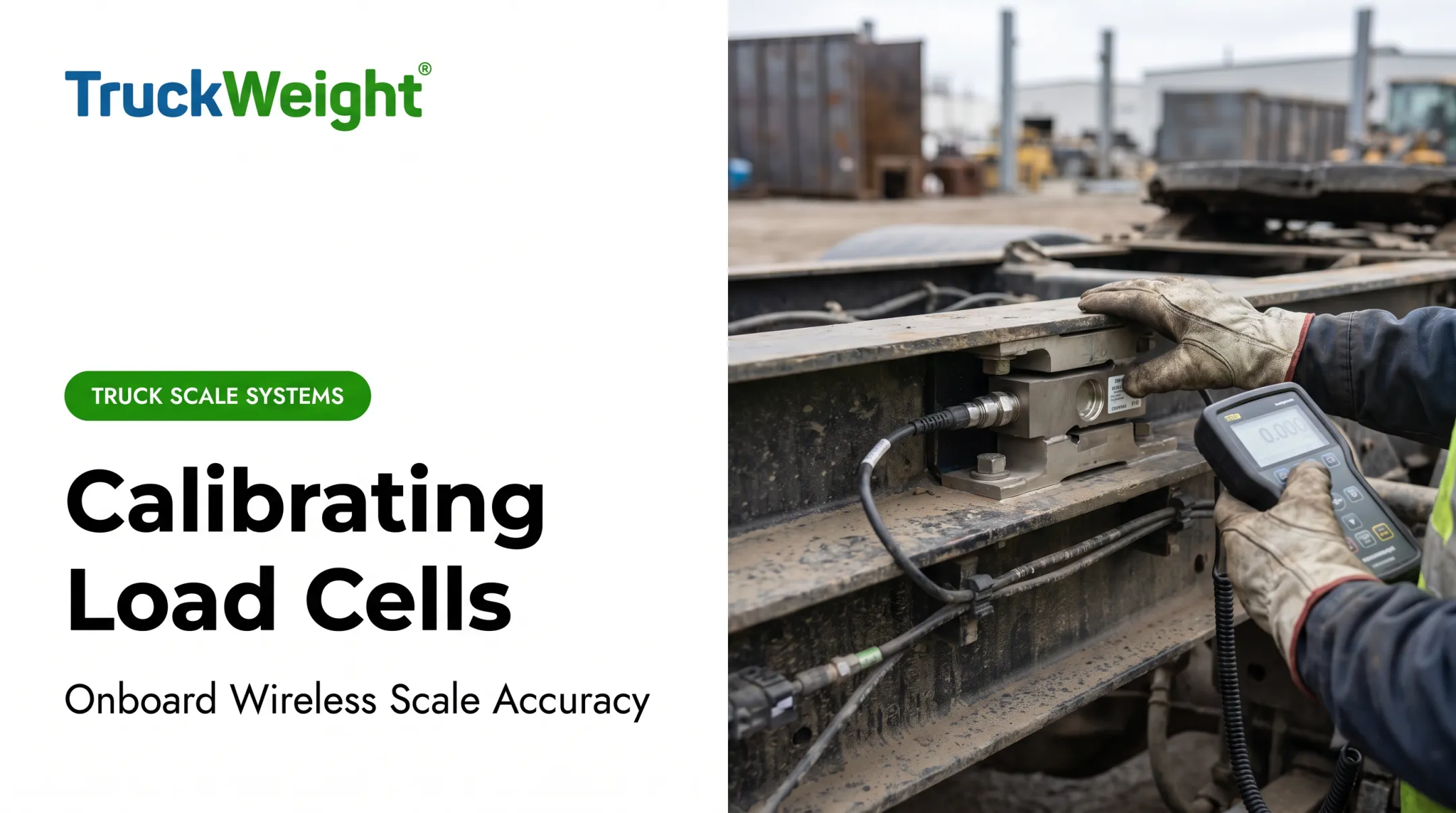
- Certified technicians place known test weights over each load cell section
- Run a NIST shift test using at least 12.5% of capacity
- Use a test load about 4 ft long and 10 ft wide (or platform width, whichever is narrower)
Document calibration results in a scale test report that confirms legal-for-trade approval. Keep it on file for inspections and warranty claims.

Don't rush cure time. Loading the scale before it fully cures—or skipping validation—creates inaccuracies that often stay hidden for weeks, after you're already trusting the readings.
Common Installation Problems and Fixes
Most post-installation headaches trace back to three things: foundation, drainage, or wiring.
Issue 1: Inaccurate or Inconsistent Weight Readings
Problem: The scale shows drifting or inconsistent weights.
Likely cause: Load cell misalignment, moisture intrusion, or improper wiring at the junction box. Mettler Toledo notes that moisture ingress can degrade exposed load cell wiring over time.
Fix: Have a technician recheck baseplate alignment and junction box connections, then recalibrate.
Issue 2: Foundation Cracking or Settling
Problem: Visible cracks or uneven settling near the approach or deck edges.
Likely cause: Poor drainage, weak soil compaction, or a foundation undersized for local loads and frost conditions.
Fix: Address drainage grading first. Then bring in a structural engineer to assess and repair the foundation before putting the scale back into service.
Issue 3: Failed Legal-for-Trade Inspection
Problem: The state weights and measures inspector rejects certification.
Likely cause: Approach slope or dimensions don't meet NIST Handbook 44 requirements.
Fix: Rebuild the non-compliant approach section and retest against Handbook 44 specs before scheduling reinspection.
Pro Tips for Installing a Truck Scale Effectively
- Bring your scale supplier in during site selection, not after the concrete is poured. Retrofitting a foundation after a bad location choice is far more expensive than getting it right the first time.
- Plan for growth now. If you might add a second scale or scale house down the road, lay out the site with that in mind today.
- Document every calibration test report and keep it on file for inspections and warranty claims.
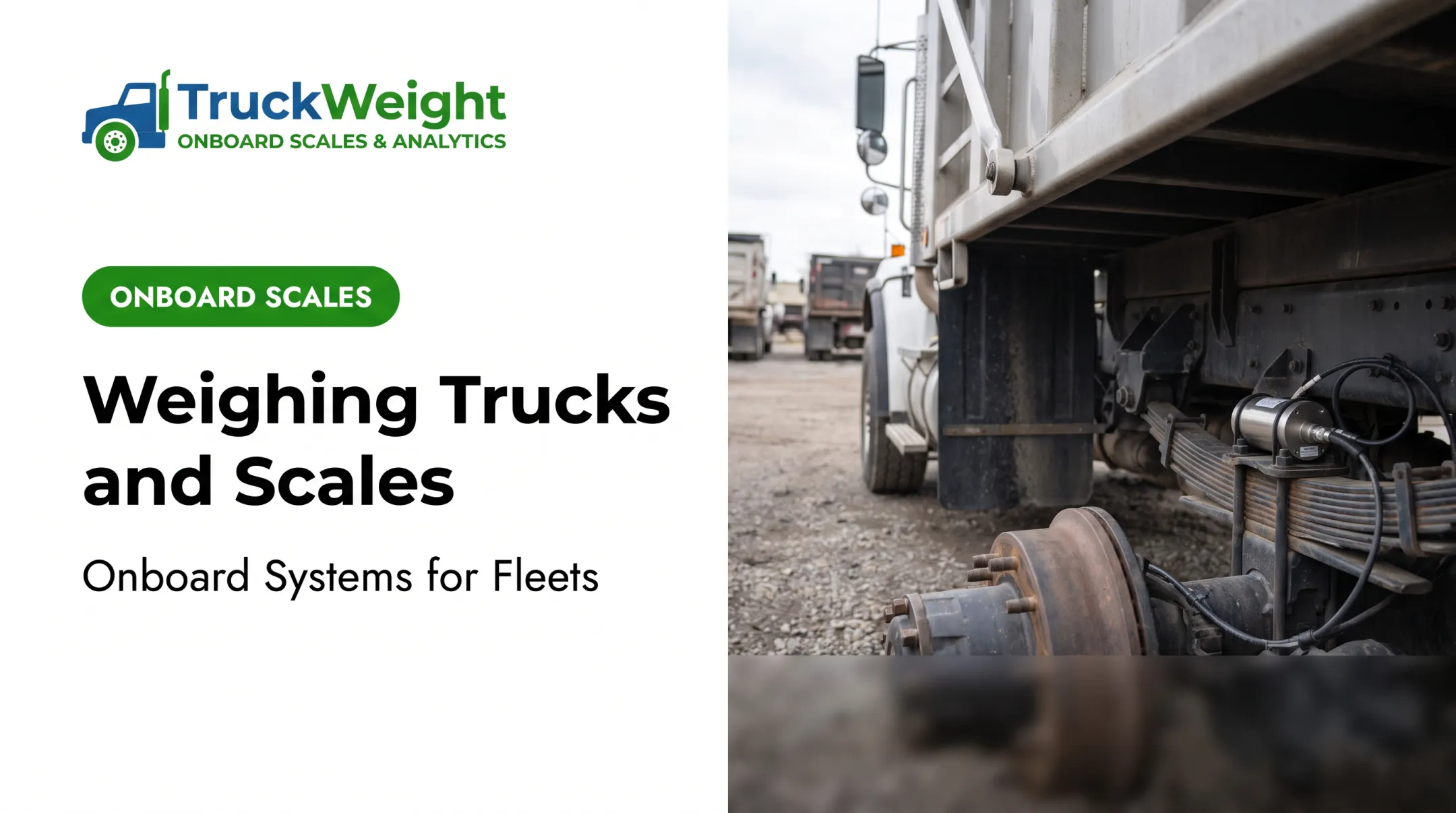
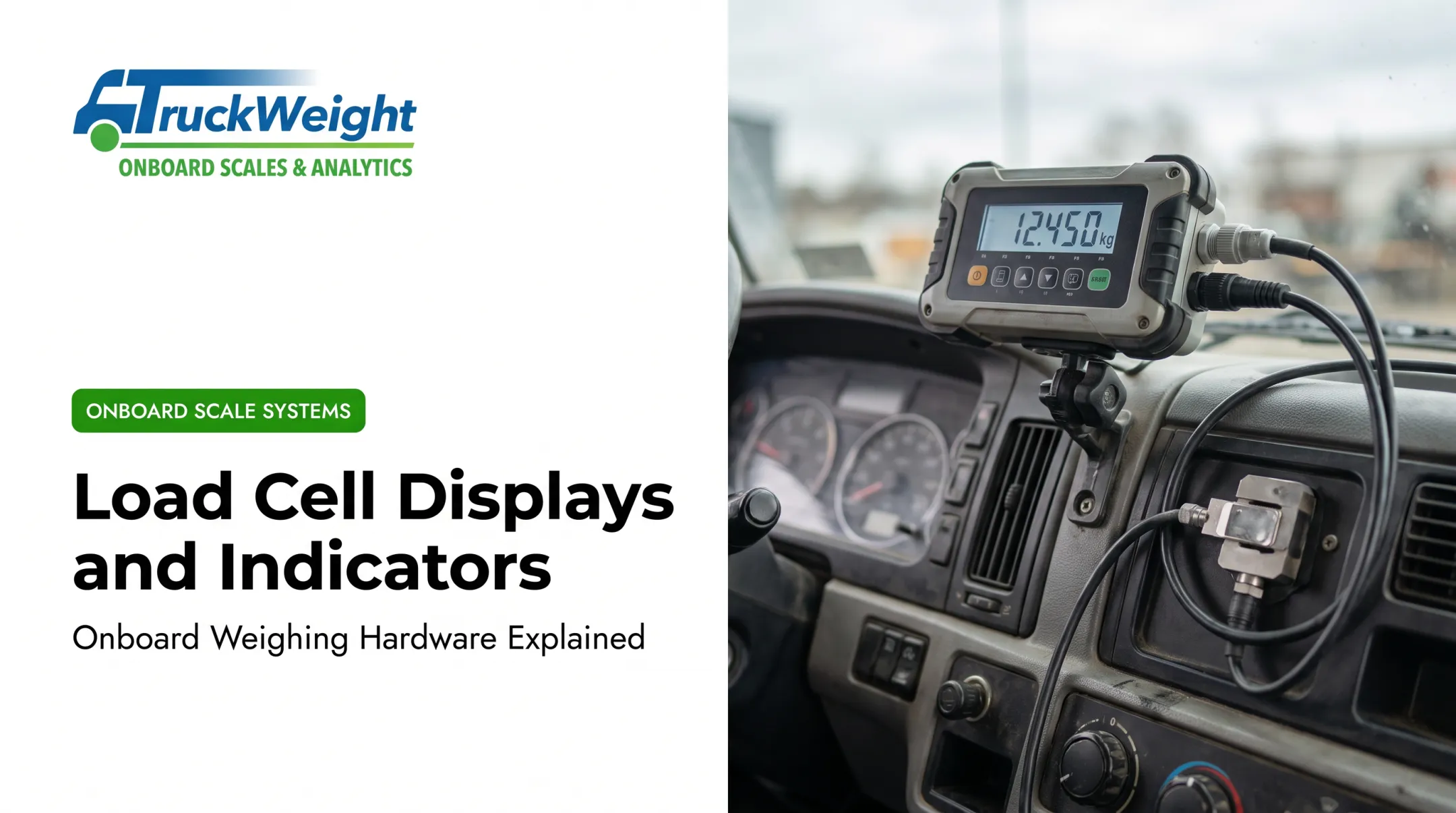
- Consider onboard wireless scales as a complement. TruckWeight sensors give drivers real-time axle-group, gross, and net weights from the cab (stated accuracy around 0.3%–2% of GVW) on air-ride and mechanical/spring suspensions.
- Use fleet analytics to cut extra scale trips. TruckWeight Analytics adds remote calibration and overweight alerts so you can skip unnecessary runs to a fixed scale after installation.
Conclusion
The quality of your installation determines the scale's long-term accuracy, safety, and compliance status. A rushed foundation pour or skipped calibration step doesn't just cost you money later; it can shut down operations entirely if an inspector rejects your certification.
Plan the site thoroughly, work only with certified technicians and licensed contractors, and never skip calibration or cure-time validation. The weeks you invest upfront save you far more downstream.
Frequently Asked Questions
What does a truck scale cost?
Cost varies based on scale length, foundation type (pit vs. above-ground), site prep needs, and legal-for-trade requirements. Get a site-specific quote from your scale dealer rather than relying on generic estimates.
How long does it take to install a truck scale?
Installation typically spans several weeks, including foundation curing time. Steel-deck scales can be faster (around a week), while concrete-deck installations often take closer to three weeks.
Do I need a permit to install a truck scale?
Most jurisdictions require zoning, construction, and electrical permits. Legal-for-trade scales additionally need approval from your state's Weights and Measures authority before commercial use.
What is the difference between a pit-mounted and above-ground truck scale?
Pit-mounted scales sit flush with grade but cost more to install due to reinforced walls, floors, and drainage requirements. Above-ground scales use ramps and are generally simpler and faster to build.
Can I install a truck scale myself?
No. Structural and load cell work must be done by certified technicians due to precision alignment needs and legal-for-trade certification requirements.
How often does a truck scale need to be recalibrated after installation?
Calibration frequency depends on usage volume and state regulations. Annual inspection and certification is common for legal-for-trade scales, but check your state's specific schedule.