
Caterpillar's own guidance recommends no more than 10% of loads exceed 110% of target payload, and none should ever top 120% — because the structural damage, fuel penalties, and tire wear from overloading are well documented. Underloading carries its own cost: one Komatsu case study found a coal mine running trucks 13% underloaded, quietly bleeding productivity every shift.
Mining truck scales solve this by giving operators real-time payload data, on-road or off. This guide breaks down the scale types available, what makes onboard systems different, and how to choose the right setup for a mining fleet.
Key Takeaways
- Onboard wireless scales show axle, gross, and net weight in the cab — no detour to an external scale required
- Overloading damages tires, suspension, and frames; underloading wastes fuel and adds unnecessary trips
- Rugged, wireless systems handle the dust, vibration, and remote terrain typical of mine sites
- Accuracy varies by scale type, so choose technology that fits payload goals and compliance needs
What Are Mining Truck Scales and Why Do Mining Fleets Need Them
Mining truck scales are weighing systems built to measure haul truck payloads in conditions that would wreck standard equipment: dust, extreme temperature swings, constant vibration, and rough, unpaved terrain far from any highway.
Why Weighing Matters in Mining Operations
Unmeasured payloads cut both ways. Caterpillar's research notes that overloading causes structural damage, higher fuel consumption, and reduced component and tire life. Meanwhile, underloaded trucks leave capacity on the table every single trip.
A 2016 study in the International Journal of Mining Science and Technology found that payload variance in surface-mine haul trucks has non-linear relationships with production, fuel consumption, and emissions — meaning inconsistent loading doesn't just cost a little, it compounds.
Underloading is often the sneakier problem. A Komatsu case study at an African gold mine found trucks running 20% underloaded on average. After six months of active payload monitoring, results included:
- Loading efficiency up from 61 to 77 tons per truck
- Monthly ore throughput up 46%
- Clear proof that consistent payload data pays off in tons moved

At most mine sites, there's no scale down the road. Getting an accurate weight often means a real detour, burning fuel and shift time just to confirm what a truck should already know.
Core Business Benefits
- Confirm every load hits target without guesswork
- Cut out-of-route miles by skipping detours to external scales
- Document weight data for internal audits and compliance checks
- Move more tons per shift with fewer wasted trips and less equipment wear
Types of Truck Scales Used in Mining
Mining operations generally choose from three approaches, depending on site layout and how mobile the operation needs to be.
Weighbridge and Portable Scales
Static weighbridges are fixed, high-capacity scales usually installed at a gatehouse or dispatch point. They're accurate but require every truck to stop and detour, a real cost on sites where haul roads already stretch for miles.
Portable pad scales offer more flexibility. These relocatable units suit temporary pits or sites that shift over time. NIST classifies them as wheel-load or portable axle-load weighers. They're useful for spot checks, but generally built for occasional use rather than continuous fleet monitoring.
Onboard Wireless Vehicle Scales
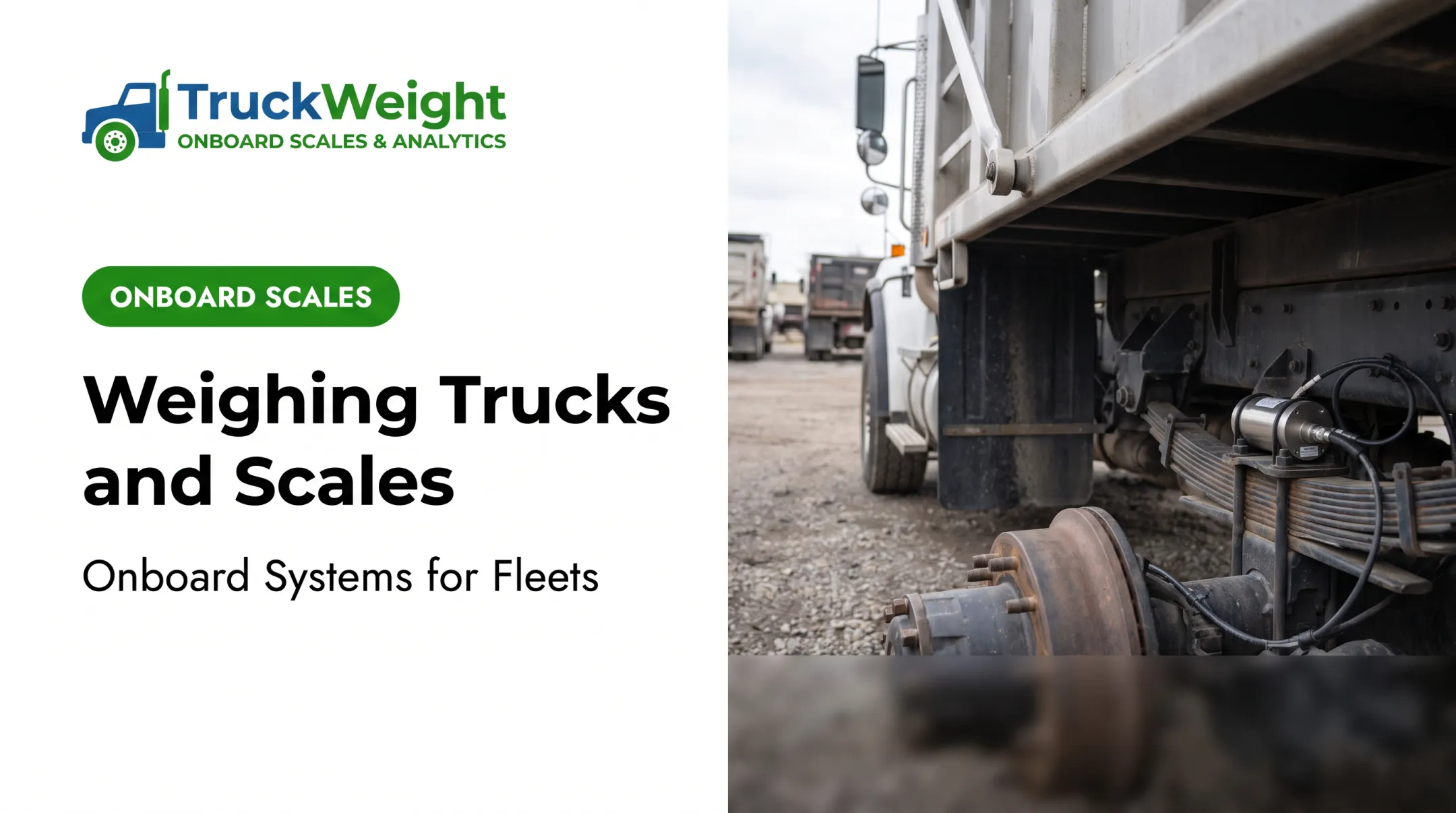
Onboard scales mount directly on the truck's suspension and display weight in the cab, in real time. No stopping. No detour.
Wireless design removes a major failure point. Traditional wired installations run cable across the chassis, creating connection points that fail from dust intrusion, vibration, or corrosion. Wireless systems eliminate that risk and install faster.
This approach works on mechanical (spring) suspensions common on rigid haul trucks and dump trucks, and on air-ride suspensions common on articulated mining vehicles.

Why Onboard Wireless Scales Are Built for Mining's Toughest Conditions
TruckWeight builds ISO 9001-certified onboard scale systems designed around the reality of mine sites: dust, vibration, temperature swings, and long hours between service intervals.
Sensor Options for Every Suspension Type
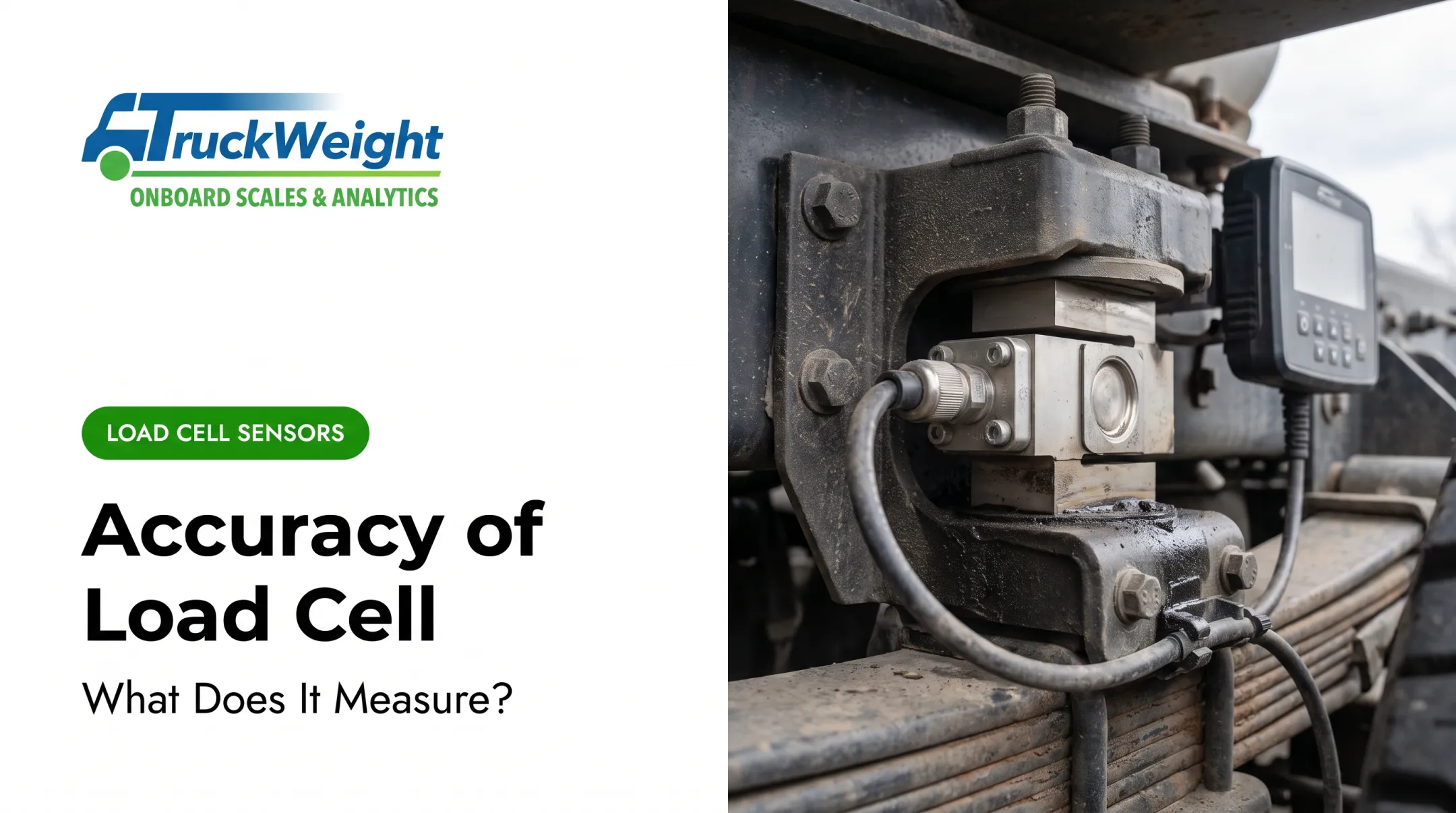
For mechanical and spring-suspension trucks, TruckWeight uses SG-1 and SG-2 strain gauge sensors. These are bonded directly to the spring, walking beam, or axle and are waterproof, shock-resistant, and corrosion-free — built to survive constant jarring on haul roads.
For air-ride suspensions, TruckWeight's patented sensor uses a temperature- and pressure-based measurement approach, with 0.3%–1% accuracy on axle and gross vehicle weight across weather conditions.
The MG-3 military-grade sensor uses a zero-wear design, needs minimal maintenance, and carries a 2-year warranty. For high-cycle mining haul routes running the same loop hundreds of times a week, that durability matters more than almost any other spec.

Real-Time Visibility, In the Cab and Beyond
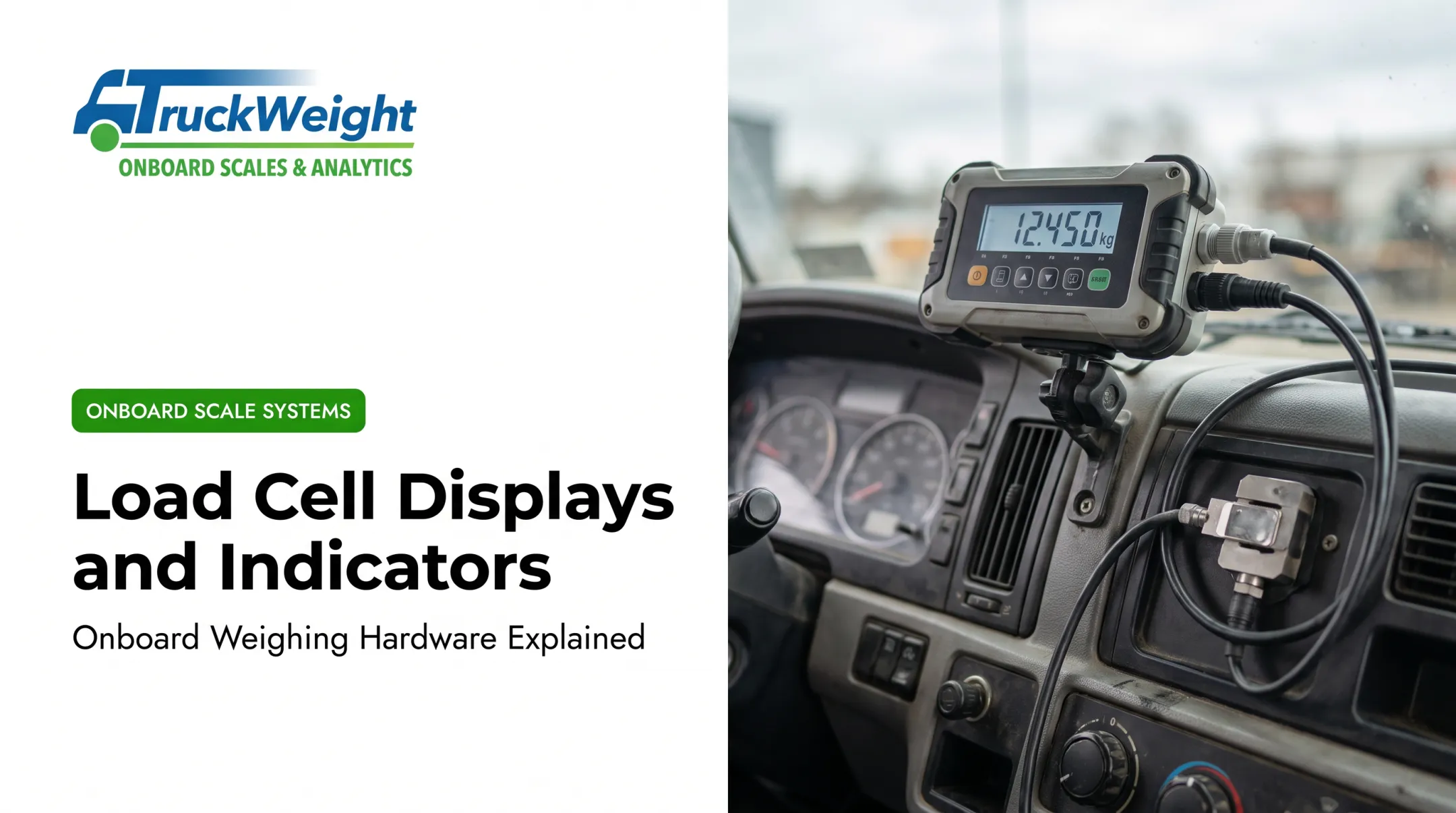
TruckWeight's long-range handheld display shows gross, net, and axle weights from up to 500 feet away, meaning operators or dispatch can check a load without walking out to the truck.
For fleet-wide visibility, TruckWeight Analytics pulls weight data from every truck into a cloud or telematics platform, built on infrastructure including Google Firestore and BigQuery. It flags:
- Overweight conditions in real time
- Loading and unloading events
- Equipment that may need maintenance or recalibration
Instead of checking trucks one at a time, fleets can track payload trends across the full haul cycle.
Key Features to Evaluate Before Buying a Mining Truck Scale
Not every scale built for a warehouse or a paved yard survives a mine site. Before buying, check these:
- Ruggedness and weatherproofing: dust, moisture, and impact loads are constant on mine roads. Look for sensors described as shock-resistant and corrosion-free, not just "durable."
- Installation complexity: favor self-installable, wireless systems. TruckWeight's documentation describes crews finishing installs in minutes with a regular toolkit and no specialized equipment.
- Integration options: GPS, telematics APIs, and back-office reporting matter once you manage more than a handful of trucks. Single-truck readouts don't scale with a growing fleet.
Accuracy and Compliance Considerations
Accuracy expectations shift with scale type, so mine operators should match the tool to the job.
Static weighbridges typically offer the tightest tolerances. NIST Handbook 44 places large vehicle scales in Class III L, with tolerances scaled to load bands rather than a flat percentage.
Onboard sensors trade some of that precision for mobility and speed. TruckWeight's calibrated systems measure within 0.3%–2% of gross vehicle weight, close enough for payload optimization and trip planning even when the reading is not legal-for-trade.
Regular calibration keeps that accuracy intact. TruckWeight's process uses a certified ground scale to record empty and loaded weights alongside sensor readings. Check for PSI differences greater than 0.3 PSI, which can signal an unlevel surface throwing off results.
Practical compliance habits include:
- Calibrate against a certified ground scale on a set schedule
- Log empty, loaded, and sensor readings together for each check
- Keep weight records that support internal reporting and overweight defense
Frequently Asked Questions
What are the four types of weight scales?
Common types include mechanical scales, static weighbridges, portable wheel weigh pads, and onboard vehicle scales. Mining fleets often pair a fixed weighbridge at dispatch with onboard scales for haul-route monitoring.
What is a truck scale called?
Truck scales go by several names depending on their setup: weighbridges (fixed), vehicle scales, or onboard scales when mounted directly on the truck.
What are the different sizes of mining trucks?
Mining haul trucks range from smaller articulated dump trucks, rated around 24-45 tons, up to ultra-class rigid trucks like the Cat 797F, rated near 400 tons. Scale systems need to match the truck's specific capacity and suspension type.
How accurate is a truck scale?
Static weighbridges follow NIST Class III L tolerances scaled to load. Onboard systems like TruckWeight's air suspension sensors are stated at 0.3%–1% accuracy for axle and gross weight readings.
Why do mining fleets prefer wireless onboard scales over static weighbridges?
Wireless onboard scales skip the wiring complexity of older systems, avoid costly detours to offsite scales, and give real-time in-cab weight data on remote mine terrain where every extra mile counts.