
Flexible and stretchable strain sensors solve this by swapping metal foil for elastomers and nanomaterials that move with the surface they're measuring. Some designs now detect strain from 0.005% to 100% without breaking down, a range no traditional gauge can match. This article covers how these sensors work, the main types available, where they're being deployed, and how to choose between flexible and ruggedized options for your application.
Key Takeaways
- Flexible strain sensors combine elastomeric substrates and conductive nanomaterials to track deformation on curved or moving surfaces.
- Unlike rigid gauges, they stretch farther, use softer materials, and target dynamic or conformal applications.
- Core applications include wearables, robotics, smart textiles, and industrial load monitoring.
- Match the sensor to strain range, sensitivity, durability, and operating environment.
What Are Flexible Strain Sensors?
Flexible strain sensors detect mechanical deformation—stretching, bending, or compression—by measuring changes in electrical resistance or capacitance.
Instead of etched metal grids, they sit on elastomeric or polymer substrates that conform to skin, fabric, or curved industrial parts. Academic reviews describe this construction as an active sensing material on a compliant support layer, where conductive networks change resistance as strain changes.
Are strain gauges flexible? Many bend for installation, but most are not stretchable. The difference matters:
- Traditional bonded metal-foil gauges use an etched metal grid on polyimide backing. The backing can wrap a curved surface; the grid is not meant to elongate.
- Flexible and stretchable sensors use nanomaterials or conductive polymers, so the sensing layer itself can deform elastically—not just the mount.
Industrial truck and suspension scales typically rely on bonded metal-foil strain gauges, not stretchable polymer skins. Stretchable designs show up more in wearables, soft robotics, and research prototypes where large elastic strain is the point.
Types of Flexible Strain Sensors
Each sensor type trades sensitivity against range differently, so the right pick depends on what you're measuring.
Piezoresistive sensors change resistance under strain using conductive fillers like carbon nanofibers or nanotubes. A dual-alignment carbon nanofiber design stacks a parallel-aligned layer (for low-strain sensitivity) with a randomly aligned layer (for broader range).
Reported performance includes:
- Gauge factor of 1,272 below 0.5% strain
- Gauge factor of 2,266 between 70% and 100% strain
- Detection range from 0.005% to 100% strain

Capacitive sensors rely on silver nanowire layers separated by a dielectric. Stretching changes the spacing or overlap between conductive layers, altering capacitance. A Wyss Institute fabric-silicone design detected changes within 30 milliseconds when integrated into a glove.
Piezoelectric sensors generate voltage directly from mechanical stress and need no external power. Flexible PVDF nanofiber sensors mounted on a thin liquid-crystal-polymer substrate have detected finger and joint motion well enough to control a robotic hand.
Optical/fiber-based sensors embed light-emitting phosphors in stretchable fiber. One design showed linear response from 10% to 60% strain across 8,000 stretch-release cycles without external power.
Match the sensor to the gauge factor, strain range, and environment you need. No single type wins every use case.
How Flexible Strain Sensors Work
The core mechanism is straightforward: mechanical deformation alters an electrical property, which converts into a measurable signal. What varies is the substrate and conductive filler.
Substrate Materials
Elastic polymers like PDMS and TPU give sensors the compliance to conform to skin or curved machine parts without cracking.
Electrospun TPU nanofibers coated with graphene and coiled into an intertwined structure achieved 1,100% stretchability with a gauge factor of 31.35 at 400% strain. The design maintained steady current output over 10,000 loading cycles.
Conductive Fillers
- Carbon nanofibers — high sensitivity at low strain when aligned
- Silver nanowires — strong conductivity, used in both resistive and capacitive designs
- Graphene — flexible, conductive coating for coiled or fibrous substrates
Combining fillers can push performance further. An AgNW/silver/PDMS composite reinforced with laser-written silver welds reached a gauge factor of 623.2, sensing beyond 35% strain with a 51/50 ms response and recovery time, and lasting over 2,000 cycles.

High sensitivity and wide range still tend to pull in opposite directions. Narrow cracks or fragile percolation paths amplify small strains but often fail under large deformation. Researchers continue working on durability under repeated stretching without sacrificing sensitivity.
Applications of Flexible Stretchable Strain Sensors
Healthcare and Wearables
Flexible sensors track pulse, joint movement, and rehabilitation progress. A TPU/graphene coil sensor monitored wrist pulse with enough fidelity to calculate a radial-artery augmentation index near 43%. In assistive communication, a dual-aligned carbon nanofiber sensor powered a lip-language recognition system for people with speech disabilities, using its low detection limit and wide range to track subtle phonetic movements.
Robotics and Human-Machine Interfaces
Soft robotic skins use crack-patterned sensors to sense touch and deformation. One design tolerated 50% strain across 100,000 loading cycles and helped an origami robot predict trajectory with under 4% error.
Smart Textiles
Sensors woven directly into fabric track fitness metrics and posture. The Wyss fabric-silicone sensor distinguished individual finger movements in real time when built into a glove.
Industrial and Commercial Vehicle Load Monitoring
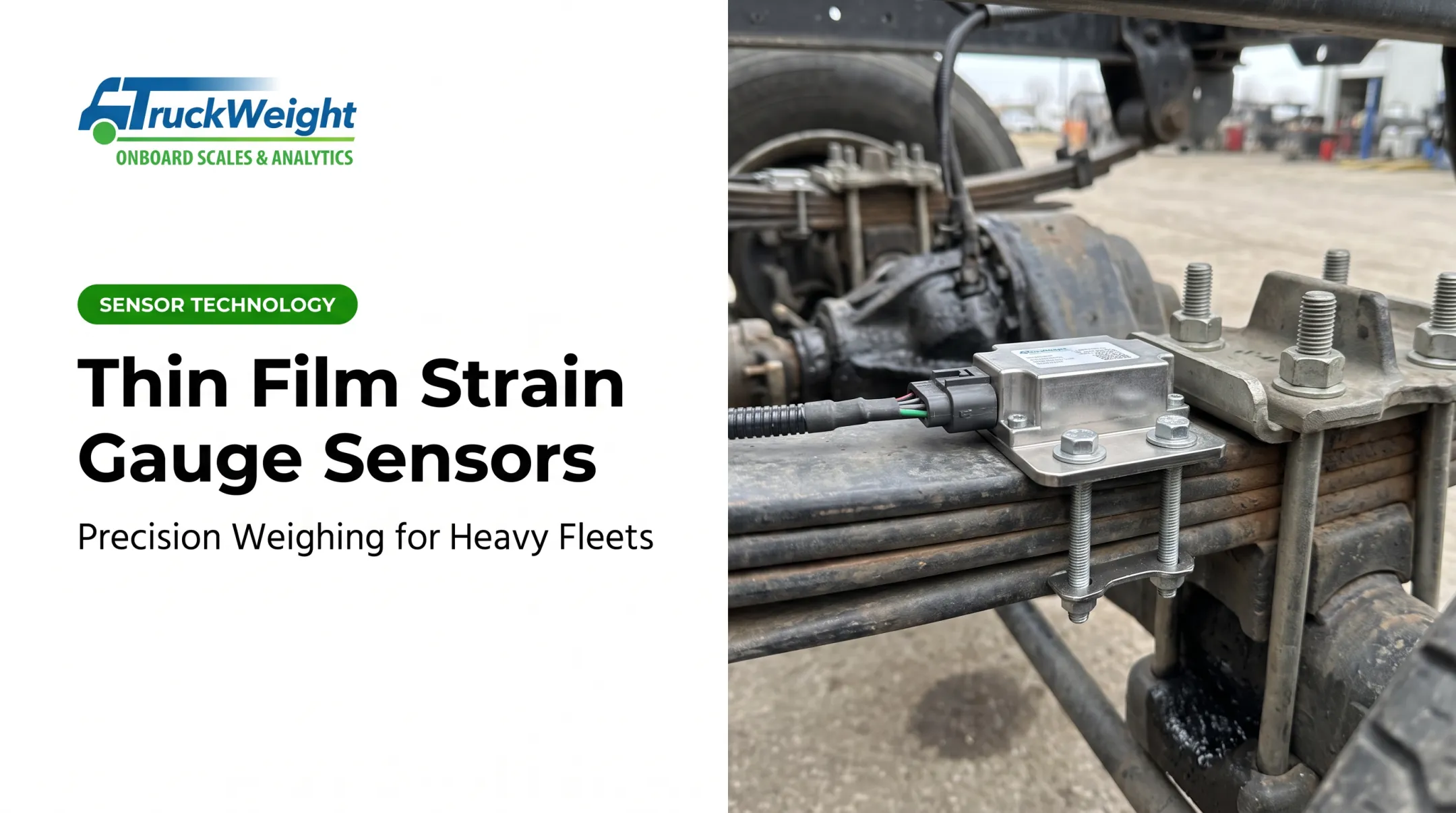
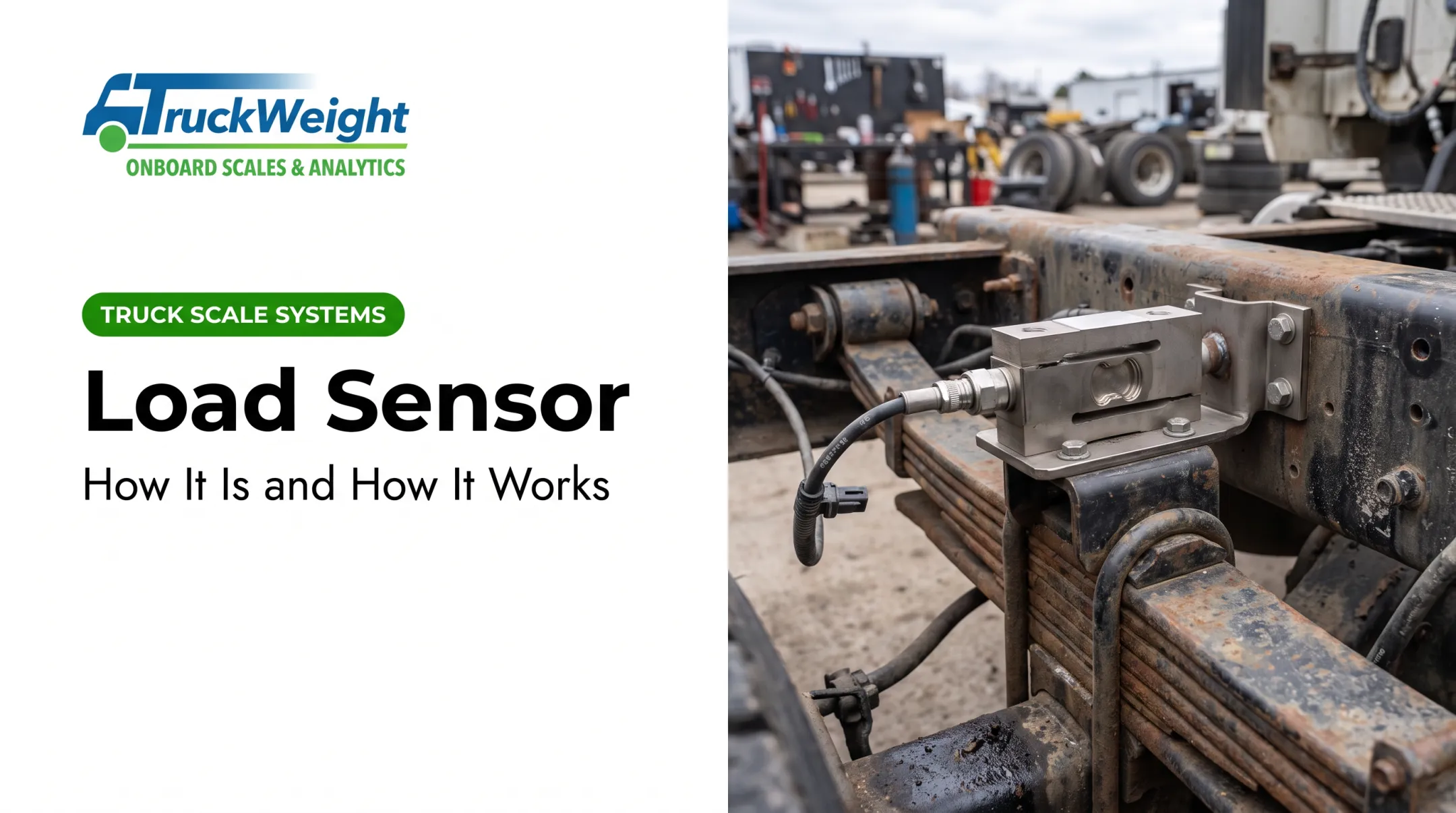
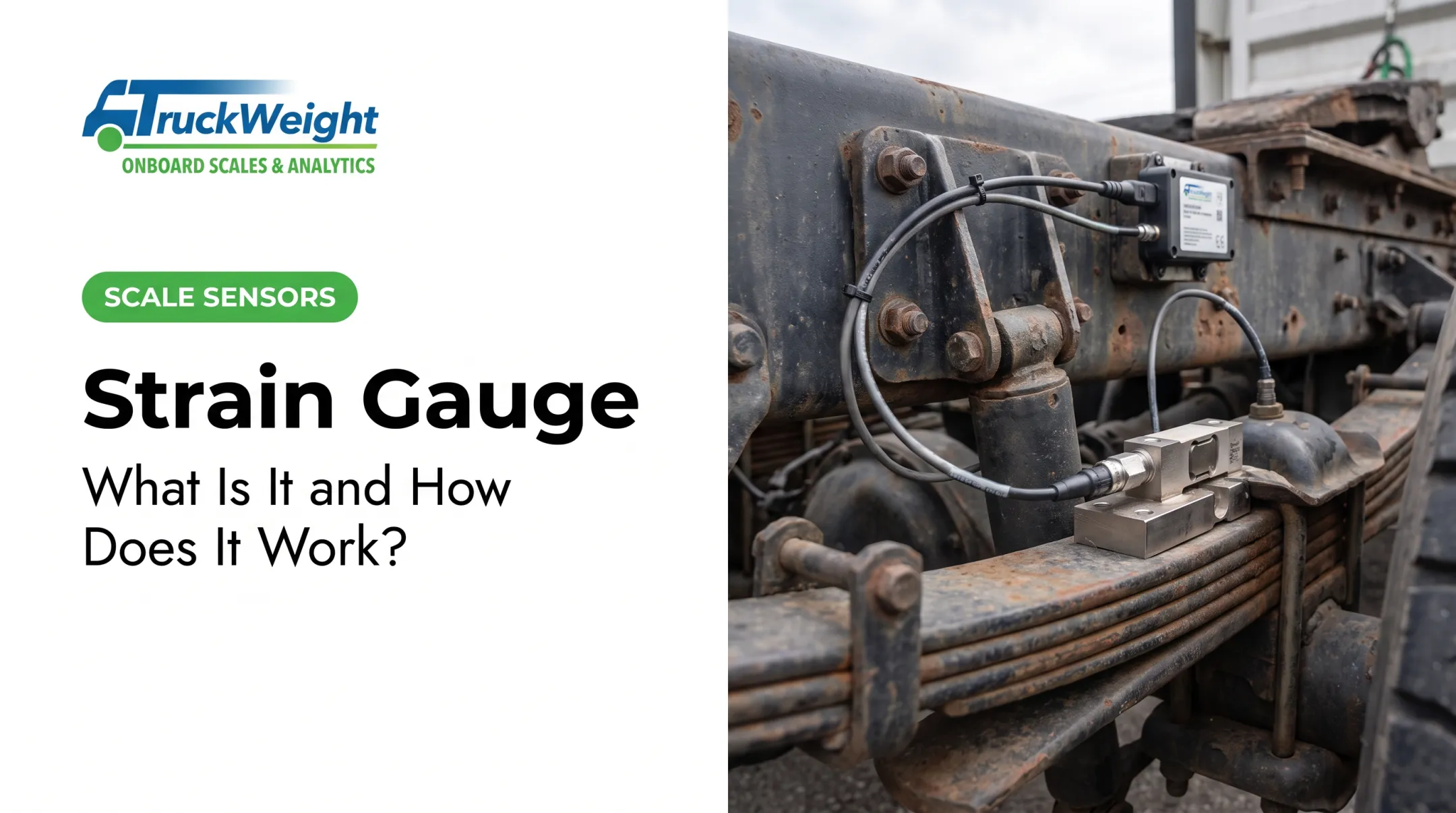
The same strain-sensing principles power onboard truck scale systems. Strain gauges mount directly onto axles, springs, or walking beams and measure payload weight as the suspension flexes under load.
TruckWeight's SG-1 and SG-2 sensors are a practical example. These mechanical strain-gauge sensors bond to a prepared surface on the axle or spring and convert suspension displacement into gross-vehicle and axle-group weight readings, typically within 0.3% to 2% of gross vehicle weight.
They are built for fleets that run in harsh conditions:
- Waterproof, shock-resistant, and corrosion-free construction
- Dump trucks, mining equipment, and agricultural fleets
- Mechanical, spring, and walking-beam suspensions
Structural Health Monitoring
Flexible piezoresistive sensors are being tested on bridges and steel structures to catch stress and fatigue early. One sprayed multilayer composite coating produced voltage patterns tracking strain closely enough to match simulated structural loads.
Flexible vs. Traditional Rigid Strain Sensors
| Attribute | Traditional Metal Foil | Flexible/Stretchable |
|---|---|---|
| Material | Etched metal grid on polyimide backing | Elastomer + nanomaterial composite |
| Strain range | Often 1%–5% depending on product line | Up to 100% in published lab designs |
| Best suited for | Stable structural monitoring, industrial scales | Curved, moving, or soft surfaces |
| Precision reference | Mature, standardized (ASTM E251) | Application-specific validation needed |
Rigid gauges remain the precision standard for small, stable structural strains. Flexible sensors take over where surfaces move, stretch, or bend repeatedly.
Not every industrial application needs ultra-stretchable skin-like sensors. TruckWeight's mechanical strain-gauge sensors for spring suspensions prioritize durability and consistent accuracy over extreme stretch range.
A truck axle doesn't need to flex 100%. It needs to survive years of vibration, moisture, and temperature swings while reporting weight reliably.

Choosing the Right Strain Sensor for Your Application
Match the sensor to real operating conditions, not datasheet highlights alone.
- Compare gauge factors only within the same strain interval and test method; a sensor optimized for 0.5% strain will not perform the same way at 50%
- Account for temperature swings, moisture, and vibration in outdoor and industrial use—conditions lab-tested wearable sensors rarely face
- Balance conformability against ruggedness: a skin-mounted sensor and an axle-mounted sensor solve different problems
- Favor wireless, self-installable systems when setup time matters. TruckWeight's SG sensors, for example, install in minutes with no special tools once the surface is prepped and cleaned, with no rewiring of the truck's electrical system required
Use this checklist before you buy:
- Define the expected strain amplitude and direction
- Confirm sensitivity needs at that specific range
- Check environmental exposure (temperature, moisture, vibration)
- Decide if signal type matters (static posture vs. dynamic events)
- Validate cyclic durability at real-world conditions, not lab defaults
Frequently Asked Questions
What are flexible strain sensors?
They're devices that detect stretching, bending, or compression by measuring changes in resistance or capacitance on an elastic substrate. This allows them to conform to skin, fabric, or curved surfaces that rigid sensors can't handle.
What are the different types of flexible strain sensors?
The main types are piezoresistive (resistance-based), capacitive, piezoelectric, and optical/fiber-based sensors. Each converts mechanical strain into a measurable electrical or optical signal.
Are strain gauges flexible?
Traditional metal-foil strain gauges have a flexible backing but a rigid metal sensing grid, so they're not stretchable. Newer flexible and stretchable sensors use polymer and nanomaterial composites that handle much larger deformation.
How accurate are flexible strain sensors compared to traditional ones?
Accuracy depends on material and design. Industrial-grade rugged sensors used for truck payload monitoring often prioritize consistent accuracy in harsh conditions over extreme stretchability.
Can flexible strain sensors be used in industrial or commercial vehicle applications?
Yes. Ruggedized strain sensors support payload monitoring on commercial vehicles, including onboard truck scale systems like TruckWeight's SG-1 and SG-2 sensors mounted on axles and suspensions.
What materials are used to make flexible strain sensors stretchable?
Common substrates include elastomers like PDMS and TPU, combined with conductive fillers such as carbon nanofibers, silver nanowires, or graphene. That combination sets the sensor's stretch range and sensitivity.