
Engineers can't measure stress directly. Instead, they measure strain, the deformation a material undergoes under load, and calculate stress from there. When people say "stress gauge," they almost always mean a strain gauge.
This article covers how strain gauges work, the main types available, how accurate they really are, and where they show up in the real world, from bridge foundations to the axles of a loaded dump truck.
Key Takeaways
- Strain gauges measure deformation, not stress; stress is calculated with Young's modulus and Hooke's Law
- Bonded metallic foil and semiconductor gauges are the two primary sensor categories
- Accuracy hinges on installation quality, temperature compensation, and circuit design
- Load cells and onboard truck weighing systems use strain gauges to help prevent overweight violations
What Is a Stress Gauge and What Does It Measure?
Stress is an internal force per unit area. It can't be measured with a sensor placed on a surface. Strain, however, can be: it's the physical deformation a material undergoes when force is applied.
Strain is the ratio of change in length to original length. It's dimensionless and often reported in microstrain (millionths of a unit length). There are two basic types:
- Tensile strain – material stretches under a pulling force
- Compressive strain – material shortens under a pushing force
Once strain is known, engineers calculate stress using Hooke's Law: stress equals strain multiplied by the material's modulus of elasticity, also called Young's modulus. This constant describes how much a given material resists deformation under load.
If you've seen both "gauge" and "gage," they're the same instrument. "Gauge" is the more widely used spelling, while some manufacturers, notably Micro-Measurements, use "gage" as a product-naming convention. Neither is wrong.
Resistive strain gauge technology dates back to 1938, when Edward E. Simmons and Arthur C. Ruge independently discovered that a wire's electrical resistance changes predictably when it's stretched or compressed. That discovery, documented in a 2022 historical review of structural health monitoring sensors, remains the working principle behind nearly every strain gauge made today.
How Strain Gauges Work for Strain Analysis
A strain gauge is a metallic foil grid bonded to a flexible backing and adhered to the surface being tested. When that surface deforms, the gauge deforms with it, and its electrical resistance changes proportionally.
That resistance change is tiny. Detecting it requires a Wheatstone bridge: a four-arm resistive circuit that converts small resistance shifts into a measurable voltage—the industry-standard setup for pulling usable data from a strain gauge.

Gauge Factor: The Sensitivity Rating
The gauge factor (GF) describes how much resistance changes relative to strain. According to NI's technical overview of strain gauge measurement, metallic foil gauges typically have a GF around 2. Semiconductor gauges are far more sensitive, sometimes reaching a GF near 200, though they are more temperature-sensitive and less linear than foil gauges.
Signal Conditioning Isn't Optional
Raw voltage output from a strain gauge circuit is small, often just millivolts. Getting usable data requires:
- Excitation voltage to power the bridge circuit
- Amplification to boost signal strength for accurate reading
- Filtering to strip out electromagnetic noise
Temperature swings can also throw off readings, since resistivity itself shifts with heat. Well-designed systems use temperature-compensated bridge configurations, pairing matched gauges so ambient changes cancel out rather than skewing the result.
Types of Strain Gauges
Bonded Foil Strain Gauges
This is the workhorse of stress analysis. A thin metallic foil grid is bonded directly to the test surface using adhesive, transferring deformation to the gauge in real time. Bonded foil gauges are reliable, relatively inexpensive, and versatile enough for general-purpose testing across industries.
Semiconductor Strain Gauges
Built from silicon using the piezoresistive effect, semiconductor gauges offer much higher sensitivity. A 2013 peer-reviewed study on silicon-based strain sensors found single-crystalline silicon gauges can reach gauge factors up to 200, far beyond metallic foil.
The tradeoff is stiffness and fragility. Silicon is more brittle and more prone to temperature drift, so these gauges fit high-precision lab and research work better than rugged field deployment.
Other Variants
- Unbonded gauges – free wires strung between supports, mainly found inside laboratory-grade load cells rather than field equipment
- Optical fiber gauges – use fiber Bragg gratings instead of resistance changes; well-suited to harsh environments involving humidity, corrosion, or long-distance monitoring

Are Strain Gauges Accurate? Factors That Affect Performance
Strain gauges can be extremely precise, but "accurate" depends entirely on setup. There's no single accuracy number that applies to every gauge in every condition.
What affects accuracy:
- Installation quality – poor bonding or misaligned placement introduces error before the first reading
- Temperature and humidity – uncompensated swings shift resistance readings
- Electromagnetic interference – can corrupt signals in industrial environments
- Zero drift – small drift at low strain can mean a large percentage error
As a real-world benchmark, TruckWeight's air suspension sensors are rated at 0.3% to 1% accuracy, while its SG strain-gauge sensors for spring and mechanical suspensions achieve 0.3% to 2% accuracy once properly calibrated. That range reflects the added variability of bonding a gauge directly to a spring, axle, or walking beam rather than reading air pressure.
Installation is decisive here. TruckWeight's documented process for SG sensors includes:
- Install with the truck empty and the frame jacked up so axles hang freely
- Place the gauge under proper pre-strain on the spring, axle, or walking beam
- Sand about 1 square inch of bonding area with 200-grit sandpaper
- Clean thoroughly with acetone or isopropyl alcohol
- Bond at 70°F or warmer so the adhesive cures correctly
That level of surface prep isn't overkill. It's the difference between a sensor reading within spec and one drifting out of tolerance within weeks. Gauges built for vibration, moisture, and temperature swings hold that accuracy on the truck—not only on a lab bench.
Real-World Applications of Strain Gauges
Civil Engineering
Strain gauges monitor structural health on bridges and buildings over decades of service. In one documented case, the FHWA's report on the I-35W bridge foundation monitoring used 16 vibrating-wire gauges and 8 resistance-type strain gauges per foundation shaft, tracking construction loads starting in February 2008.
Aerospace and Automotive
NASA Langley has used strain gauges since at least 1999 for wind-tunnel balances and materials testing across extreme temperature ranges, from roughly -450°F to over 700°F for composite testing. In automotive suspension work, a Micro-Measurements case study using tee-rosette gauges at seven suspension locations identified rear lower control arms as the most heavily stressed components in the system.
Load Cells and Onboard Truck Weighing
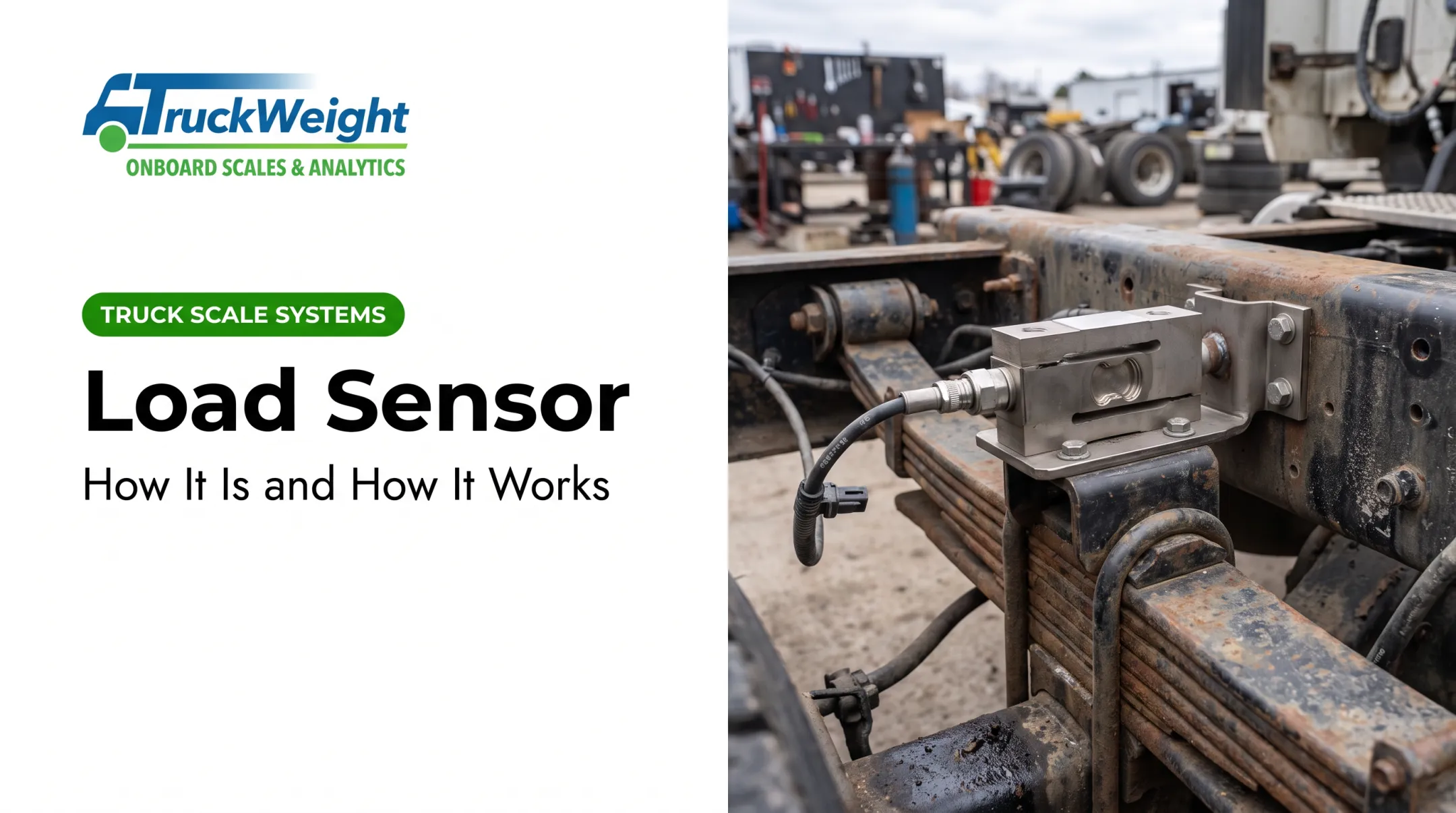
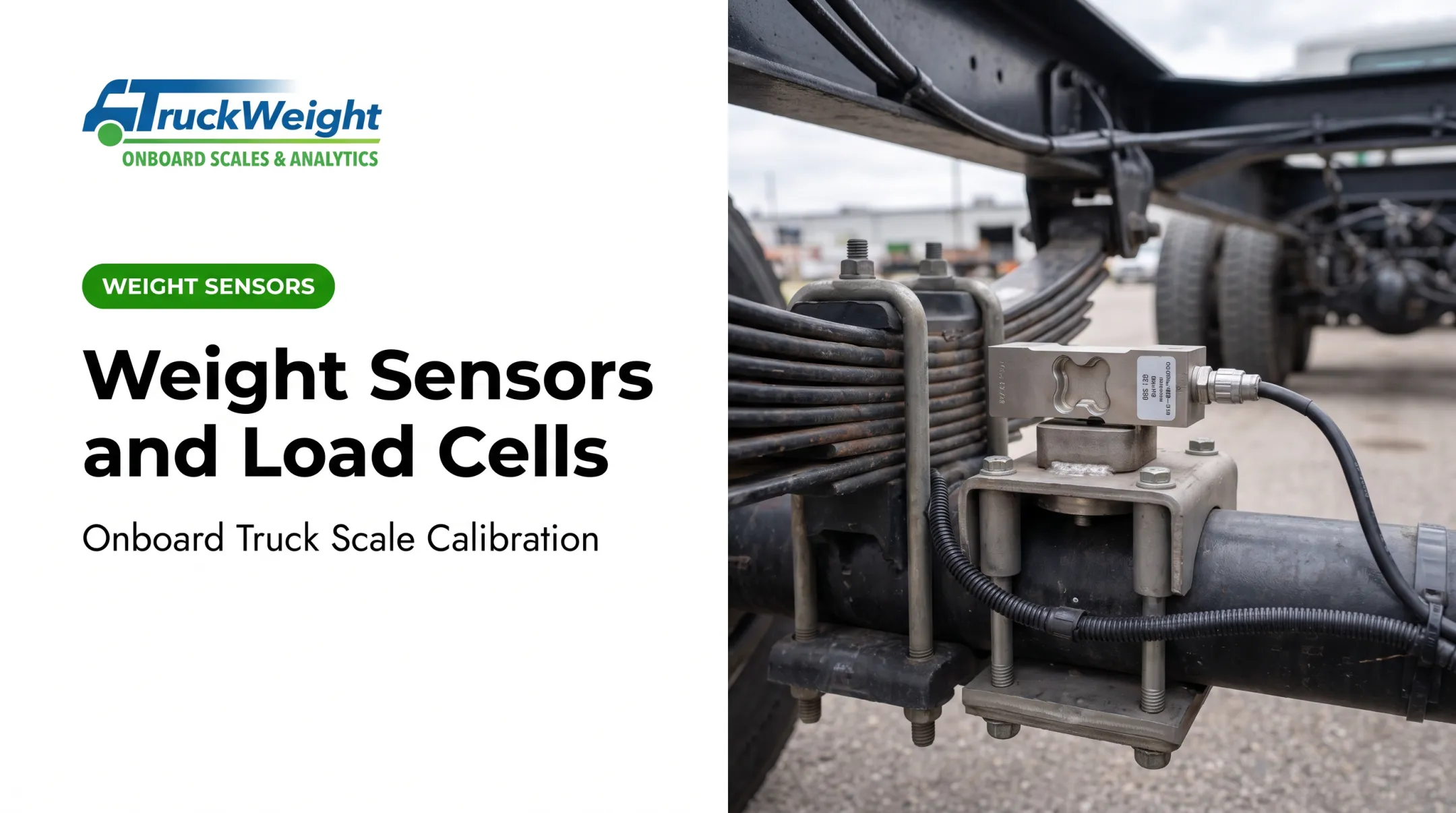
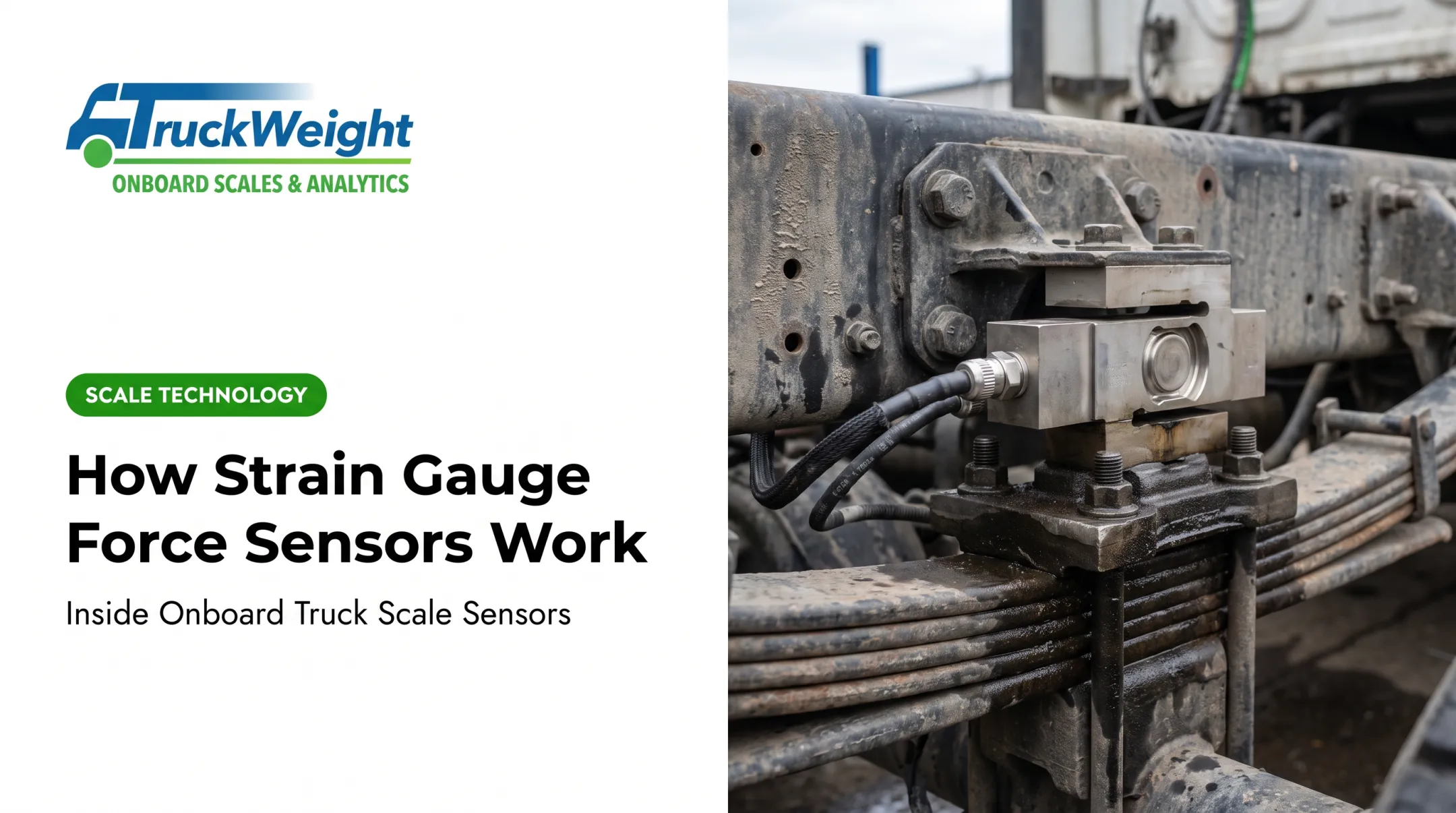
Fleet operators use the same strain gauge principle for onboard weighing. TruckWeight's SG-1 and SG-2 sensors mount on truck axles, springs, and walking beams to measure load in real time.
Where these sensors get used:
- SG-2: spring trailers, drive axles, walking-beam suspensions, and Chalmers systems on dump, roll-off, and hydrovac trucks
- SG-1: front-axle applications
- Shared use cases: mining, agriculture, aggregate hauling, and general commercial fleets
The sensors transmit data wirelessly up to 500 feet, install without special tools, and are rated waterproof, shock-resistant, and corrosion-free for all-weather use. Paired with TruckWeight Analytics, sensor data feeds a live dashboard showing axle weight, gross vehicle weight, and net weight, so drivers and dispatchers can catch an overweight load before the scale house.
Overweight violations carry real financial consequences. Texas, for example, sets statutory fines starting at $100 to $250 per offense under its transportation code—before delays, rerouting, or lost loads.
Accurate strain-based weighing at the axle level helps fleets avoid those costs and stay compliant.
Frequently Asked Questions
What does a strain gauge measure?
A strain gauge measures strain, the physical deformation of a material under load. Stress is then calculated from that strain using the material's modulus of elasticity.
Are strain gauges accurate?
Yes, when properly installed with temperature compensation and correct circuit design. TruckWeight's SG strain-gauge sensors, for example, achieve 0.3% to 2% accuracy on gross vehicle weight once calibrated.
What is the difference between a strain gauge and a gage?
There's no difference in function. "Gauge" and "gage" refer to the same device; the spelling varies by manufacturer or regional convention.
What are the two types of strain gauges?
The two primary categories are bonded metallic foil gauges and semiconductor (piezoresistive) gauges. Foil gauges are versatile and rugged; semiconductor gauges are more sensitive but more temperature-sensitive.
What are the four main types of gauges?
The four common families are bonded foil, semiconductor, unbonded, and optical fiber. Bonded foil is general-purpose and adhesive-mounted; semiconductor is highly sensitive; unbonded suits lab load cells; optical fiber handles harsh, corrosive environments.