
This scenario plays out at scales across the country every day, and it usually isn't about hauling "too much freight." It's about where that freight sits.
Overweight trailer axles typically trace back to a handful of specific, fixable problems: cargo placement, tandem position, or a shipper's paperwork error. This article breaks down those causes, the warning signs drivers can catch before a scale does, and how onboard weighing technology takes the guesswork out of axle compliance.
Key Takeaways
- Poor cargo placement, tandem misadjustment, and shipper errors cause most overweight axles
- Federal limits: 20,000 lbs steer, 34,000 lbs per tandem, 80,000 lbs gross on Interstates
- Ignoring axle imbalance risks fines, out-of-service orders, and faster tire/suspension wear
- Prevention means correct loading, proper tandem adjustment, and weighing before you leave the yard
- Onboard scales like TruckWeight let drivers check axle weights from the cab in real time
Common Causes of Overweight Trailer Axles
An overweight trailer axle happens when the trailer's tandem group exceeds its legal weight limit. That can happen even if your total gross vehicle weight is perfectly legal. This trips up a lot of drivers who assume gross weight is the only number that matters.
Most causes fall into four buckets: where the load sits, where the tandems sit, bad data on the paperwork, or a load that simply won't fit legal axle capacity.
Uneven or Rear-Heavy Cargo Placement
Freight loaded too far toward the back of the trailer shifts weight directly onto the trailer axles. This happens constantly with flatbeds and dry vans when:

- Pallets aren't centered per the bill of lading instructions
- Loaders default to "back to front" stacking without checking axle balance
- Dense freight (steel coils, machinery) gets placed based on convenience, not distribution
Trailer Tandems Positioned Too Far Back
Sliding the tandems rearward increases trailer axle weight while reducing drive axle weight. Drivers sometimes make this adjustment purely to satisfy bridge-formula spacing rules for length, then forget to re-weigh afterward. The spacing looks legal. The axle weight isn't.
Shipper Weight Errors or Miscounts
Wrong pallet counts, the wrong product loaded, or a clerical error on the BOL can send a driver out the gate overweight without knowing it. A common trap: freight documented under 40,000 lbs gets treated as "automatically safe" and skipped past the scale entirely. The problem then surfaces 200 miles down the road.
Total Load Exceeding Realistic Axle Capacity
Sometimes the math just doesn't work. No amount of tandem sliding or cargo shuffling legally distributes the load across trailer axles. In these cases, you need an overweight permit or a partial offload.
The federal baseline tandem-axle limit on the Interstate System is 34,000 lbs, according to FHWA's Bridge Formula guidance. That number shifts on non-Interstate and state routes. Texas, for example, allows up to 46,000 lbs on a tandem for certain permitted, non-Interstate hauls. Always check the specific state and route before assuming a number applies.

What Happens If Overweight Trailer Axles Are Ignored
The consequences compound fast:
- Fines: amounts vary by state and by how far over the limit you are—check your jurisdiction directly
- Out-of-service orders: the vehicle can't move until the violation is corrected
- Delayed delivery: every hour at the scale or waiting for a reload is an hour lost
- CSA score impact: overweight violations land in the Cargo-Related BASIC and count against your safety record, even without an OOS order
Beyond the immediate hit, imbalanced axles grind down your equipment. Overloaded trailer axles wear tires faster, strain suspension components, and cut fuel efficiency because the truck isn't running the way it was engineered to run.
Warning Signs You May Be Overweight on a Trailer Axle
Catching a problem before the scale does saves time and money. Watch for:
- High air-suspension pressure versus your normal empty or loaded baseline for that axle group
- Trailer sitting lower or riding stiffer than usual across the tandem group
- Dense or rear-loaded cargo on the BOL: steel, machinery, or freight palletized toward the tail
None of these signs replace an actual weight reading. But they're a signal to stop and check before you're three hours down the highway.
How to Prevent Overweight Trailer Axles
Prevention rests on three habits—load correctly, adjust the tandems, and weigh consistently—plus tools that make those checks practical on every run.
Load and Position Cargo Correctly
Work with the shipper to center freight according to the load diagram. Don't assume default placement is safe. Even distribution keeps any single axle group from absorbing excess weight. This has to happen at the yard, before you leave, not after you're already rolling.
Slide Trailer Tandems to the Correct Position
Adjusting the tandem slide forward or backward redistributes weight between the drive axles and trailer axles. Exactly how much weight shifts per hole depends on your trailer's spacing and configuration, so there's no universal number to memorize. Re-weigh after every adjustment rather than guessing. Do this immediately after an initial weigh shows a group is over limit.
Weigh Before and During the Route, Not Just at Pickup
Check axle weights right after loading, not just when something looks unusually heavy. Freight under 40,000 lbs isn't automatically safe — that's exactly the assumption that lets shipper miscounts slip through. Weigh again after any tandem or fifth-wheel adjustment, since moving one thing changes everything else.
Use Onboard Wireless Scale Technology for Real-Time Axle Monitoring
Manual weighing still breaks down when every check means a truck-stop scale, extra miles, and a detour. Onboard systems remove that dependency so the weigh-before-you-roll habit actually sticks.
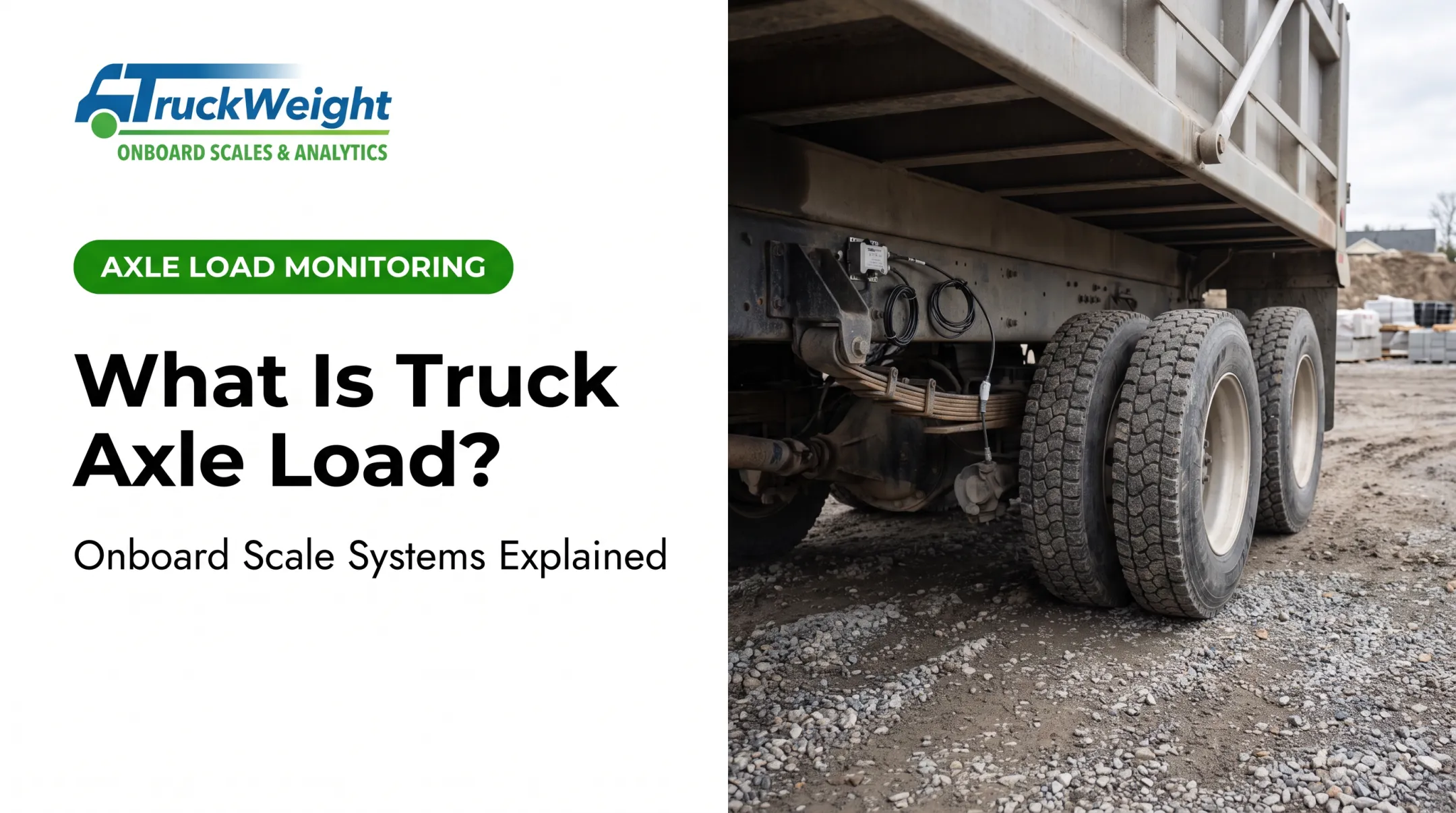
TruckWeight wireless sensors monitor axle, gross, and net weights directly from the cab:
- Air Suspension Sensor for air-ride trailers, accurate to within 0.3%–1%, calculating weight from suspension pressure
- SG-2 strain gauge for spring or mechanical trailer suspensions, accurate to within 0.3%–2%, with wireless range up to 500 feet
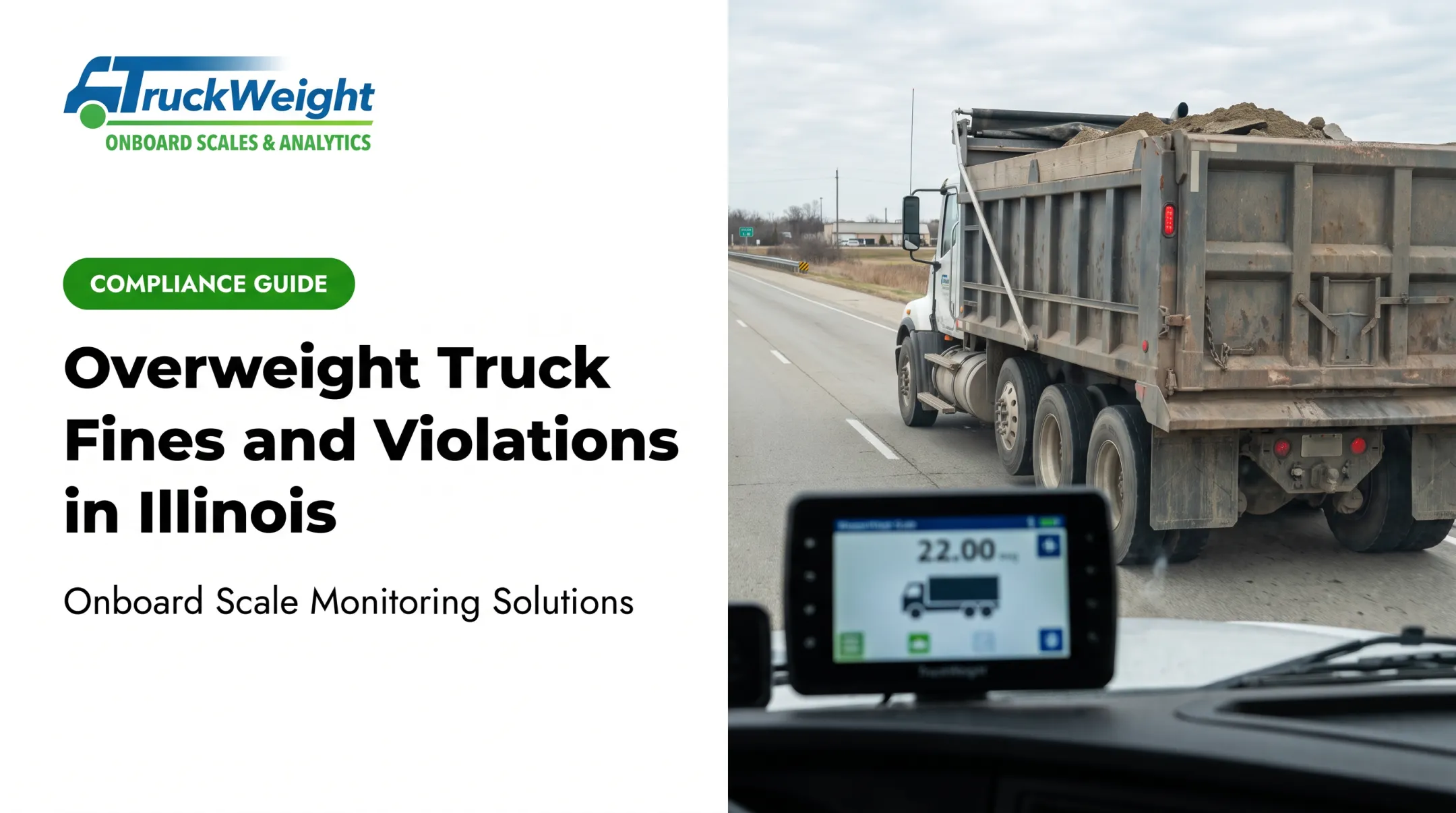
- Handheld display shows trailer axle-group weight separate from gross and net, so you know where you stand before you reach a scale
The system installs without special tools: mount the sensor to the suspension, pair it to the handheld display, and it starts transmitting. Ritcey & Sons, a TruckWeight customer, has described the system as helping the company "run legal" after strict weight-law enforcement started cutting into profits.
Tips for Long-Term Prevention and Control
One-off fixes don't stick. Build these into daily operations:
- Make pre-trip weight checks routine — not just for loads that "look" heavy
- Train drivers and dispatchers on axle limits, sliding-tandem procedure, and when to request a shipper reload
- Keep scale ticket and calibration records on file to support compliance audits
- Use fleet-wide analytics to spot patterns before they become violations
TruckWeight Analytics supports this by recording, storing, and analyzing weight data across a fleet in real time. Built-in alerts flag overweight conditions, and the system keeps auditable compliance records.
Customers like Tri County Block & Brick, which runs seven sand-and-stone loads a day, have used the platform to replace estimate-based loading with precise weight data.
Conclusion
Overweight trailer axles almost always trace back to something identifiable. Freight placement, tandem position, or a paperwork error usually starts the problem long before the truck hits the road—and none of that takes guesswork to catch.
Consistent weighing habits, paired with onboard scale technology, make axle compliance proactive instead of a surprise at the next scale house.
Frequently Asked Questions
How much weight can I have on my trailer axle?
The federal limit for a tandem axle group on the Interstate System is 34,000 lbs. State and route-specific limits can differ, so check local regulations for non-Interstate hauls.
What should I do if my trailer tandems are overweight?
Slide the tandems to shift weight toward the drive axles, then re-weigh. If gross weight is also over the limit, you'll need a partial offload or an overweight permit.
What happens if you put too much weight on a trailer?
You risk fines, out-of-service orders, and accelerated wear on tires and suspension. Overweight violations can also affect your CSA safety score.
What can happen if you have too little weight on the drive axle?
You get reduced traction, especially in rain or snow, because the drive axle needs enough weight to maintain grip. That shortfall also pushes excess weight onto the steer or trailer axles.
How much weight can a trailer with two 7,000-lb axles carry?
That's a manufacturer capacity rating (14,000 lbs combined), separate from legal road limits. Your actual legal hauling weight depends on your specific configuration and applicable state/federal rules.
How much does a 20 ft tandem axle trailer weigh?
Empty weight varies by construction and material. Check the manufacturer's spec sheet or weigh the trailer empty before calculating your payload capacity.