
Engineers and fleet operators face a real challenge here: choosing between foil, silicon, and thin film gauges affects accuracy, lifespan, and total cost. Get it wrong, and you're stuck with drift, calibration headaches, or a sensor that fails in the field.
This article breaks down how thin film strain gauges work, how they compare to foil and silicon alternatives, and where they show up in real-world applications, including commercial vehicle weighing systems.
Key Takeaways
- Thin film gauges are sputtered directly onto a substrate, skipping the organic adhesive layer found in foil gauges.
- Direct sputtering delivers better long-term stability and lower hysteresis than bonded foil.
- Common applications include load cells, pressure transducers, and onboard truck scale systems.
- Foil, silicon, and thin film gauges trade off sensitivity, cost, and durability—choose based on the operating environment.
What Is a Thin Film Strain Gauge Sensor and How Does It Work?
A strain gauge is a resistive element. Apply force, and its resistance changes proportionally. Most gauges are wired into a Wheatstone Bridge, a four-arm circuit that measures these tiny resistance shifts as a differential output.
Thin film gauges take a distinct manufacturing path. Instead of gluing a metallic foil grid onto a surface, manufacturers use vacuum-chamber sputtering to deposit the resistive pattern directly onto a steel or aluminum substrate (SMD Sensors). This creates a molecular bond with no organic epoxy layer involved.
Why Skipping the Adhesive Matters
That missing adhesive layer removes failure modes common to bonded foil gauges:
- Blocks moisture absorption into an epoxy layer that can degrade over time
- Prevents creep, where the adhesive slowly shifts under sustained load
- Eliminates delamination risk, since there's no bonded interface to separate
Typical output characteristics: Thin film gauges have a gauge factor around 2, with bridge resistance ranging from 1,000 to 10,000 Ohms (SMD Sensors). That resistance range matters for power draw — higher resistance means lower current consumption, which is why thin film gauges suit battery-powered and wireless sensor designs.

One design constraint: all gauge elements must sit on the same flat surface during deposition. This requires careful upfront planning, since you can't easily wrap the pattern around curves or add elements after the fact.
Types of Strain Gauge Sensors: Thin Film vs. Foil vs. Silicon
Not every application needs the same gauge technology. Here's how the three main types stack up.
Bonded Foil Strain Gauges
Foil gauges use a metallic grid mounted on a flexible backing, typically attached with adhesive. They're a low-cost option that performs well in high-strain applications where signal strength isn't the limiting factor.
The tradeoff shows up in low-strain conditions:
- Signal output weakens when strain levels drop
- Adhesive layers introduce creep and hysteresis
- Thin film construction avoids both issues by design
Silicon/Semiconductor Strain Gauges
Silicon gauges rely on the piezoresistive effect, and the payoff is a gauge factor up to 200 — dramatically higher signal output than foil or thin film.
That sensitivity comes at a cost:
- Brittle construction and higher unit cost
- Temperature compensation circuitry usually required for stable accuracy
A 2023 hypersonic force-balance study shows why compensation matters: external correction cut uncompensated drift from 7 mV to 0.25 mV, roughly a 30-fold reduction (Springer study).
Where Thin Film Lands
Thin film trades peak sensitivity for stability. It won't match silicon's gauge factor, but it outperforms foil on creep resistance, hysteresis, and ruggedness.
| Factor | Foil | Thin Film | Silicon |
|---|---|---|---|
| Gauge factor | 2–5 | ~2 | Up to 200 |
| Cost | Low | Moderate-high | High |
| Temperature tolerance | Depends on adhesive limits | Up to 250°C (manufacturer example) | Requires compensation |
| Main risk | Creep, hysteresis | Design complexity | Brittleness |
Temperature limits are product-specific. SMD lists thin-film transducers rated to 250°C, and experimental sputtered gauges have run at 400°C or higher (MDPI Sensors study). Check the full sensor assembly rating, not the technology label alone.

Key Advantages of Thin Film Strain Gauge Technology
Thin film's biggest wins come down to five factors:
- Long-term stability: SMD reports better than 0.02% full-range output drift in an accelerated six-year test of thin-film pressure transducers (manufacturer-specific to those devices, not a universal load-cell guarantee).
- Tighter repeatability: Batch-to-batch bridge resistance and zero balance stay more consistent than bonded gauges, with no adhesive variability in the mix.
- Environmental resistance: No organic adhesive layer to absorb moisture, degrade under chemicals, or delaminate under vibration.
- Wide temperature range: Suited to extreme industrial, aerospace, and automotive environments where foil adhesive limits become the bottleneck.
- Compact design: Direct deposition supports miniaturized sensors in space-constrained load cells.
None of this means thin film is bulletproof. Design constraints around flat-surface deposition and higher manufacturing complexity still apply. But for applications demanding stability over decades of service, it's a strong technology choice.
Common Applications of Thin Film Strain Gauge Sensors
Thin film strain gauges show up wherever accuracy and longevity outweigh raw signal strength.
- Industrial load cells and force sensors: Used in weighing scales and material testing equipment where consistent zero balance matters over years of use.
- Pressure transducers: Common in medical devices, HVAC systems, and process control, where repeatability and survival under rough handling matter in pump applications.
- Aerospace and automotive structural monitoring: Used in high-stress, high-temperature environments where foil gauges' adhesive limits would fail.
- Commercial vehicle weighing systems: Onboard scale systems for trucks, tractors, and trailers with spring suspensions.
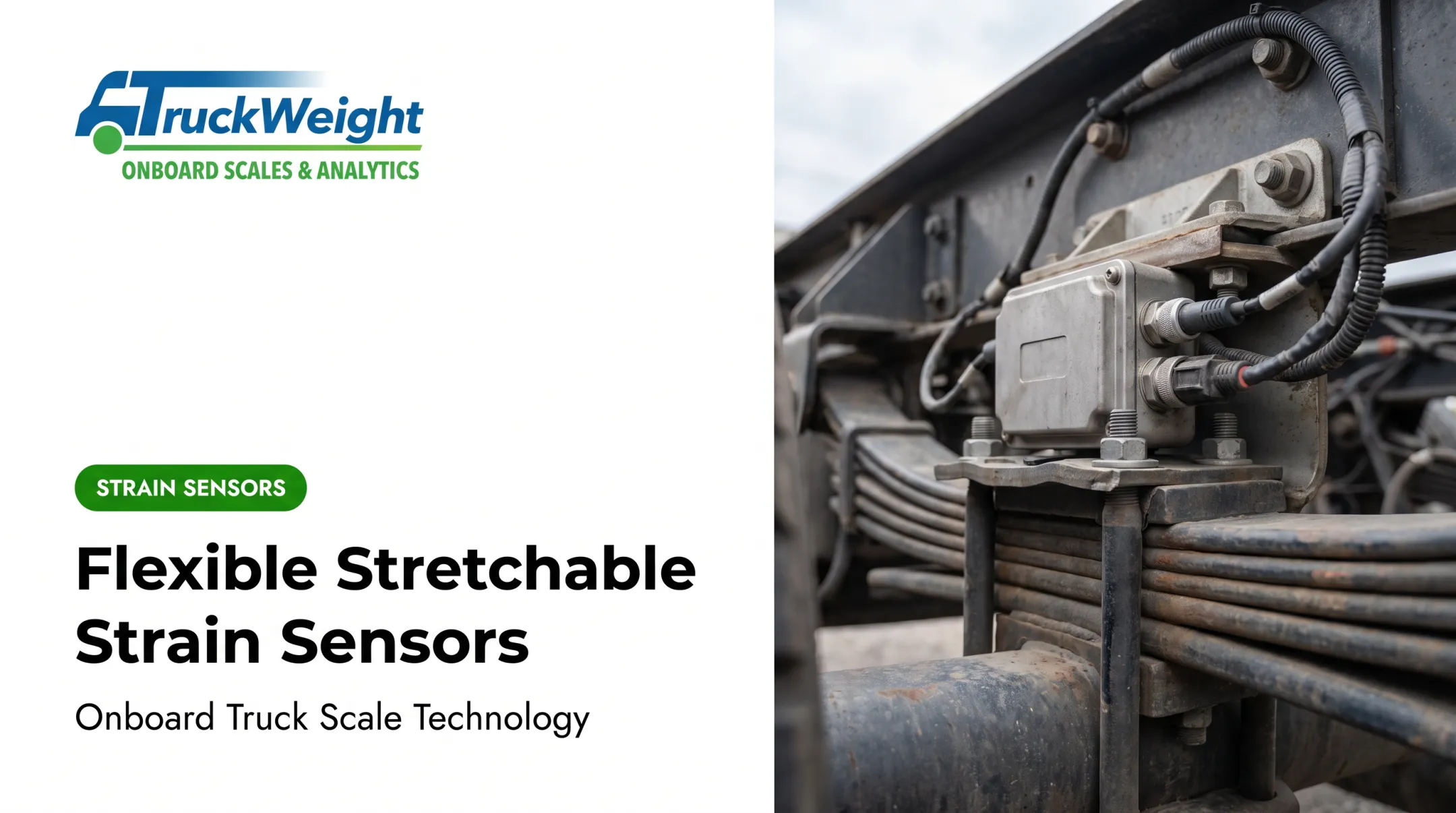
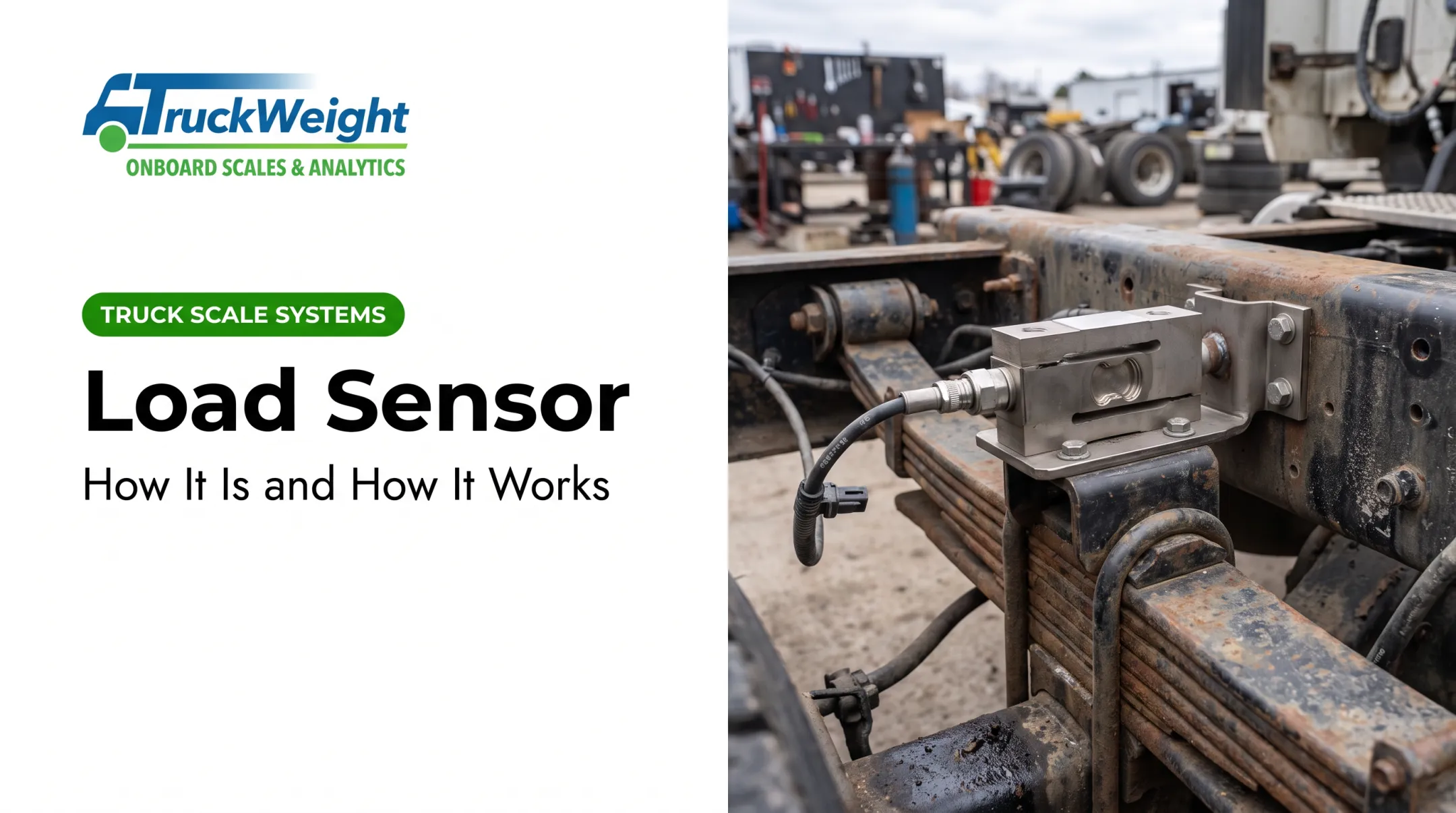
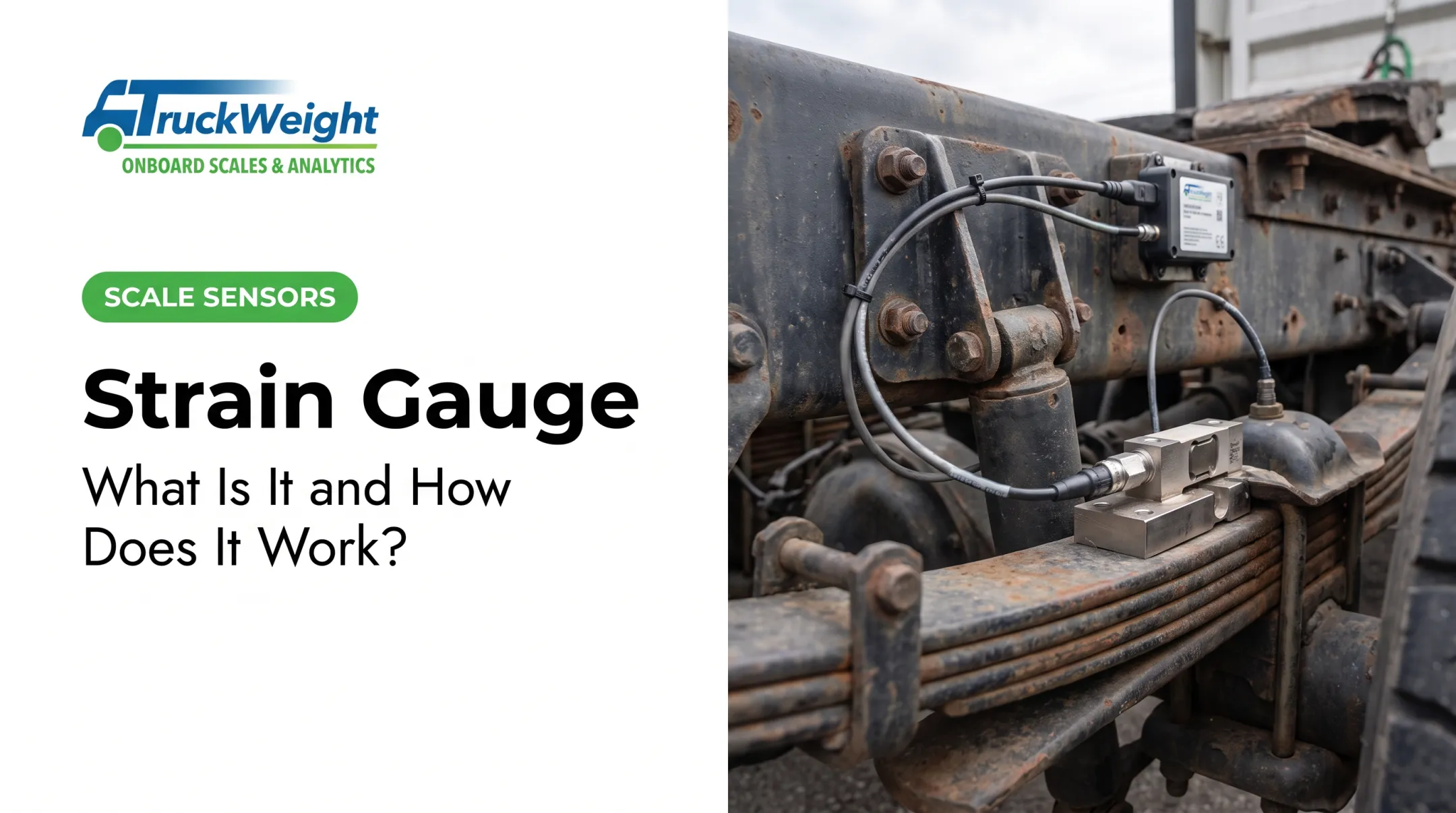
That last category is where TruckWeight's SG strain gauge sensors fit. Designed for mechanical and spring-suspension vehicles, including drive axles, walking-beam suspensions, and Chalmers systems, these sensors monitor axle and payload weight directly from the cab.
TruckWeight's SG-2 sensor measures within 0.3–2% of gross vehicle weight, transmits wirelessly up to 500 feet, and carries a two-year warranty. Fleets use this data to avoid overweight violations and optimize every load without running to an external scale.
Choosing the Right Strain Gauge Sensor for Your Application
Choose a strain gauge by matching it to your operating conditions, not by ranking one technology as universally best.
Start with these questions:
- Temperature and moisture exposure — Foil struggles in humid or high-temp environments due to adhesive limits. Thin film handles both better.
- Budget vs. precision — Foil costs less for general testing; silicon maximizes signal if you can fund compensation circuitry; thin film prioritizes stability and ruggedness.
- Installation complexity — Wired systems add cabling and labor. Wireless systems cut that overhead significantly.

For fleets running spring-suspension trucks, tractors, or trailers, TruckWeight's SG sensors are built specifically for that use case. They're waterproof, shock-resistant, and corrosion-free, and installation takes minutes without specialized tools. The SG-2 covers spring trailers, drive axles, and walking-beam suspensions, while the SG-1 handles front-axle applications.
Match the sensor to your suspension type, environmental conditions, and accuracy needs—not just the lowest price tag.
Frequently Asked Questions
How does a strain gauge sensor work?
Strain gauges measure deformation by detecting changes in electrical resistance proportional to applied force. They're typically wired in a Wheatstone Bridge configuration for a stable, accurate output.
What are the different types of strain gauge sensors?
Three main types cover most applications:
- Bonded foil — low-cost, adhesive-mounted
- Silicon/semiconductor — high sensitivity; needs temperature compensation
- Thin film — sputtered onto the substrate for long-term stability
Each suits different accuracy and budget needs.
What are the uses of strain gauge sensors?
Common uses include vehicle weighing systems such as onboard truck scales, plus load cells, pressure transducers, and structural monitoring in aerospace and automotive settings.
What is the difference between thin film and bonded foil strain gauges?
Thin film gauges are molecularly bonded via sputtering, with no adhesive layer. Bonded foil uses an organic epoxy backing, which can introduce creep and hysteresis over time that thin film avoids.
How accurate are thin film strain gauge sensors?
Thin film gauges deliver low hysteresis and low creep, which supports long-term accuracy. Drift has been measured below 0.02% of full-range output over extended accelerated testing periods.