
Two technologies dominate force measurement: piezoelectric and strain gauge sensors. They work on entirely different principles, and that difference determines where each one belongs.
This guide breaks down how each sensor works, compares their strengths and weaknesses, and helps you pick the right technology for onboard truck weighing.
Key Takeaways
- Piezoelectric sensors generate charge under mechanical stress for dynamic events like impacts and vibration.
- Resistance-based strain gauges suit static, sustained loads such as onboard truck weighing.
- Long-term stability and minimal drift make strain gauges the industry standard for compliance weighing.
- Match your choice to load type (static vs. dynamic), environment, and accuracy needs.
What Is a Piezoelectric Sensor?
Piezoelectric sensors rely on the piezoelectric effect: certain crystals or ceramics generate an electrical charge when mechanically stressed. Kistler explains that this charge is proportional to applied force and read through a charge amplifier. The sensing element itself needs no external power to generate a signal.
These sensors are known for:
- High-frequency response suited to fast, transient events
- Compact size that embeds easily in test equipment
The main trade-off is signal drift under constant load, which makes them a poor fit for anything held steady.
Common Applications of Piezoelectric Sensors
Piezoelectric sensors are common in:
- Vibration and shock detection on machinery
- Ultrasonic and accelerometer-based equipment
- Dynamic impact testing and press-force measurement
- Weigh-in-motion systems and crash-test setups
They excel at fast-changing forces. Sustained, static load monitoring (like a fully loaded truck parked for hours) is not their strength.
Charge leaks over time, and HBK estimates drift around 1 N/min for a run-in piezoelectric measuring chain. That error becomes more pronounced at smaller forces held over longer periods.

What Is a Strain Gauge Sensor?
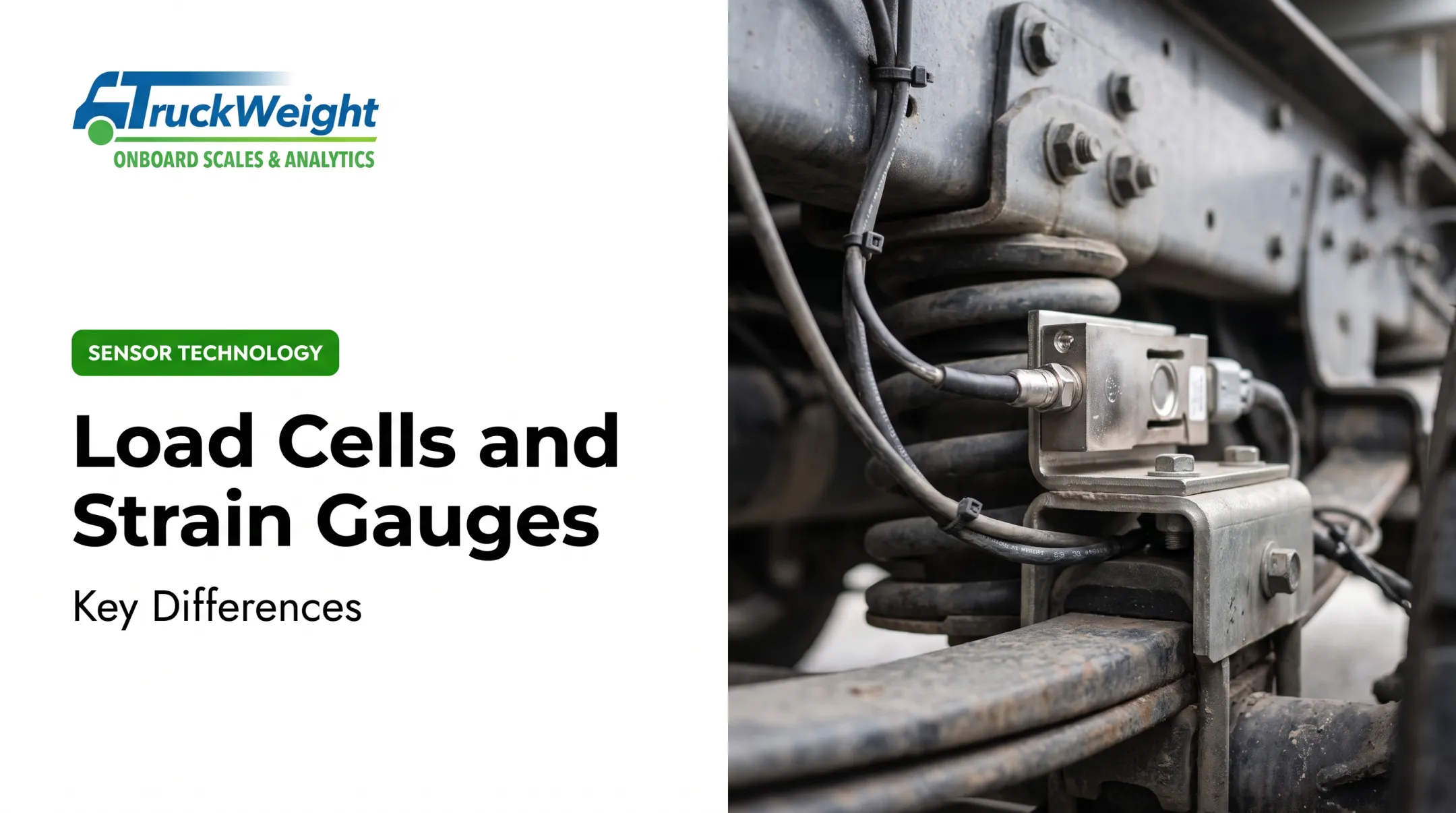
A strain gauge is a conductive element bonded to a structural surface. As that surface deforms under load, the gauge's resistance changes proportionally. Omega describes this as converting force, pressure, tension, or weight into a measurable resistance change. A Wheatstone bridge circuit measures that tiny resistance shift and converts it into a usable electrical signal.
Strain gauges function as both sensors and transducers. The gauge itself senses mechanical deformation; wired into a bridge circuit on a spring element, it becomes a complete transducer producing an output voltage proportional to force.
Key characteristics:
- High accuracy for static loads
- Minimal drift or creep over time
- Durability in rugged, high-vibration environments
Piezoresistive Strain Gauges Explained
Semiconductor-based (piezoresistive) gauges offer much higher sensitivity than standard foil gauges. HITEC reports gauge factors of 2.0 to 4.5 for foil versus 50 to 200 for semiconductor types, meaning semiconductor gauges can produce roughly 75 times more output for the same strain. The trade-off: semiconductor output varies more with temperature, requiring careful thermal compensation.

Why Strain Gauges Power Onboard Truck Scales
Static-load accuracy and low drift make strain gauges the core technology behind onboard truck scales. They hold a stable reading whether a truck is parked at a job site or crawling through a scale house, matching the sustained conditions fleets need to monitor.
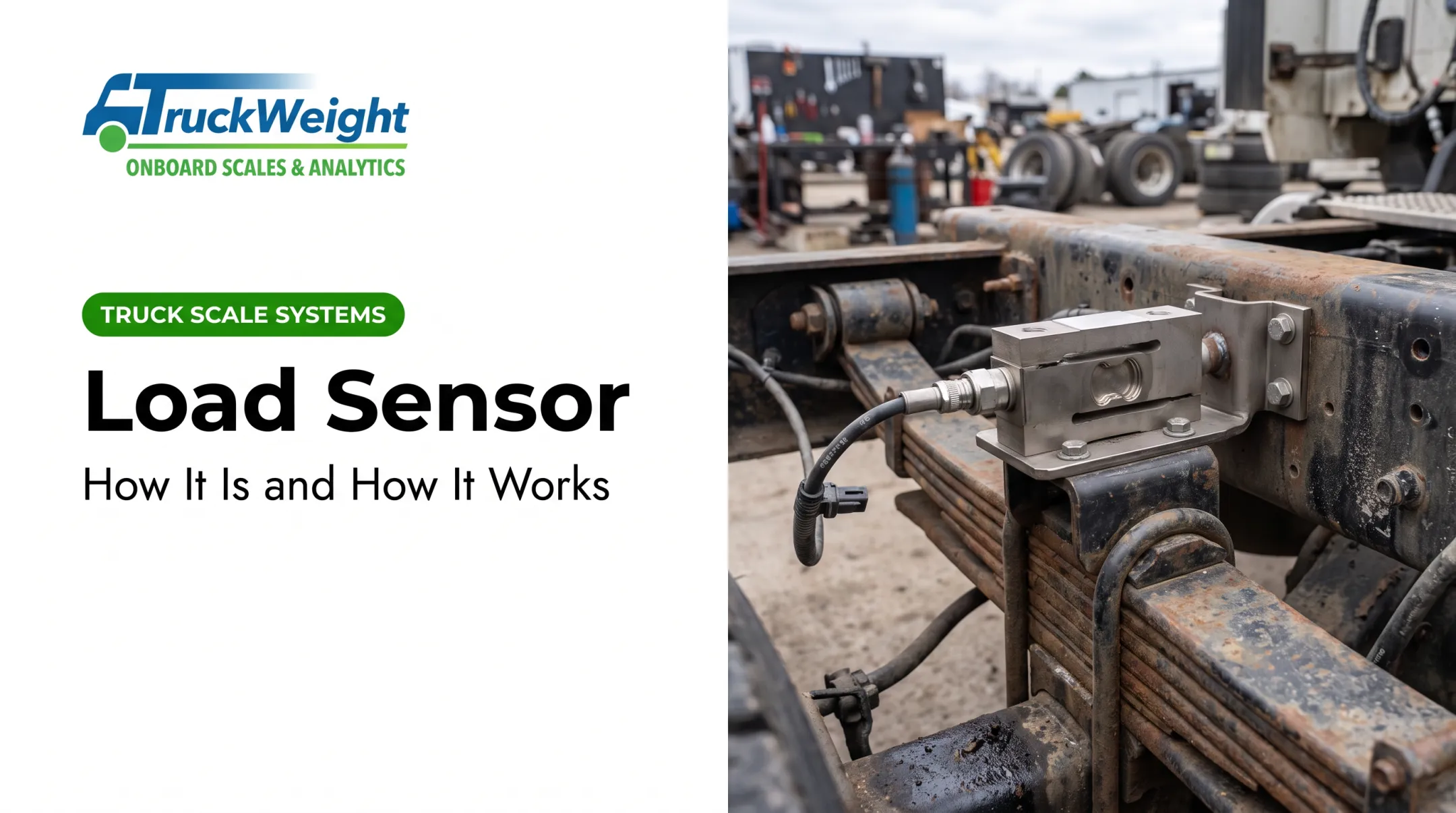
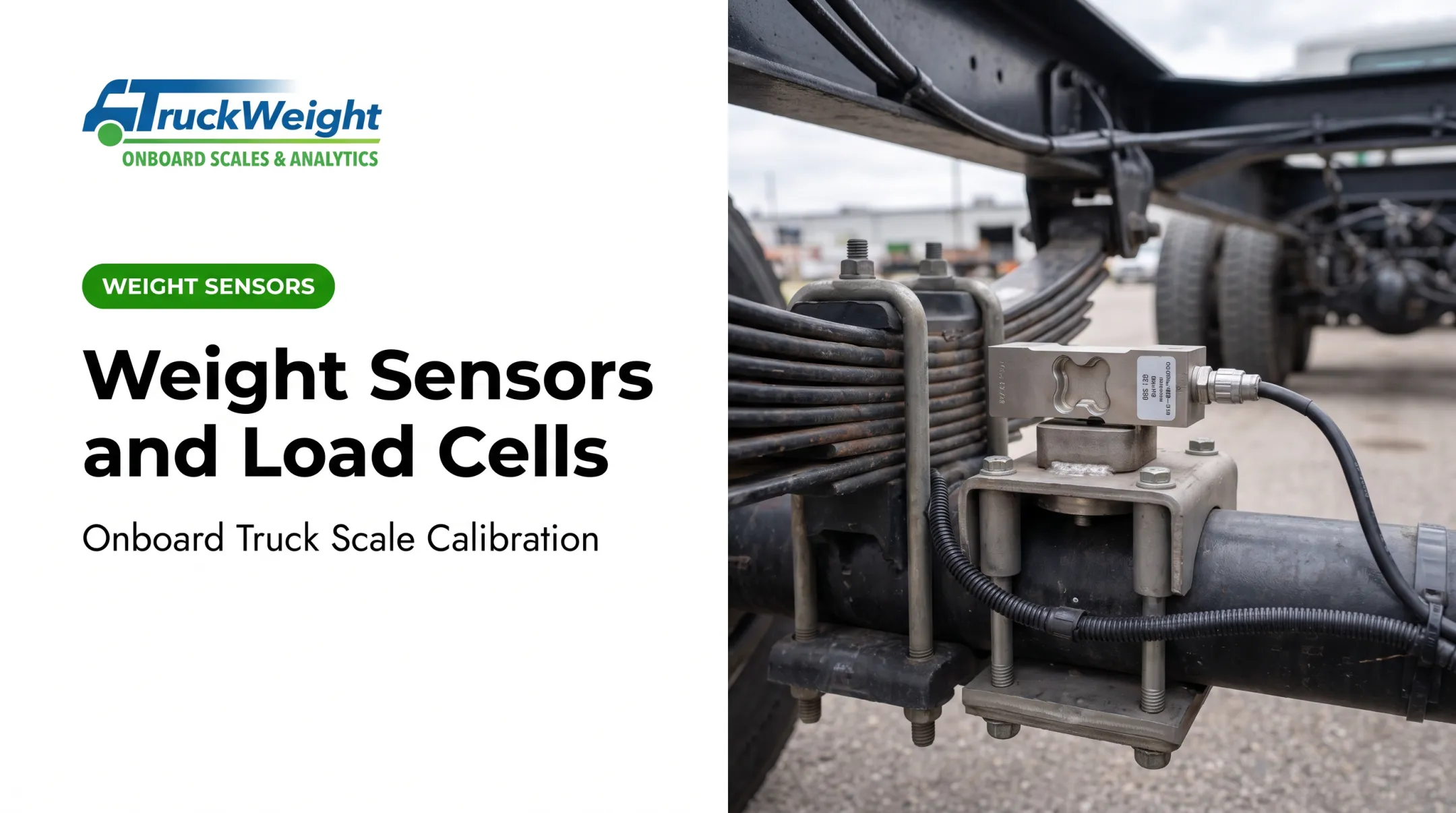
TruckWeight's SG strain gauge sensors are a real-world example. Built for spring and mechanical suspensions, including spring trailers, drive axles, walking-beam, and Chalmers systems, they're waterproof, shock-resistant, and corrosion-free. Accuracy is rated at 0.3% to 2% of gross vehicle weight.
Piezoelectric vs. Piezoresistive vs. Strain Gauge: Key Differences
These terms get mixed up constantly. Here's the distinction:
- Piezoelectric effect: mechanical stress generates an electric charge
- Piezoresistive effect: mechanical strain changes electrical resistance
Strain gauges work on resistance change under load: foil gauges respond mainly to geometry shifts, while semiconductor gauges lean on the piezoresistive effect itself.
Kistler defines piezoresistance as a change in a material's resistivity under strain, driven by geometry and conductivity shifts — a different physical mechanism entirely from charge generation.
| Factor | Piezoelectric | Strain Gauge (foil/semiconductor) |
|---|---|---|
| Static load performance | Drifts over time | Minimal creep, stable long-term |
| Dynamic response | High resonance frequency, ideal for spikes | Better with larger, sustained forces |
| Signal conditioning | Requires charge amplifier + shielding | Simpler voltage-based amplification |
| Cost/complexity | Higher for precision applications | Generally lower, well-established |
Practical takeaway: use piezoelectric sensors for vibration, shock, and dynamic testing. Use strain gauges for weighing, compliance, and long-term load monitoring.
Which Sensor Type Is Best for Commercial Truck Weighing?
For axle, gross, and net weight monitoring, static-load accuracy makes strain gauge technology the practical choice. Trucks sit loaded at docks, job sites, and scale houses — situations where piezoelectric drift becomes a real liability.
Rugged, weatherproof strain gauge sensors mounted on spring or air suspensions let operators check payload directly from the cab, without complex wiring. Accuracy specifications matter here: a system rated to 3% error looks very different from one rated to 10% when you're trying to avoid overweight fines under federal limits (80,000 lb gross, 20,000 lb single axle, 34,000 lb tandem).
TruckWeight's lineup covers multiple suspension types under ISO 9001-certified manufacturing:
- SG strain gauges for spring and mechanical suspensions, rated 0.3–2% accuracy
- Patented air suspension sensors, rated 0.3% to 1% accuracy in all weather conditions
- MG-3 military-grade sensors, built for zero wear and no maintenance, with a 2-year warranty
All three operate wirelessly, install with standard tools, and support monitoring from up to 500 feet away. That range helps mining, construction, refuse, and other heavy-duty fleets where wired installations are impractical.

Pairing these sensors with TruckWeight Analytics gives back-office teams remote calibration, real-time alerts, and fleet-wide reporting. Built on Google Cloud infrastructure (Firestore, BigQuery, PubSub), it lets managers verify calibration status without pulling every truck off the road.
Maintaining and Calibrating Your Onboard Sensors
Strain gauges are stable, but they are not maintenance-free. A few habits keep readings accurate for the life of the install:
- Recalibrate after any suspension repair or component swap that can shift the sensor baseline
- Factor in temperature swings, moisture, and road vibration—sealed, weatherproof housings help limit drift
- Inspect mounting points and wiring on a routine schedule; loose hardware introduces error long before a sensor fails
TruckWeight Analytics backs these habits with Full Remote Calibration. Authorized users can recalibrate sensors and push firmware updates over the air, so fleets avoid a shop visit for every truck.
Frequently Asked Questions
What is a piezoresistive strain gauge?
It's a semiconductor-based strain gauge that changes resistance under strain. It offers much higher sensitivity than standard foil gauges but is more sensitive to temperature swings.
What is the difference between piezoelectric and piezoresistive?
Piezoelectric sensors generate an electrical charge from applied stress. Piezoresistive sensors change electrical resistance under strain. Each requires different amplification circuitry.
What is the purpose of a piezoelectric sensor?
It measures dynamic forces like vibration, pressure changes, and impact, converting mechanical stress directly into an electric charge.
What is the purpose of a strain gauge sensor?
It measures static and slow-changing forces such as weight and load. Strain gauges are widely used in scales and structural monitoring where stability matters.
Is a strain gauge considered a sensor or a transducer?
Both. The gauge itself senses mechanical deformation. Wired into a bridge circuit with a spring element, it transduces that deformation into an electrical signal proportional to load.