
The concept itself, force per unit area, is simple. But getting an accurate reading depends on a lot more: sensor type, installation quality, calibration discipline, and the environment the sensor lives in. Skip any one of those, and your numbers will lie to you.
This guide walks through how pressure sensors actually work step-by-step, when to use which type, what you need for reliable readings, the mistakes that trip people up, and where these sensors show up in the real world, including inside a truck's suspension system.
Key Takeaways
- Pressure sensors turn force per unit area into a usable voltage or current signal
- Three measurement types exist: absolute, gauge, and differential pressure
- Sensor choice depends on range, response speed, and environment
- Zero and span calibration is non-negotiable for trustworthy readings
- Common uses include HVAC, healthcare, industrial control, and fleet payload monitoring
How to Measure Pressure Using Sensors
Step 1: Define the Pressure Type You Need to Measure
Before picking hardware, decide which pressure reference you need. According to NIST, pressure is simply force divided by area (P = F/A), but the reference point changes everything.
- Absolute pressure references a perfect vacuum, so weather and altitude don't shift the baseline—used for barometric and altitude measurement.
- Gauge pressure references current atmospheric pressure (it shifts with weather)—what a tire pressure gauge reads.
- Differential pressure compares two separate points, like
p1 - p2. WIKA notes this is the go-to method for filter monitoring and tank-level measurement in closed vessels.
Choose the wrong type and the diaphragm design, reference port, and reading math won't match your application.
Step 2: Select and Install the Appropriate Sensor
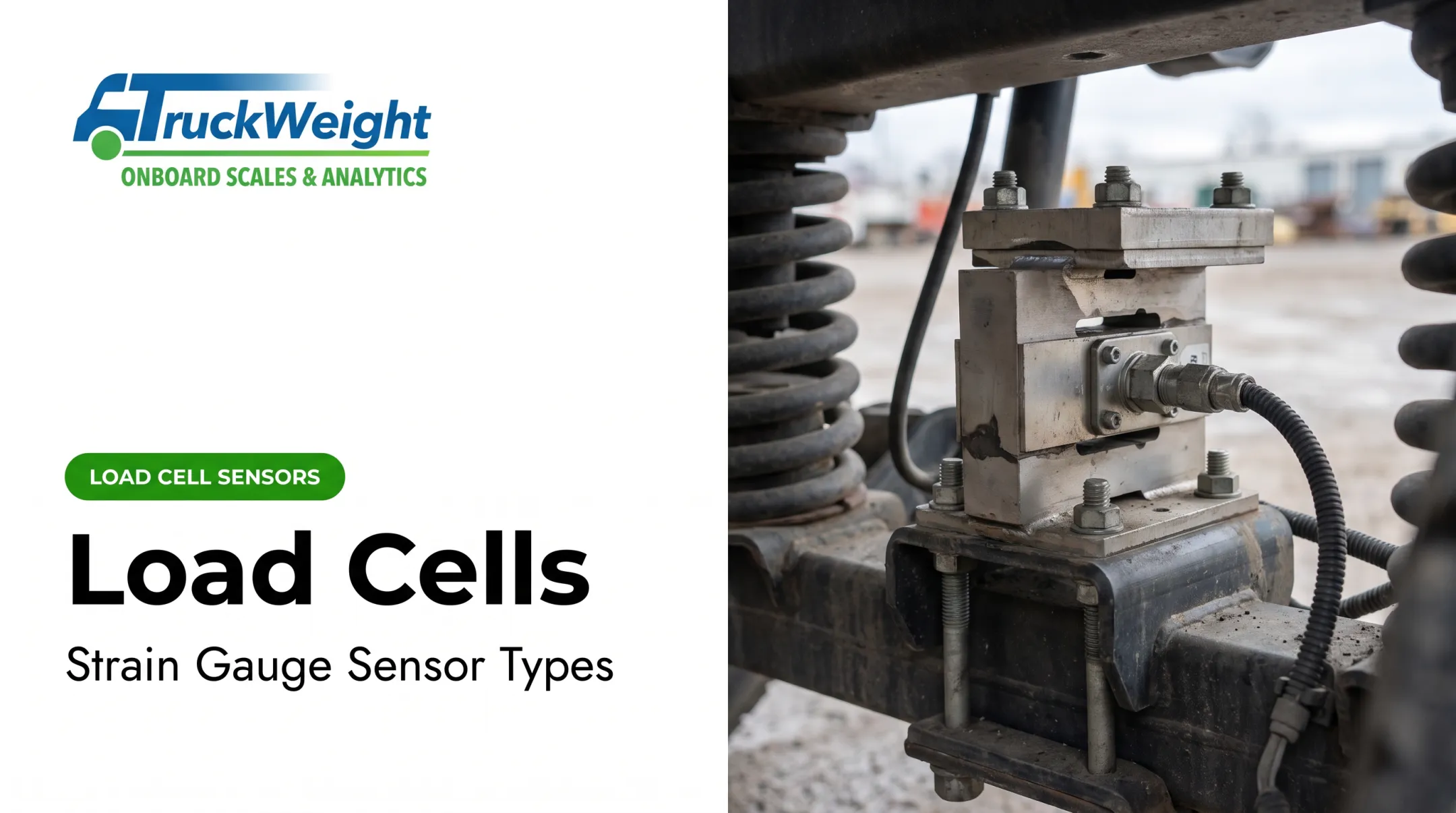
Match the sensing technology to your pressure range and whether you're measuring something static or rapidly changing. A strain gauge sensor works fine for steady industrial pressure. A combustion event needs something faster.
Once you've picked the technology, installation details matter just as much:
- Confirm mounting orientation and port connection match the manufacturer's specs
- Make sure the diaphragm actually contacts the correct pressure medium
- Check environmental fit: temperature swings, moisture, corrosive fluids, vibration
Skipping this step is one of the most common reasons a "good" sensor gives bad data.
Step 3: Convert and Calibrate the Signal
Inside the sensor, mechanical deformation (or a change in capacitance/resistance) becomes an electrical output. OMEGA's transducer glossary groups common outputs into three families:
- Millivolt (raw bridge output)
- Amplified voltage (commonly 0–5V)
- Current (4–20mA, the industrial standard for long-distance runs)
Raw output still needs calibration before you can trust it. The ISA's 2016 calibration procedure recommends:
- Use a stable, vibration-free fixture and exercise the sensor to roughly 90% of range
- Vent, then zero the sensor (for a 150 psi cell, hold 130–135 psig for 30 seconds)
- Check 0%, 50%, and 100% of span on both ascending and descending passes
- For a 4-20mA transmitter, confirm readings land at 4, 12, and 20 mA
- Document as-found and as-left results with environmental conditions noted

Some signal conditioners include built-in temperature compensation, which helps reduce drift between calibration cycles.
Step 4: Read, Log, and Act on the Data
Once the signal is clean and calibrated, connect it to whatever needs it: a display, PLC, data logger, or monitoring software. From there:
- Set alarm thresholds or automated control logic (valve shutoff, pump control) where needed
- Periodically cross-check readings against a calibrated reference gauge
- Watch for gradual drift between calibration cycles, not just outright failures
Types of Pressure Sensors and When to Use Them
No single sensor handles every job. The right choice depends on range, response speed, and the environment the sensor has to survive.
- Strain gauge / piezoresistive sensors work well for industrial, automotive, and general-purpose jobs. MKS examples range from a differential transducer at -760 to 760 Torr to an absolute unit rated 0.1 to 1,000 Torr.
- Piezoelectric sensors measure fast, dynamic pressure changes such as engine combustion, blast events, or impact testing. PCB Piezotronics notes they respond in microseconds but aren't built for static readings; the charge leaks toward zero over time.
- Capacitive and MEMS sensors fit high-precision, low-power, compact applications such as medical devices, consumer electronics, and semiconductor tools where composition-insensitive measurement matters.
- Mechanical gauges (Bourdon tube, manometer, diaphragm) remain useful when no power source is available. WIKA Bourdon tube gauges cover gauge pressure from 0.6 to 7,000 bar (about 9 to 101,500 psi).
- Vacuum-specific sensors (Pirani, ionization) handle pressures far below atmospheric. Cold-cathode ionization gauges reach down to 10⁻¹² Torr, often required in semiconductor manufacturing.

What You Need for Accurate Pressure Sensor Readings
Reliable data starts before the sensor ever gets installed.
Equipment and Specification Requirements
Confirm the operating pressure range, accuracy rating, and output signal type (analog vs. digital) match your application's demands. A sensor rated for 1,000 psi won't give you useful resolution on a 10 psi system.
Installation and Environmental Conditions
Verify the sensor tolerates:
- Temperature extremes at your install site
- Humidity and moisture exposure
- Vibration from equipment or vehicles
- Corrosive or high-viscosity media contact
Calibration and Compliance Readiness
Look for sensors built to relevant standards. IEC 60770-1:2010 covers performance-test methods for transmitters with pneumatic or electric output. ASTM F2070-00(2017) specifies requirements for electrical and fiber-optic pressure transducers.
Neither standard guarantees accuracy on its own, but they establish that a sensor was tested using recognized methods. Pair that with a documented calibration schedule, and you've got a defensible measurement chain.
Common Mistakes and Troubleshooting When Measuring Pressure
Most bad pressure data traces back to a handful of repeat offenders:
- Skipping zero/span calibration — yields skewed readings that look "close enough" until they cause a real problem
- Wrong sensor for the job — a static-rated sensor on dynamic combustion testing misses transient spikes entirely
- Ignoring temperature compensation — heat expands sensing materials and shifts electronics, driving drift in strain gauge and piezoresistive sensors (Fuji Electric)
- Overranging and pulsation — repeated cycling near the top of a sensor's rated range accelerates diaphragm fatigue
Troubleshooting tip: If readings fluctuate erratically without an obvious cause, check for electromagnetic interference or a failing diaphragm seal before assuming the sensor is bad. Replacing a sensor doesn't fix a wiring problem.
Real-World Applications of Pressure Sensors
Industrial and process control
Hydraulic and pneumatic systems rely on pressure sensors for continuous monitoring. Differential pressure sensors detect filter clogging before it causes a system failure, and hydrostatic pressure readings determine liquid level in closed tanks.
Healthcare and HVAC
Ventilators measure the air pressure delivered to patients breath by breath. Blood pressure monitors depend on the same underlying principle. In buildings, differential pressure sensors control cleanroom airflow and monitor duct pressure for HVAC systems.
Heavy-duty fleet weighing
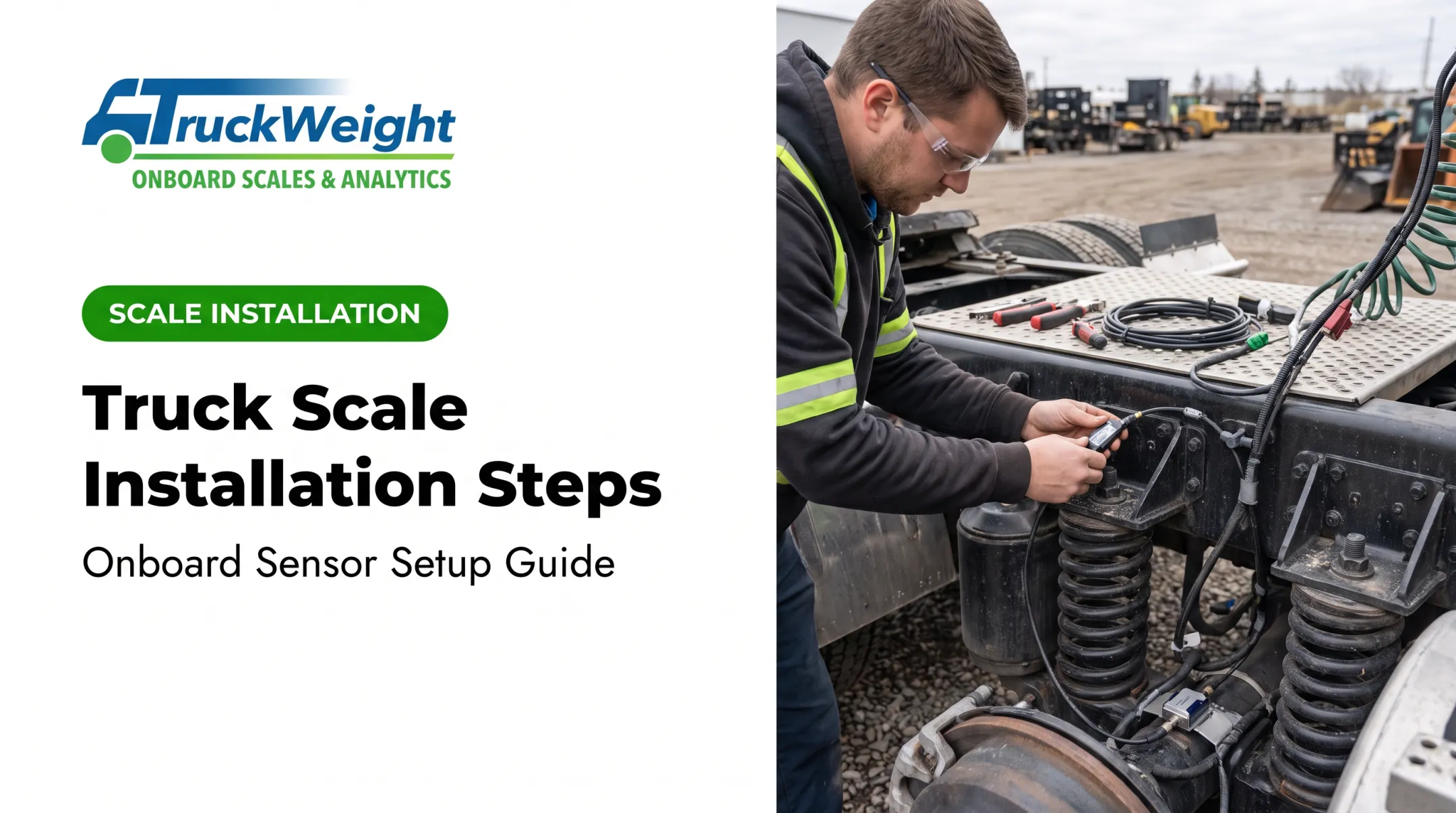
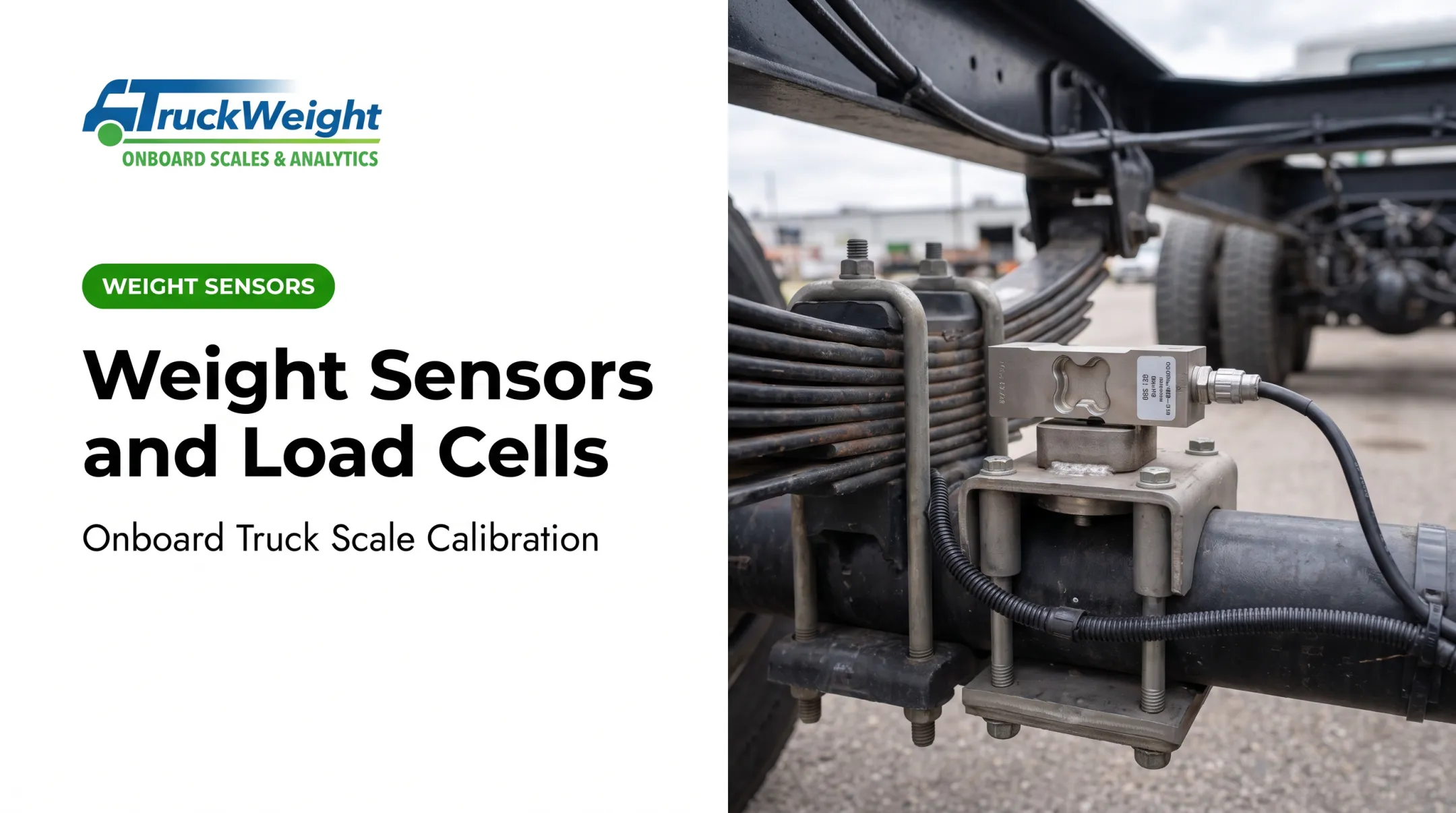
Those same pressure principles power onboard truck scales. TruckWeight's patented air suspension sensor measures pressure and temperature changes in a truck or trailer's air-ride suspension.
It converts those readings into axle-group and gross vehicle weight in real time, right from the cab.
The system works like any well-calibrated pressure sensor setup:
- Mount sensors on the air-suspension airline with a tee fitting
- Connect wirelessly over LoRa to a handheld or in-cab display
- Calibrate against a certified ground scale using empty and loaded PSI readings per axle group
Stated accuracy is 0.3% to 1% in all weather conditions, so fleets get a wireless alternative to external weigh scales.
Across every use case, the right sensor still comes down to range, response time, and durability. Fleets hauling aggregates, steel, asphalt, or logs need hardware built for weather and road shock—not a lab-grade device that only holds up indoors.
Conclusion
Accurate pressure measurement isn't complicated in theory. It comes down to matching the right sensor type and calibration process to your specific application. Most measurement errors trace back to one of two root causes: the wrong sensor for the job, or a calibration step that got skipped.
Even specialized applications like fleet payload monitoring still rest on the same foundation. Convert pressure into a signal, calibrate it against a known reference, and trust the output because you verified it upfront.
Frequently Asked Questions
What is the range of a pressure sensor?
Ranges vary widely by sensor type. Ionization vacuum gauges measure down to 10⁻¹² Torr, while industrial hydraulic sensors handle thousands of psi. The range must match your specific application, not the other way around.
What sensor is used to measure pressure?
Strain gauge, piezoresistive, capacitive, piezoelectric, and MEMS sensors are the most common electronic options. Bourdon tubes and manometers remain widely used mechanical alternatives, especially without a power source.
What's the difference between a pressure sensor, transducer, and transmitter?
The terms are often used interchangeably. Transducers typically output a raw signal such as 0-5V, while transmitters condition and amplify that signal into a standardized output like 4-20mA for longer runs. "Sensor" is usually the umbrella term.
How often should a pressure sensor be calibrated?
NIST doesn't mandate one universal interval. It depends on accuracy requirements and drift history. Fluke calls annual calibration the most common baseline, with shorter cycles for critical or high-frequency measurements.
Can a pressure sensor measure both positive and negative pressure?
Yes. Most sensors measuring differential or gauge pressure can register both positive and negative readings, since they measure a pressure difference rather than an absolute value.
Why do pressure sensors drift over time?
Drift commonly comes from temperature sensitivity, material fatigue from repeated pressure cycling, or simply going too long without a zero/span recalibration. Regular checks against a reference gauge catch drift before it becomes a real problem.